Nowadays, there are two ways to travel: fast travel—packing as many bucket-list destinations, tourist hotspots and Instagram shots as possible into a short amount of time—and slow travel—journeying with intention, mindfulness, immersion and connection to people and places.
Numerous factors influence the urge for some Americans to travel fast. Many are starved for time, either because they choose to forgo vacation days or are granted too few to begin with. Others simply prefer fast-paced, checklist-style tourism for a quick dopamine hit or a bump in social media likes.
However, more American travelers are choosing to slow down. Their motivations range from a desire to learn about the culture and history of places to a craving for exclusive, authentic and soul-soothing experiences. As the number of slow travelers increases, destinations such as the Alps-Adriatic region of Austria, Slovenia and Croatia are becoming increasingly attractive.
Travel advisors can be the purveyors of slow travel. Would-be slow tourists can search for activities online and travel with a guidebook or mobile app in hand, but to peek behind the tourist facade, mine the hidden gems, connect with extraordinary people and explore unspoiled terrain requires the finesse and experience of travel professionals—experts who invest in travel to the region and collaborate with vetted, in country destination management companies and tour operators.
Three countries, a tapestry of experiences
Austria, Slovenia and Croatia are a triptych of color and texture. Award-winning vineyards, medieval castles, cobblestone villages, and organic farms are nestled seamlessly among the mountains, lakes, rivers, and coasts. And so are Michelin-starred restaurants, five-star and boutique hotels, wellness retreats, UNESCO World Heritage sites, and awe-inspiring museums. Behind the scenes, artisans, farmers, vintners, brewmasters, baristas, hoteliers, chefs and shopkeepers are eager to tell their stories.
The Alps-Adriatic region is a haven for outdoor enthusiasts who prefer slow, yet active travel experiences. However, travelers seeking a different type of slow adventure can also appreciate the region’s farm-to-table sensibility, impeccable service and amenities, variety of complex, distinctive and indigenous wines and dedication to preserving its cultural heritage.
Creating a unique travel corridor that encompasses portions of three countries on the same slow travel itinerary is the collaborative effort of the Austrian, Slovenian, and Croatian tourist boards. Through their “Alps. Adriatic. Amazing.” campaign, they enable travel advisors to design appealing, multi-destination packages within a single promotional framework, receive specialized information and training on the region, and meet the growing demand for authentic experiences.
Embracing slow travel culture
The amount of time travelers have for a vacation can be an impediment to some slow itineraries. “When traveling overseas, [visitors] want to pick up the pace, especially when they learn how easily you can go from country to country,” says Kathleen Flannery, owner of T&E Solutions, LLC, working with Global Travel Collection (Protravel International), a corporate and luxury travel agency in Bellevue, Washington.
Because there is so much to see and do in the Alps-Adriatic region, travel advisors may be tempted to incorporate too many activities into an itinerary. Izhar “Izzy” Naveh, an international luxury travel specialist at Carlisle Travel Management – Travel Leaders in Columbus, Ohio, skirts that conundrum by planning high-end, exclusive experiences every other day or two, while offering suggestions for activities clients can manage on their own for the rest of the time.
The beauty of introducing clients to the parts of Austria, Slovenia and Croatia that are regionally diverse but share a similar “gentle” rhythm, says Phyllis Murdock, an expert on Slovenia and an independent travel advisor at FROSCH by Chase Travel in Jacksonville, Oregon, is that together they offer the perfect balance of art, culture, food, adventure and relaxation, she explains.
Few trips are the same for travel advisors specializing in FITs, because every client comes to the table with a different budget, travel history and preferences. However, because they know what their clients have loved in the past, what they enjoy about a destination, and what their destination management companies can deliver, agents may lean into a particular flow of experiences in each subregion.
Austria: Farm-to-table at its finest
Having recently returned from a visit to Austria, including the Alps-Adriatic area of Carinthia, the country’s southernmost province, Kathleen Flannery shares highlights of an itinerary that epitomizes the slow travel offerings in what is known as “The Hamptons of Austria.”
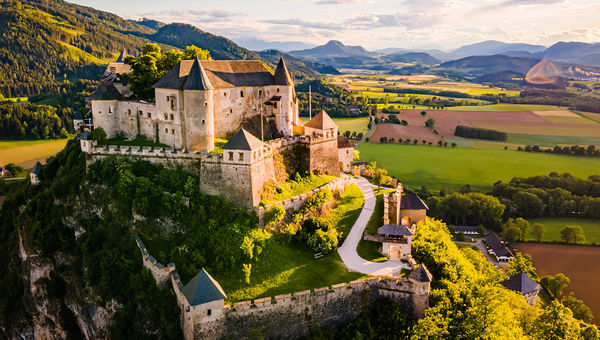
Hochhosterwitz Castle, Carinthia, Austria © Michael Stabentheine/Austria Tourism
However, visitors bound for Carinthia should begin their slow adventure in Vienna, Flannery suggests. “It is one of the most beautiful, clean, historic, cultural, artistic and gastronomic capitals of the region,” she says, adding, “The city is breathtaking, the people are unbelievably nice, and you feel like you’re in the heart of everything.” For example, a 20-minute train ride from the city center puts you in wine country.
Velden, a market town on the shore of Wörthersee Lake in Carinthia, is only about a three-and-a-half-hour train ride from Vienna—and not just any train ride. Passengers in the first-class car enjoy cocktails or Viennese coffees as they relax to the low thrum of travel over the historic Semmering Railway (also a UNESCO heritage site), with its dramatic viaducts, tunnels, and views of gorges and wooded mountains. The quaint Renaissance town of Graz, surrounded by rolling vineyards that produce some of Austria’s best wines, is worth a stop along the way.
The five-star wellness hotel, spa and beach club, Falkensteiner Schlosshotel Velden, is a ten-minute ride from the train station and steps away from the lake (for those longing for an invigorating daily dip) or downtown Velden and its charming collection of shops, restaurants and a casino.
A boat across the lake from Velden takes travelers to the charming village of Reifnitz, where they board a bus to the nearby Pyramidenkogel, a wooden lookout tower offering stunning panoramic views of Wörthersee Lake. From there, Klagenfurt City and the Benedictine (food) Market beckon, offering a selection of regional foods and produce and international delicacies.
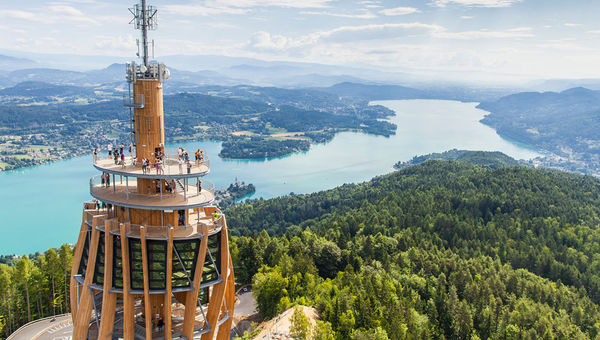
Pyramidenkogel Viewing Tower, Reifnitz, Austria © Kaernten-Werbung/Martin-Steinthaler
In the evening, visitors can enjoy progressive dinners by boat, featuring aromas and flavors such as fresh-caught fish, locally grown herbs and vegetables, and homemade breads and desserts. The experience builds to a satisfying crescendo at each lakeside restaurant. During the day, the area is also a warren of Slow Trails, which National Geographic describes as “relaxed paths with stirring lake views, always under 10km (six miles) long and never climbing more than 300m (985 ft).”
Serious hikers and cyclists or even casual amblers will love Ferlach, the southernmost town in Austria. The nearby Bodental Slow Trail leads walkers to the tiny but mysterious Meerauge lake and Marchenwiese (Fairy Tale Meadow) for a “serene and in the moment” experience, Flannery says. After lunch at Ferlach’s Gasthaus Bodenbauer, a family-owned restaurant that epitomizes home-cooked Carinthian fare and local culture (featuring father-and-son accordion players who serenade diners), an e-bike tour departing from Ossiach Lake takes visitors on a gentle ride through the Carinthian countryside.
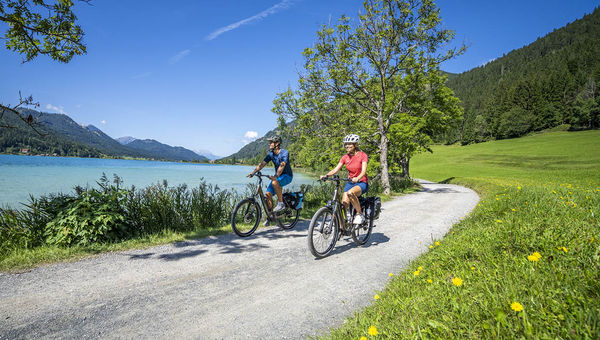
Biking on a lake in Carinthia, Austria © Kaernten Werbung/Gert Perauer
Feuerberg Mountain Resort, a luxury Alpine spa hotel in the Gerlitzen-Alpe ski area of Carinthia, is a destination of its own. Reachable by car after a breathtaking 20-minute ride up the mountain, an enclave of log lodges appears above the clouds. Cuisine there is a revolving farm-to-table fusion of Alpine and Mediterranean dishes. Wellness is served up in the form of an Xfinity pool, saunas, spa treatments, outdoor relaxation areas, a natural swimming pond, herbal hikes, archery, skiing, dining in alpine huts or simply doing nothing at all.
Nature lovers will want to top off their trip to Carinthia with a ride on the Brunnach Biosphere Park cable car and a tour of the newly constructed ÖZIV-certified, barrier-free hiking trail above the town of Bad Kleinkirchheim, famous for its thermal spas, alpine huts and scenic trails.
Slovenia: Adventure in an idyllic landscape
While the Alps-Adriatic corridor in Austria may lean more toward the Alpine lifestyle, landscape, and cuisine, Croatia, with its long coastline, could be described as having a more Adriatic bent. Slovenia, on the other hand, is a curious blend of both Alpine and Adriatic with a foothold in both topographies and some Italian influence added into the mix.
When the Adriatic coast is at the top of the itinerary, Murdock often flies guests into Venice, Italy, which is just over the Slovenian border. However, Ljubljana, Slovenia’s charming capital city, is another starting point for a slow travel itinerary to the Alps-Adriatic corridor. The city is celebrated as one of Europe’s most sustainable cities, featuring a vibrant, car-free city center, lush green areas, numerous gourmet restaurants, and a thriving café culture.
She continues to at least one of the three wine regions (Podravje, Posavje or Primorska), where generations of vintners share their stories over farm-to-table fare. The city of Maribor, in the eastern part of Slovenia, is home to the oldest grapevine in the world. Then, she moves on to the mountains, where guests can inhale the fragrant alpine air and take in the magnificent mountains that amaze visitors year-round.
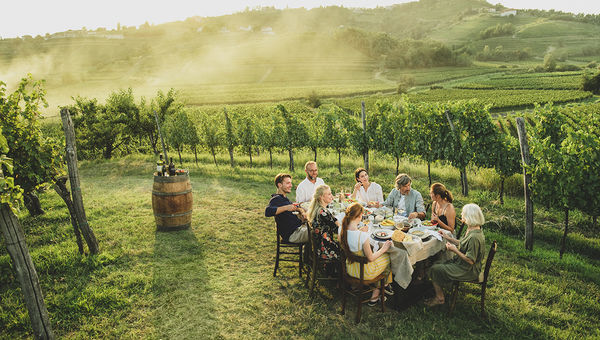
Goriska Brda Wine Region, Slovenia © Ciril Jazbec/STB
As her groups traverse the country, Murdock slows them down with other Slovenian delights. Lake Bled, which Lonely Planet’s Slovenia travel guide describes as “the sort of place that seems painted onto reality with a combination of Studio Ghibli magic and technicolor artistry,” is also one of her favorite destinations. She is also a fan of the Postojna Cave, which is famous for a “five-metre-tall bright-white stalagmite called Brilliant” and an unusual number of cave-dwelling animals, including the olm.
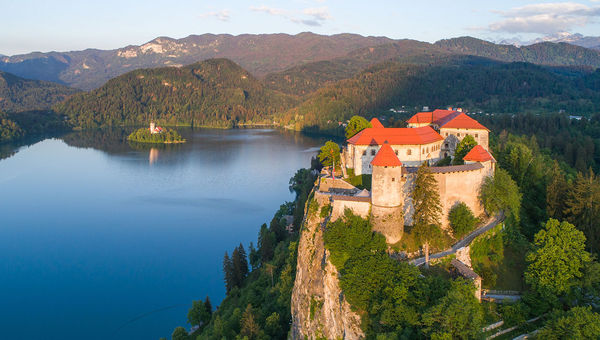
Lake Bled, Slovenia © Jost Gantar/STB
Of course, travel advisors familiar with the Alps-Adriatic are always on the lookout for extraordinary hotels. For high-end accommodations in Slovenia, Murdock recommends the Kempinski Palace in Portorož and the InterContinental Hotel in Ljubljana. However, one of her favorite boutique hotels is Vila Planinka, situated in the picturesque Jezersko Valley in the Slovenian Alps. It is worth highlighting Otočec Castle in the southeast—a castle hotel and a true gem among boutique properties in Slovenia.
Water is a principal theme through the Alps-Adriatic corridor, but never more so than in Slovenia, which claims Alpine lakes, such as Bled and Bohinj, the Soča River, an aquamarine treasure for kayakers, river rafters, fly fishermen and hikers, and the Adriatic coast, a warm, crystal-clear patch of the Mediterranean.
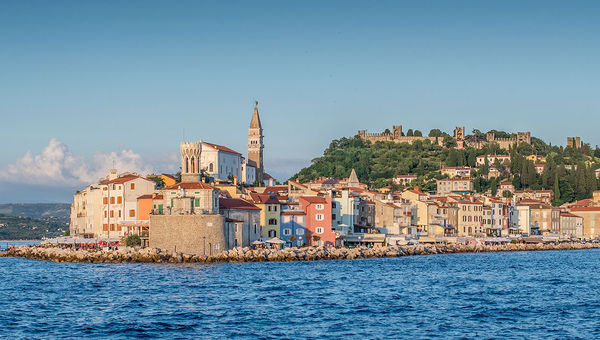
Piran, Slovenia © Nikola Jurisic/STB
One of Murdock's most memorable experiences in the Alps-Adriatic region occurred in the Slovenian Logar Valley, situated at the base of the Kamnik-Savinja Alps, near the Austrian border. Standing outside a clutch of boutique hotels, she noticed a misty bank of fog rolling off the mountain tops and into the valley, painting a fairytale-like panorama. It was so "breathtaking," she says. "I remember standing there thinking, 'This is a dream. It can't be real.'"
Murdock happened to be staying in the same hotel in the Logar Valley, Hotel Plesnik, as world-renowned Slovenian chef Janez Bratovž, head chef at Ljubljana’s JB Restaurant, was giving a cooking class, which she joined. Chef Bratovž, whose restaurant has been included in the World’s 50 Best Restaurants list, “gave the guests in that lovely, rural hotel the same [exceptional] dining experience his customers receive in his [flagship] restaurant,” she says.
Bratovž is one of several celebrated chefs in a country that has become a top culinary destination, offering everything from Michelin-starred restaurants to rustic farms, all rooted in fresh, local ingredients. Ana Roš, the world's best female chef and holder of three Michelin stars, hails from the Soča River Valley and showcases the nation’s culinary identity with an innovative twist on traditional Slovenian cuisine.
Croatia: Where luxury meets history and authenticity
When Izhar “Izzy” Naveh plans a slow travel itinerary in the Croatian part of the Alps-Adriatic region, he looks for the authentic, off-the-beaten-path luxury often found in lesser-known towns and villages. They offer unique charm, a quieter atmosphere and opportunities for genuine interaction with Croatians. He favors boutique hotels—high-end private villas that are often family-run—for their unique history, architecture, design and high level of service. He plans hands-on activities such as cooking classes with local chefs, homemade food tastings or visits to local markets like Dolac in Zagreb or City Market in Rijeka.
Naveh typically flies clients into Zagreb, which travel maestro Rick Steves describes as having an “almost Prague-like Old World streetscape, a thriving café culture, an impressive variety of good restaurants, my favorite urban people-watching in Croatia, the nation's best museums, and relatively few tourists.” Naveh’s “go-to” property for luxury clients is the “historic, stunning and perfectly located” Esplanade Zagreb. “It makes you feel like you’re traveling with Agatha Christie,” he says.
In a food-forward city like Zagreb, Naveh recommends cafés in Upper Town and St. Mark's Square. For an offbeat experience, he says, the Museum of Broken Relationships isn’t what people might expect. “I thought it would be funny, but it’s actually more heartwarming, sad, and, in my case, a bit cathartic.”
Those looking for a glimpse into Croatia’s aristocratic past can explore some lesser-known, yet spectacular destinations, such as the Zagorje region near Zagreb, which is peppered with Renaissance and medieval fortresses, Baroque castles, and family-run vineyards and farms.
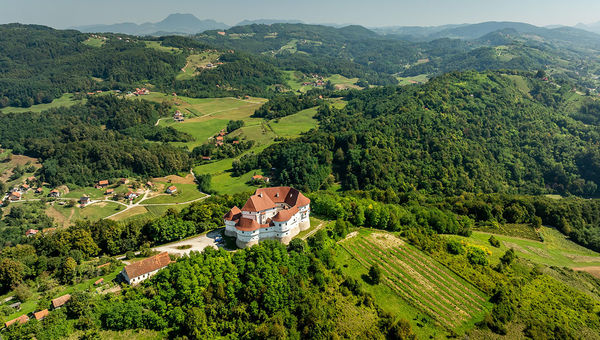
Veliki Tabor Castle, Croatia © Julien Duval/CNTB
After Zagreb, Naveh recommends three nights in Opatija, which European Travel magazine calls the Queen of Kvarner Bay. “Once the preferred summer resort of the aristocrats of Austria, this enchanting seaside city has an elegant air to it and invites you to stroll along the Lungomare for hours.”
In Opatija, Naveh places guests in the Hotel Milenij Amadria Park, situated in a historic Habsburg-era villa and offering à la carte restaurant menus that feature fresh fish, famous Kvarner scampi, and Istrian white truffles, among other specialties. The forested Gorski Kotar area around Opatija offers visitors ample time to engage in outdoor activities and taste authentic, locally made foods.
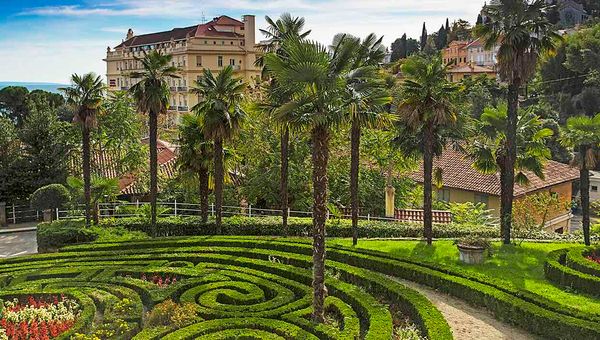
Opatija, Croatia © Marko Vrdoljak/CNTB
A three-hour car ride from Opatija takes travelers to Zadar and the Falkensteiner Hotel Adriana, an adults-only boutique hotel, which Naveh describes as having a very “beachy” aesthetic. En route from either Zagreb or the Opatija to Zadar, slow travelers can take in the colorful, one-of-a-kind lakes, waterfalls and forests of the Plitvice Lakes National Park located in the Lika region.
Zadar is an epicenter of history, arts and culture, starting with the Cathedral of Saint Anastasia, and the Church of Saint Donatus, the largest pre-Romanesque building in Croatia. People’s Square is one of the best places to have a coffee or take a break from a busy day of sightseeing. The historic Five Wells Square is a popular place for food and drink, including the famous Maraschino liqueur.
Another option in Zadar is the Bastion Heritage Hotel, located in the historic district, just a few yards away from the Arsenal (a 16th-century building that now serves as an entertainment and events venue) and the location of the famous fine dining restaurant Kaštel that serves Dalmatian food and wine indoors and on a spacious terrace overlooking the garden.
To add a final bit of romance and relaxation to an Alps-Adriatic trip to Croatia, Naveh recommends slipping away to the small coastal island of Dugi Otok off Zadar and the Villa Nai 3.3, “a stunning boutique property built of stone in an olive grove on the water. “It makes you feel as if you’re on another planet,” he says.
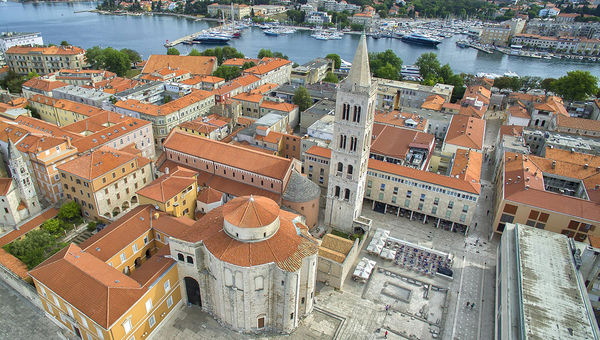
Zadar Old Town, Croatia © Ivo Biocina/CNTB
Travel slowly now
Austria, Slovenia, and Croatia beckon travelers with a blend of alpine majesty, sunlit lakes, vibrant forests, and dramatic coastlines, stretching from the peaks of the Alps to the turquoise waters of the Adriatic Sea. Engaging with locals and immersing oneself in a rich tapestry of art, cuisine, and history provides travelers with authentic cultural experiences that exceed the expectations of those seeking restoration and transformation. Now is the best time to visit the Alps-Adriatic region. The welcome mat is out.