2025: A Year in Review
It was a roller coaster of a year, with air traffic control woes, a Las Vegas downturn, Southwest’s revamp and new cruise destinations all making headlines.


(Illustration by Tanya Manthey)
(Illustration by Tanya Manthey)

(Illustration by Tanya Manthey)
(Illustration by Tanya Manthey)
It was a roller coaster of a year, with air traffic control woes, a Las Vegas downturn, Southwest’s revamp and new cruise destinations all making headlines.
Each year, Dictionary.com names a word of the year, a distinction that reflects “global events that defined that year” and “reveals the stories we tell about ourselves and how we’ve changed.” This year, that word was “6-7.” But for the travel industry, the more fitting word might be “choppy.”
It was only a year ago we declared 2024 the year of normalization after a long period of pandemic and recovery. Normal didn’t last long.
In April, the CEOs of both Norwegian Cruise Line Holdings and Carnival Corp. used “choppy” to describe the cruise booking climate. In May, Hyatt Hotels Corp. used the term to describe the hotel environment. In June, it was the president of Travel Leaders Network noting some “choppiness.”
Much of that stemmed from the policies of the new presidential administration: a standoff with Canadian travelers, tariffs and market volatility followed by a dip in consumer confidence. But there was also the fatal airplane crash in Washington, air traffic control issues at Newark, a puzzling downturn in Las Vegas.
The year also had lots of bright spots and intriguing trends: Orlando’s first theme park in a quarter century; major advancements in AI; a surge in cruise destination investment and new river cruise lines; an airline’s transformation.
Here, in no particular order, are Travel Weekly’s biggest stories of 2025.
A year of highs and lows


From a booking window gone bonkers to business peaks and valleys, this year kept travel advisors on their toes.
It started with federal government layoffs and tariff wars. Geopolitics heated up, markets fluctuated.
Travel bookings declined in the first quarter, with the economy, consumer confidence and price sensitivity all playing roles. Bookings came back, but a new pattern emerged: After several years of an expanding booking window, people began booking travel very close-in, even just weeks before departure.
Advisors and suppliers cited shock at the number of requests for summer travel during the summer and for holiday travel in October.
“It is,” as one advisor said, “nuts.”
Responses to Travel Weekly surveys exemplified the up-and-down of 2025, from showing sharp declines to business booms. Just over half of advisors in an August survey reported slight or significant decreases in bookings, while a third reported slight or significant increases.
That might have been dependent on the customer base: Survey respondents said while the average person is more cost-conscious now, upscale clients are booking as usual and seem unaffected by economic turbulence.
The hotel dip

In 2024’s Year in Review, we noted that hotels were still riding record-high room rates, reached during the post-pandemic era. But we wondered how long the party could last.
The answer came in June, when CoStar and Tourism Economics downgraded the U.S. hotel RevPAR forecast to a 1% increase; by August they projected no growth at all. In November, the forecast was a 0.4% decrease for the year, the first dip since 2020 and before that, since 2009, during the Great Recession.

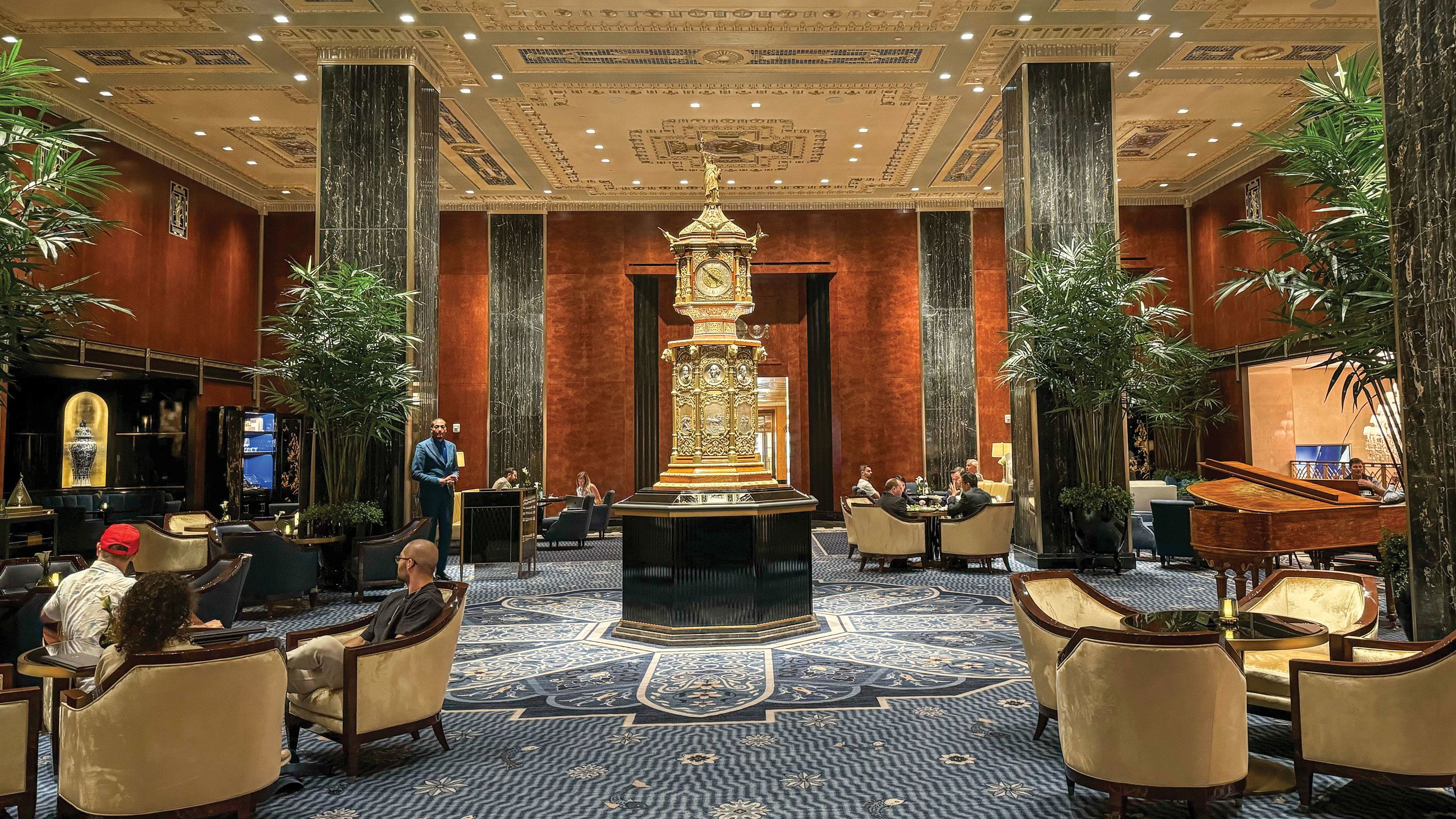
Peacock Alley at the Waldorf Astoria New York. Luxury properties fared better in 2025 than the hotel industry as a whole, which has seen a dip in RevPAR for the first time in years. (Photo by Christina Jelski)
Peacock Alley at the Waldorf Astoria New York. Luxury properties fared better in 2025 than the hotel industry as a whole, which has seen a dip in RevPAR for the first time in years. (Photo by Christina Jelski)
Puzzling to analysts is that the sector performed worse than the broader economy in 2025, with GDP growing and unemployment mostly steady.
And similar to the travel advisor experience, the downturn has not affected all hotels equally: luxury posted gains while economy and midscale saw the largest declines. It was all evidence of what economists call a “K-shaped economy,” with the upper end faring well and the lower end tightening its belt.
Leaving Las Vegas

While domestic hotel performance overall wasn’t great, it was pretty terrible for Las Vegas. Sin City properties posted some of the nation’s steepest declines this year: In July, STR reported occupancy down 16.8%, to 66.7%, while RevPAR plunged 28.7%, to $102.75. That coincided with June visitor data from the Las Vegas Convention and Visitors Authority showing a drop of 11.3%, to 3.1 million, and convention attendance down 10.7%.

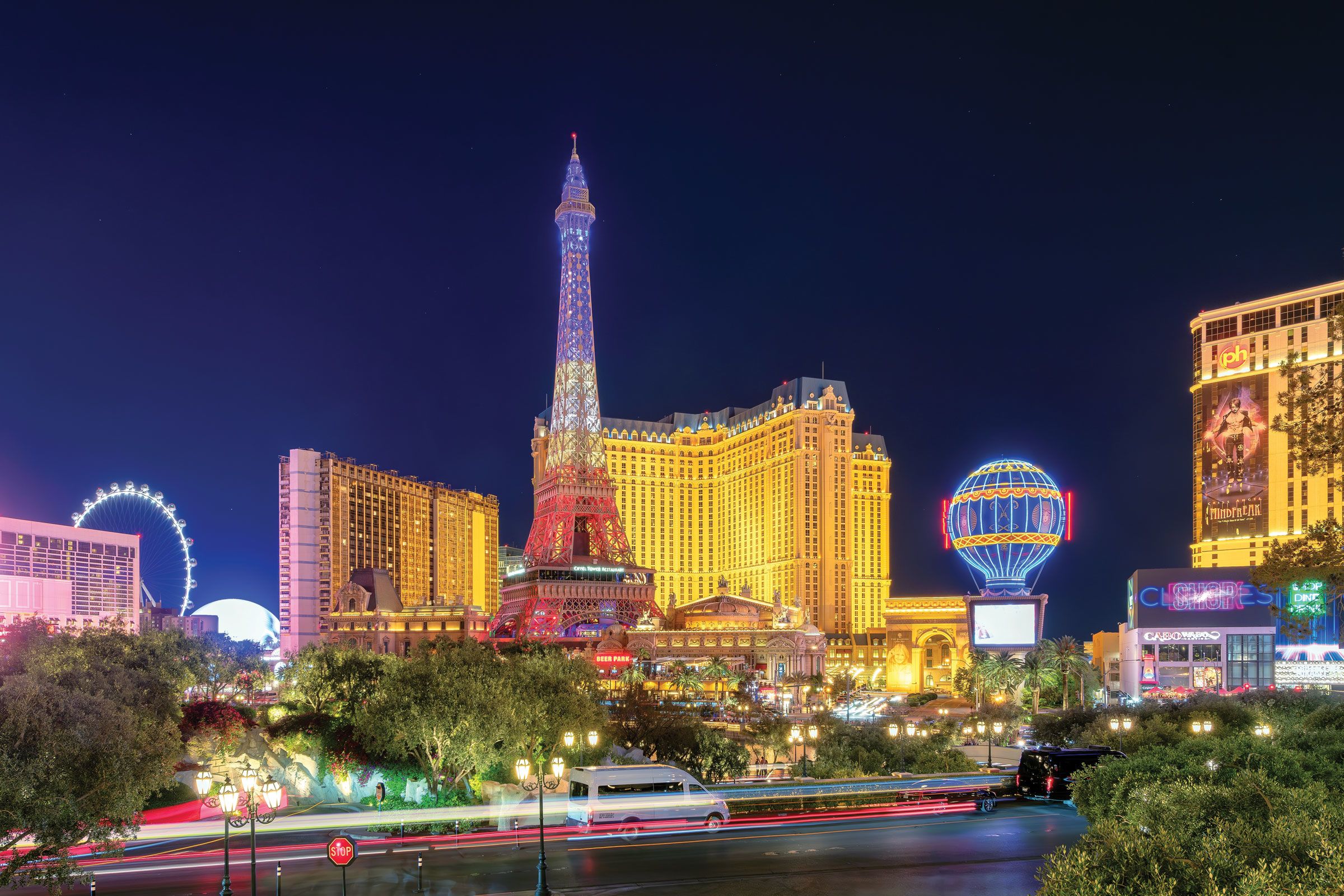
Las Vegas took its lumps in 2025, but tourism stakeholders there say things are looking promising for the new year. (Photo by Lucky Photographer/Shutterstock)
Las Vegas took its lumps in 2025, but tourism stakeholders there say things are looking promising for the new year. (Photo by Lucky Photographer/Shutterstock)
Among the issues was the steep decline in international visitation, especially from Canada, the largest source of the city’s international visitors. The LVCVA also cited the economy and responded with targeted marketing. “The value message is needed right now,” Steve Hill, the authority's CEO, said in September.
Despite the downturn, stakeholders remain bullish. “The idea that ‘Vegas is dead’ is just not accurate whatsoever,” said Sean McBurney, chief commercial officer for Caesars Entertainment, who pointed to solid Q4 demand and marquee events drawing strong interest. “As we look to New Year’s, all of that looks promising.”
Las Vegas hotels suffered some of the steepest declines in the nation this year. Among the biggest issues: a dramatic drop in international visitors, particularly from Canada, the city's largest foreign market.
Oh, Canada

Back in February, after President Trump suggested Canada become the 51st state and said the U.S. would slap tariffs on our neighbor to the north, Canadians began to retaliate, heeding prime minister Justin Trudeau’s call to “Choose Canada” when it came to vacations.
At first, U.S. destinations hoped Canadians, the nation’s No. 1 source of international travelers, would shake off the comments and come back to the U.S. As of October, the downturn still hadn’t ebbed: In November, U.S. Travel CEO Geoff Freeman said inbound travel from Canada was down 24% this year, and “the industry is feeling it.”

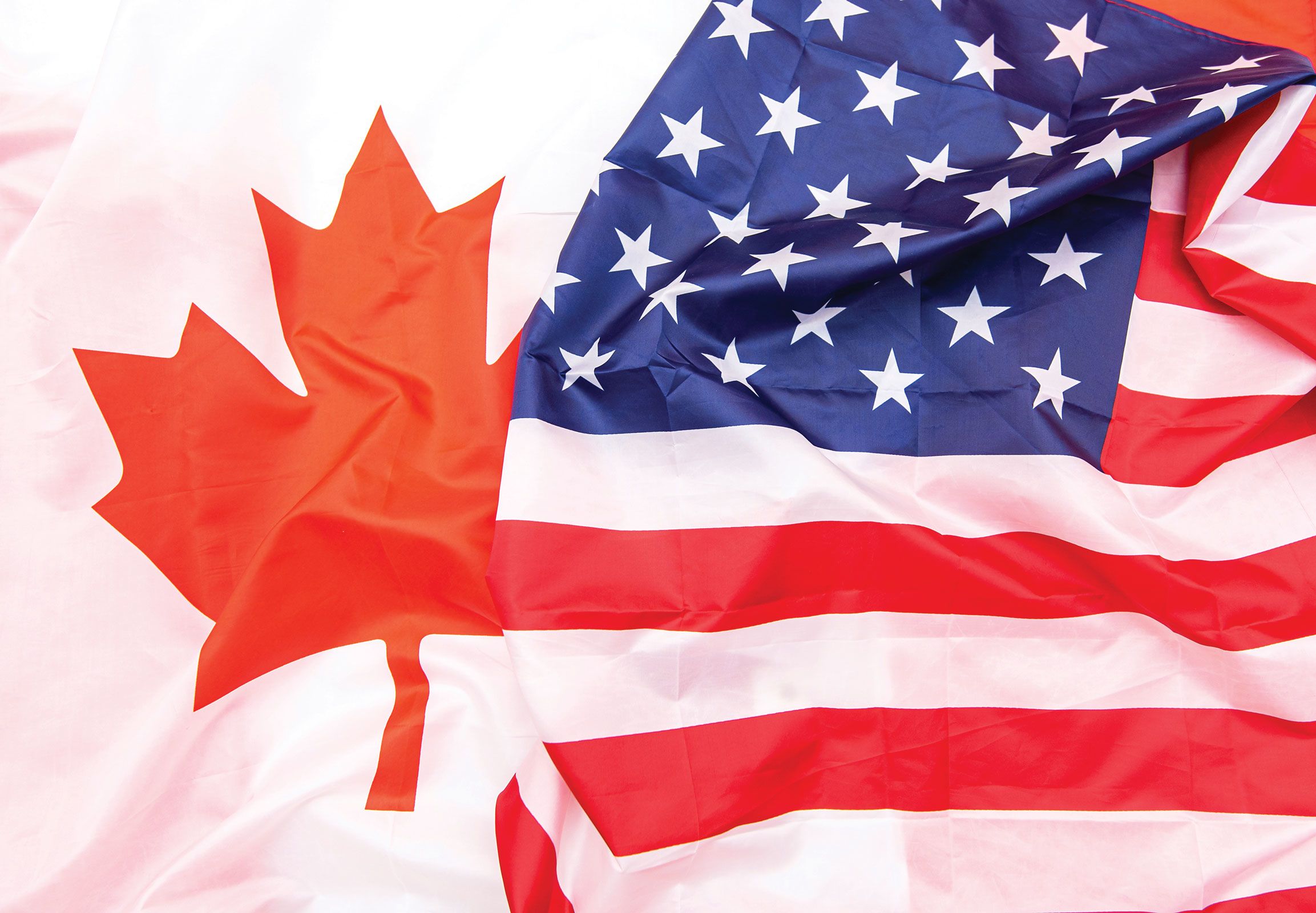
Tariffs and talk of annexation by President Trump were factors in a deep drop in Canadian visitors to the U.S. (Photo by Savvapanf Photo/Shutterstock)
Tariffs and talk of annexation by President Trump were factors in a deep drop in Canadian visitors to the U.S. (Photo by Savvapanf Photo/Shutterstock)
Canadians are the main driver of inbound travel’s projected drop of 6.3% this year, to 68 million visitors. It’s the first decline since 2020, and according to the U.S. Travel Association it makes the U.S. the only nation in the world seeing a reduction in travel in 2025.
Words and tariffs weren’t the only reason. Stories of travelers being detained for days; green card holders fearing deportation; legal visitors having their phones and laptops searched all played a role.
The result is something Freeman had never seen before. “Justified or not … there is fear about coming to the United States,” he said.
Epic Universe

In May, for the first time this millennium, Orlando saw the opening of a major theme park: Epic Universe.
It was also the most expensive park ever built and, according to Universal, the most technologically advanced to date.


For the first time in this millennium, Orlando saw the opening of a major theme park in May: Epic Universe. (Photo by Jamie Biesiada)
For the first time in this millennium, Orlando saw the opening of a major theme park in May: Epic Universe. (Photo by Jamie Biesiada)
Universal positioned Epic and its five themed worlds as its graduation to a weeklong vacation destination, a market where Disney has long held the edge and to which Universal had long aspired. Early returns indicated Epic was just the ticket for Universal; it credited the park for driving a 19% increase in revenue for parent company Comcast’s theme parks the quarter it opened.
All about AI

If 2024 was the year AI made inroads, in 2025 it got in the driver’s seat.
The travel industry rapidly adopted AI, particularly generative AI, to help market, automate, personalize and gain efficiency.
Travel Weekly’s Travel Industry Survey found that 59% of respondents used AI platforms and tools this year, up from 41% in 2024. Creating marketing material and website content were its main uses.

Nearly 60% of respondents to the 2025 Travel Industry Survey from Travel Weekly said they have used AI platforms or tools, a significant jump from last year's survey. (Photo by Net Vector/Shutterstock)
Nearly 60% of respondents to the 2025 Travel Industry Survey from Travel Weekly said they have used AI platforms or tools, a significant jump from last year's survey. (Photo by Net Vector/Shutterstock)
As much promise as AI has, the industry also wrestled with its limits — bad information — and the implications of agentic AI, which can actually book travel for people and is being rolled out by industry giants like Google. Phocuswright reported that 32% of respondents to a survey would let an AI assistant book their flights or hotels. But agentic AI also has uses for agencies: Sabre rolled it out this year to help advisors connect to its systems. And despite its rapid adoption, industry experts have repeatedly said that there is one thing that AI lacks and advisors can flex: personal touch and insider access.
The travel industry is rapidly adopting AI. Travel Weekly's Travel Industry Survey found that 59% of respondents used it this year, a significant increase from 2024 survey results.
Air Traffic Control

Air Traffic Control (ATC) was in the news this year, for all the wrong reasons.
In January, a midair collision of an American Eagle regional jet and an army helicopter near Washington Reagan National Airport killed 67 people. The disaster prompted Trump to call the nation’s ATC system obsolete. In March, DOT secretary Sean Duffy promised to build a brand new, “gold-plated” one.

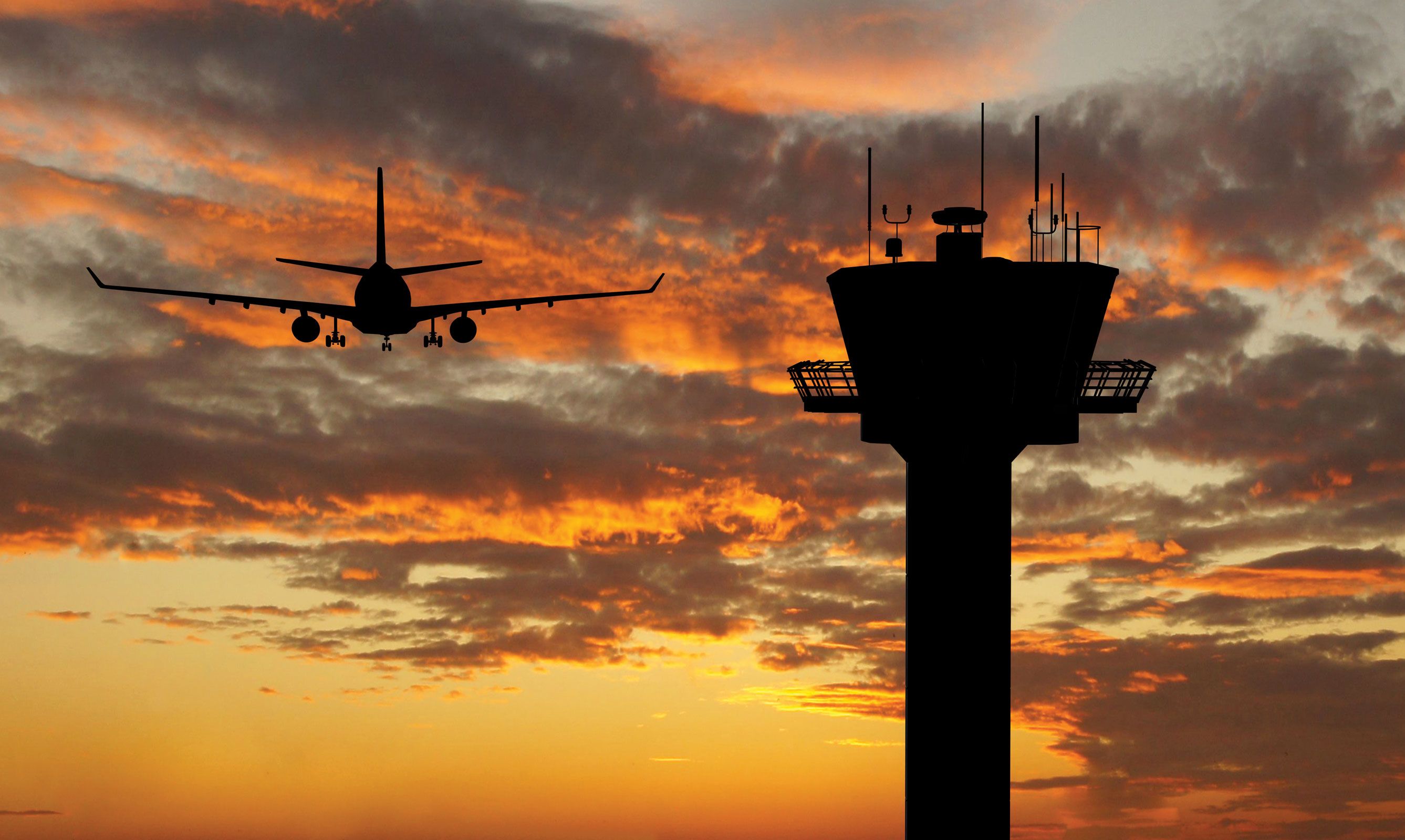
Air traffic control issues were in the news in the first half of the year, but DOT secretary Sean Duffy promised a new, “gold-plated” system is coming. (Photo by ersin ergin/Shutterstock)
Air traffic control issues were in the news in the first half of the year, but DOT secretary Sean Duffy promised a new, “gold-plated” system is coming. (Photo by ersin ergin/Shutterstock)
The news was lauded by stakeholders who have long said ATC technology was aging and outdated. Its fragility was tested yet again in April when the ATC facility managing Newark Airport lost radar and radio communications with aircraft for 90 seconds. The incident so rattled controllers on that shift that several took short-term trauma leave. The FAA reduced flights into the airport, one of the nation’s busiest.
The travel industry cheered again in July, when the 2026 budget and policy bill included $12.5 billion for an ATC overhaul. Despite being less than the price tag for the gold-plated version, the Modern Skies Coalition, a group of stakeholders formed for the purpose of supporting an ATC overhaul, called it “a meaningful first step.”
Cruise goes big on land

Over the years, cruise line arms races have mostly been over ship size, onboard thrills and far-out amenities. This year, one-upmanship extended to private ports.

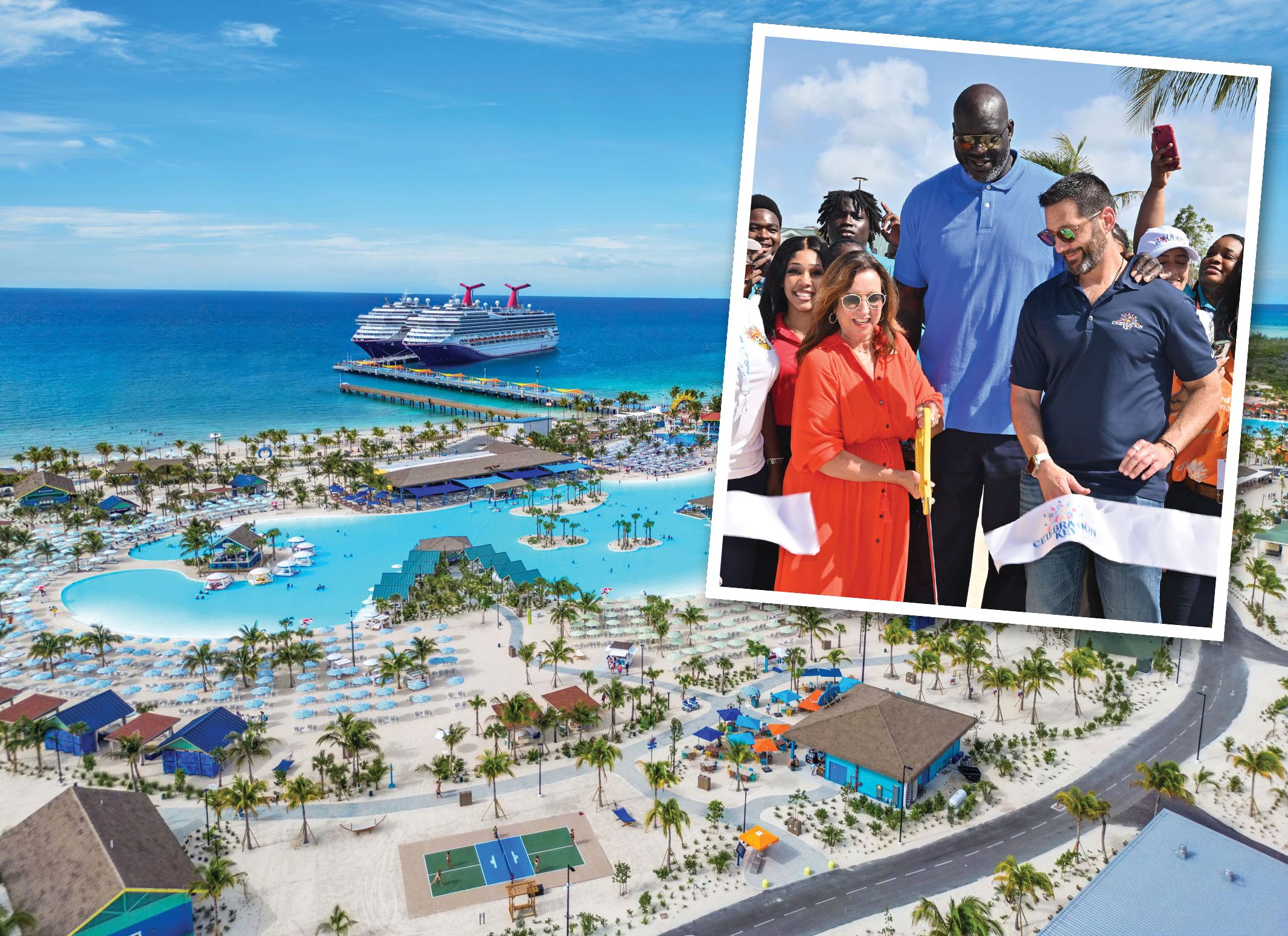
Celebration Key opened this year in the Bahamas. Carnival Cruise Line president Christine Duffy was on hand to cut the ribbon on opening day as Carnival Corp. CEO Josh Weinstein and brand ambassador Shaquille O'Neal looked on. (Courtesy of Carnival Cruise Line)
Celebration Key opened this year in the Bahamas. Carnival Cruise Line president Christine Duffy was on hand to cut the ribbon on opening day as Carnival Corp. CEO Josh Weinstein and brand ambassador Shaquille O'Neal looked on. (Courtesy of Carnival Cruise Line)
When Royal Caribbean Group said in October that it would open a Royal Beach Club in Santorini, Greece, in 2026, it became one of eight private destinations the company plans to open by 2028, including its first Royal Beach Club, which opened this month in the Bahamas, and a second one opening in Cozumel, Mexico, next year. A second Perfect Day will open in Costa Maya, Mexico, in 2027, with the world’s longest lazy river and more than 30 waterslides.

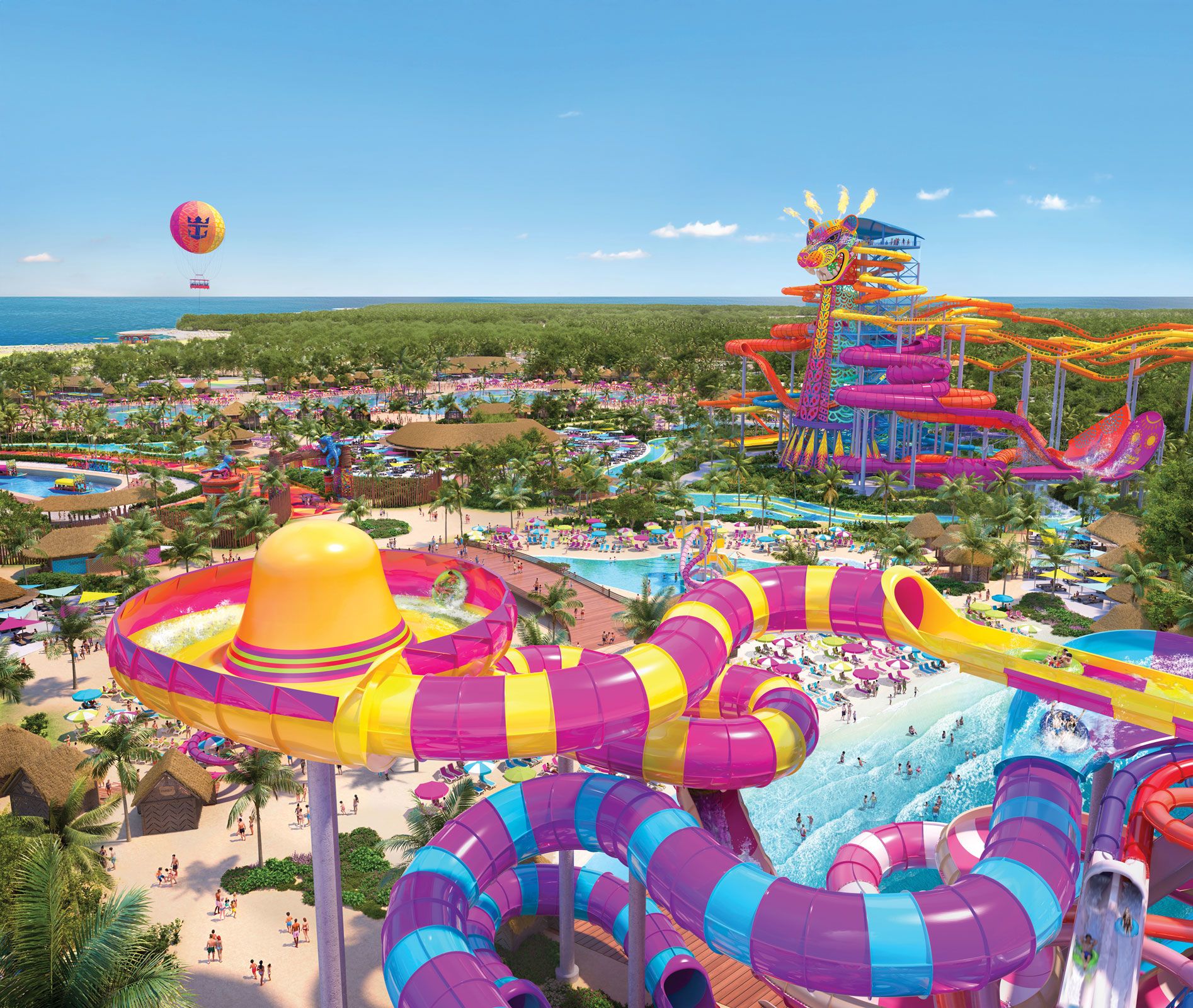
A rendering of Royal Caribbean's Perfect Day Mexico, which will open in 2027 with the world's longest lazy river and 30 waterslides. (Courtesy of Royal Caribbean)
A rendering of Royal Caribbean's Perfect Day Mexico, which will open in 2027 with the world's longest lazy river and 30 waterslides. (Courtesy of Royal Caribbean)
Royal is ahead on the private destination front, but other lines are catching up. Carnival Cruise Line spent $600 million on its new Bahamian destination, Celebration Key, which opened in July, the same month that Norwegian Cruise Line said it would add a $150 million, 6-acre waterpark to Great Stirrup Cay in 2026. Just this month, Carnival Corp. revealed plans for a $26 million destination in Ensenada, Mexico.
Various factors are pushing the investments, like going after land-based vacationers and revenue from on-island rides, drinks and cabanas. And as cruise ports from Barcelona to Juneau express cruiser weariness, private destinations not only welcome cruisers but are among the highest-rated ports of call.
New river lines

In January, Celebrity Cruises said it would launch a river cruise brand in 2027. By May, three other names — Lindblad Expeditions, Trafalgar and Waldorf Astoria — had also entered the field.
Celebrity, the giant among the entrants with Royal Caribbean Group muscle, ordered 10 180-passenger ships out of the gate. It also hinted its luxe sister brand, Silversea, might join the river fray.

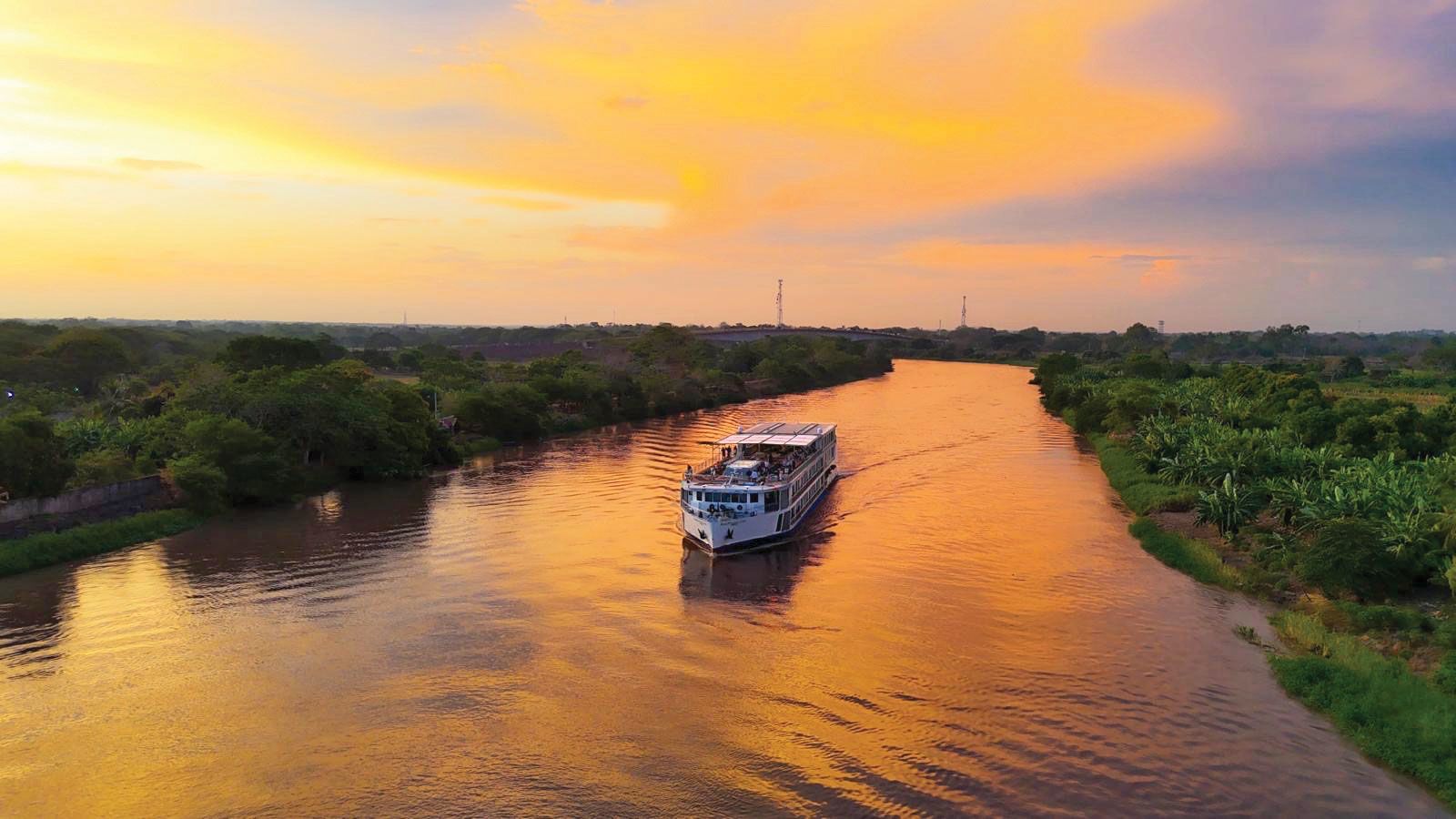
AmaWaterways launched the AmaMagdalena on the Magdalena River in Colombia on April 12, bringing river cruising back to the country for the first time in decades. (Courtesy of AmaWaterways)
AmaWaterways launched the AmaMagdalena on the Magdalena River in Colombia on April 12, bringing river cruising back to the country for the first time in decades. (Courtesy of AmaWaterways)

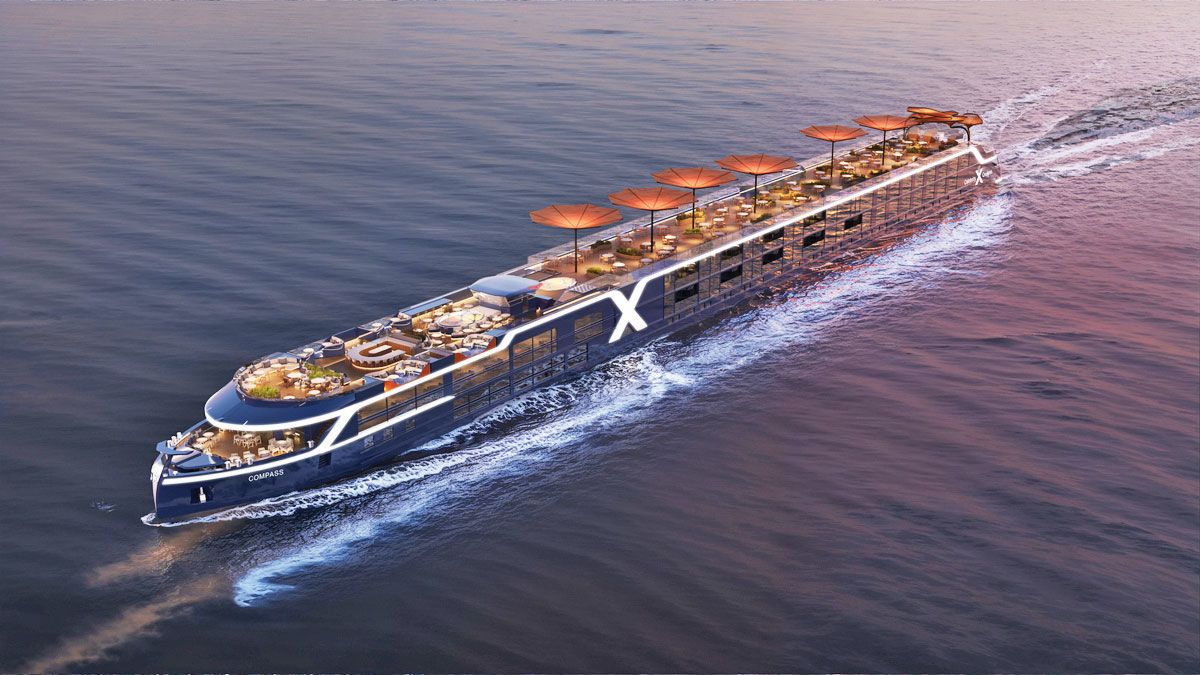
Celebrity River Cruises will sail its first itineraries in 2027 on the Celebrity Compass, pictured, and Celebrity Seeker. (Courtesy of Celebrity River Cruises)
Celebrity River Cruises will sail its first itineraries in 2027 on the Celebrity Compass, pictured, and Celebrity Seeker. (Courtesy of Celebrity River Cruises)
Unabated enthusiasm for river cruising reached a fever pitch this year, and with good reason: The market has grown at an annual rate of 10% to 15% in the last decade, CLIA said.
Advisors have wondered where all the new vessels will sail. Passengers are already crossing decks in popular ports where river ships are tied together, and distaste in some European cities for ocean cruises has spread to the rivers: Amsterdam voted to reduce river cruise calls starting in 2026.
One answer? New rivers. AmaWaterways launched Colombia sailings on the Magdalena River this year. Viking said it would expand to the Brahmaputra River in India in 2027. Even less-tapped European waterways saw in
Celebrity said it plans to launch a river cruise product, and three other big names in travel — Lindblad Expeditions, Trafalgar and Waldorf Astoria — will enter the field, as well.
M&A


From smaller agencies to the top of the Power List, 2025 saw a wave of travel agency consolidation.
The biggest news was when the DOJ dropped its lawsuit against American Express Global Business Travel’s $540 million acquisition of CWT, clearing the path for the September marriage of two of the country’s largest travel management companies: Amex GBT, No. 3 on Travel Weekly’s Power List, had 2024 sales of $30.48 billion, while CWT, No. 6, had sales of $15.2 billion.
Another Power List tie-up was made in September, when No. 13 Direct Travel acquired No. 18, U.K.-based ATPI. Combined, they will boast more than $6 billion in annual sales.
Smaller acquisitions also contributed to a more consolidated agency landscape. In January, Canadian company Trevello acquired fellow Virtuoso member and North Carolina-based host agency Gifted Travel Network. And most recently, KHM Travel Group, which turned 20 this year and projects annual sales of $430 million, acquired fellow host agency Levarte Travel in October.
The new Southwest

This was the year that Southwest Airlines started to look like, well, just another airline.
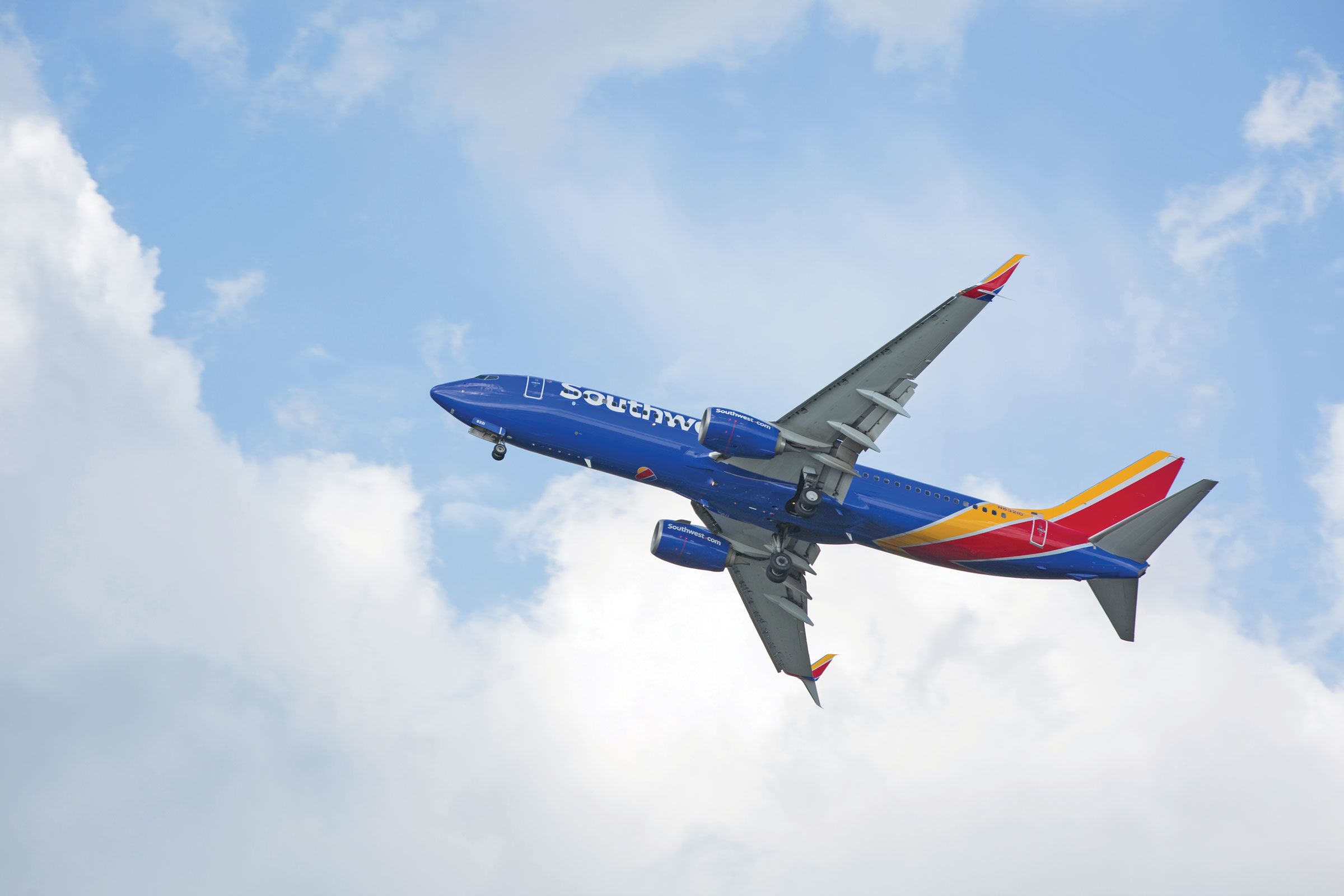
Southwest upended its business model in 2025, charging bag fees, booking assigned seats and offering extra-legroom seats for sale. (Courtesy of Southwest Airlines)
Southwest upended its business model in 2025, charging bag fees, booking assigned seats and offering extra-legroom seats for sale. (Courtesy of Southwest Airlines)
Southwest upended its business model in 2025, charging bag fees, booking assigned seats and offering extra-legroom seats for sale. These industry standards represented a seismic shift for the carrier, long known for its egalitarian cabin, open seating and free checked bags. And more changes are coming, said CEO Bob Jordan, possibly including lounges, long-haul international flights and premium seats. Reception has been mixed, but Jordan is gung-ho. “We’re right on track with our expectations,” he said.
Jamie Biesiada, Brinley Hineman, Christina Jelski, Robert Silk and Teri West contributed to this report.