MONTEGO BAY, Jamaica -- As Hurricane Melissa bore down on this tourist town the morning of Oct. 28, Andres B. Cope was worried but hopeful.
The S Hotel, where Cope serves as hotel manager, had a hurricane plan, and preparations were set. The windows were shuttered, the guests dispatched to their rooms. But the storm had lingered offshore for days gathering strength, and it was expected to make landfall with winds in excess of 155 mph.
Five weeks later, visitors have to look hard to find evidence that Melissa ever struck the waterfront property. About the only sign is poolside, where a clutch of tall palm trees lost most of their fronds and are busy pushing out new ones.
While not all of Jamaica came through the storm with such pristine results, a tour of the island a little more than a month after impact shows an impressive recovery underway and a tourist economy ready for the winter season.
The island's three airports are up and running, its ports are receiving cruise ships almost daily and travel advisors are arriving on the island to check out conditions on behalf of their clients.
In the key lodging sector, about 80% of Jamaica's 26,000 hotel rooms are expected to be back by the end of January, according to Donovan White, director of tourism at the Jamaica Tourism Board. "We've gotten a couple of groups that have canceled or postponed, but we're working with them," he said.
The missing inventory includes hotels and resorts that chose to remain closed for the season to expand and upgrade their accommodations, White said.
Of the major tourist centers, the hardest hit appears to be Montego Bay. About half of the 35 resorts there expect to remain closed beyond the end of this year, according to a status update of island properties on Visit Jamaica's website. In Negril, also on the west end of the island, nine of 53 resorts are closed or don't expect to reopen before 2026.
Undoubtedly, the slowest recovery is on the south coast, where the storm made landfall with full force. But even there only three of 12 hotels will be closed beyond year's end, including Sandals South Coast, which is targeting a May 30 reopening.
No hotels in Kingston or Port Antonio are closed, and only three properties in the Ocho Rios area are closed, the website says.
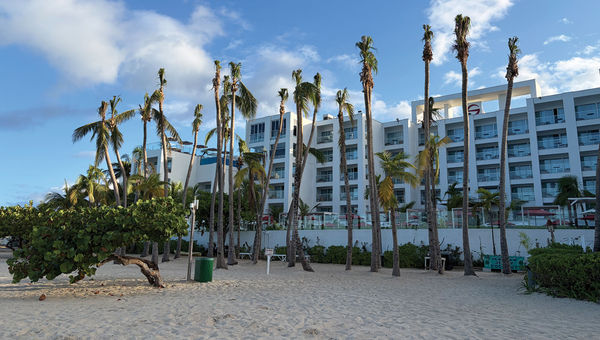
Palm trees at the S Hotel in Montego Bay lost their fronds to the storm but are now sprouting new ones. Photo Credit: Tom Stieghorst
Touring the island
A drive across Jamaica during the first week of December showed the eastern third of the island looking normal. Starting around Ocho Rios, tree and landscape damage became evident.
At the landmark Jamaica Inn, winds destroyed a giant tree that for decades had provided shade over the resort's spa building. All that's left is a stump, sawdust and some pieces of trunk yet to be hauled away.
West of Ocho Rios, on the coastal road to Montego Bay, there are still downed utility poles. Several resorts in the area said it took about three weeks for outside power to be restored. Signs are shredded, walls are crushed, corrugated roofs peeled back and blue tarps cover more than a few houses.
But in downtown Montego Bay, all traffic lights seem to be working, and there are no large piles of debris. Even the windblown trash that often lingers after a hurricane is not much in evidence.
In Negril, The Cliff Hotel is open, but there is plenty of availability at the 33-room boutique property. "We had a lot of pullback from the storm," managing director George Fisette said. "People just didn't like the uncertainty."
While he waits for guests to return, Fisette is busy preparing meals for much of the resort staff, who are still grappling with losses but showing up for work nonetheless. Jamaica's tourism sector directly employs about 200,000 workers and accounts for about 35% of the island's GDP.
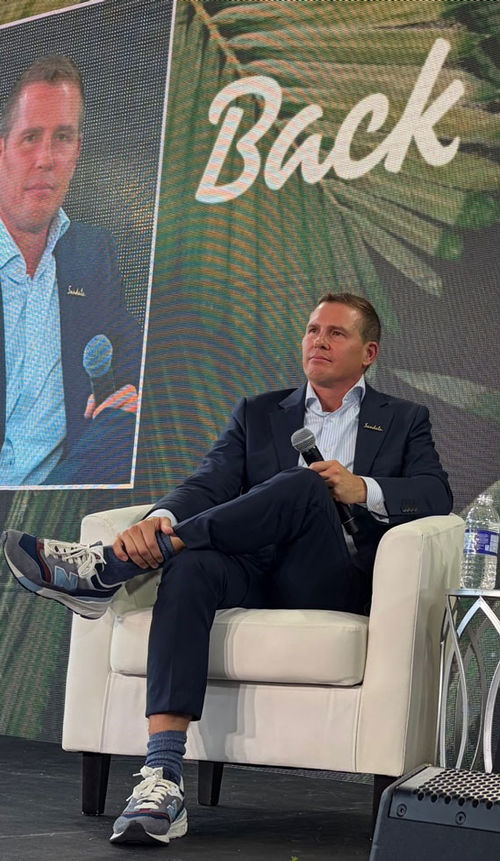
Sandals Resorts chairman Adam Stewart spoke to advisors at an event at the company's Dunns River property. Photo Credit: Tom Stieghorst
At the Sandals Dunn's River, executive chairman Adam Stewart drew a standing ovation from a group of travel agents when he told them that Sandals had covered paychecks, benefits and tips for all of its Jamaica employees since the storm. With eight properties on the island, Sandals Resorts International is Jamaica's largest resort operator.
From Dec. 3 to 6 the resort hosted 215 agents at its 260-room Dunn's River property prior to its reopening on Dec. 6.
One agent who attended, Dale Van Camp, manager of Hay Hay Vacay Travel Consultants, Wausau, Wis., said he wouldn't hesitate to recommend Jamaica to clients. "I'm going to tell them that Jamaica is ready, for the most part," he said.
Sandals' Jamaican resorts are listed on its website for as low as $174 per person, per night, while quotes for seven other Sandals Caribbean destinations are all above $300. Dunn's River rooms are listed from $235.
Other properties are also offering promotions. At the Jamaica Inn, the traditional seven-day minimum for the season has been relaxed to three days, and a 30% Black Friday deal was extended into December.
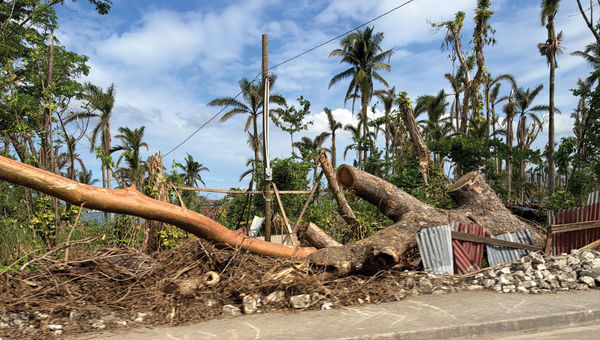
A wall was destroyed near Montego Bay when a tree fell on it during Hurricane Melissa. Photo Credit: Tom Stieghorst
The haves and have-nots
The costs of recovery pose a challenge to hoteliers, some of whom have deep-pocketed owners while others may not.
The experience of Christopher Jarrett, CEO and managing director of Altamont Hotels, illustrates the varied outcomes for one island hotel operator. Jarrett said his family's Altamont Court Hotel near the Bob Marley Museum in Kingston was hardly affected by the storm, while a sister property, Altamont West in Montego Bay, will remain closed through at least March due to the storm.
A third property in Montego Bay, Hotel 39, did not suffer core damage but lost most of its shade louvers. "We didn't see that as something that would deter us from reopening," said Jarrett, who also serves as president of the Jamaica Hotel and Tourist Association.
Motivating Jarrett to move quickly on repairs is his lack of business interruption insurance. Jarrett acknowledged that he had paid for the coverage in the past, but after several years of high premiums and no storms he decided to let it lapse.
"Now I'm wishing I had it," he said.