


When travel meets philanthropy
Travel industry nonprofits are becoming more essential as operators respond to foreign aid cuts, climate pressures and the demand for meaningful, responsible travel.

MASAI MARA, Kenya —At the recent dedication of a school library funded by Abercrombie & Kent in this popular safari destination, George Muchina, a local representative of the National Ministry of Education, stood before the students and community members who packed the schoolyard. “The issue of pulling girls out of schools to get married has got to stop,” he boldly declared. “As long as they are under 18, they are still children and should be in school.”
A few minutes later, six teenage girls stood up to chant about how “education can unlock locked doors. … Teenagers, let us say no to early marriage, early pregnancy, school dropouts.”
They were brave statements, the kind that would previously never have been spoken so publicly in the Mara because of long-standing traditions, according to A&K Travel Group advisory board chair Marett Taylor, whose grandparents and uncle, Geoffrey Kent, founded A&K and who grew up in Kenya and the U.S.
That shift in attitudes about the importance of education and gender equality is just one example of how deep the long-term impacts of travel-industry philanthropy efforts can go, bettering lives and helping people get the education and skills to improve their impoverished communities.
And while tourism-funded philanthropy is far from new, recent dramatic cuts in foreign aid, climate issues and the overtourism crunch underscore the need for such efforts to continue to grow and evolve.
“I think we’ll always be struggling,” said Paula Vlamings, chief impact officer of Tourism Cares, a nonprofit dedicated to advancing sustainability and meaningful travel within the travel and tourism industry. “Now, with the defunding of USAID [the U.S. Agency for International Development], this work is more important than ever. We all have to double down.”

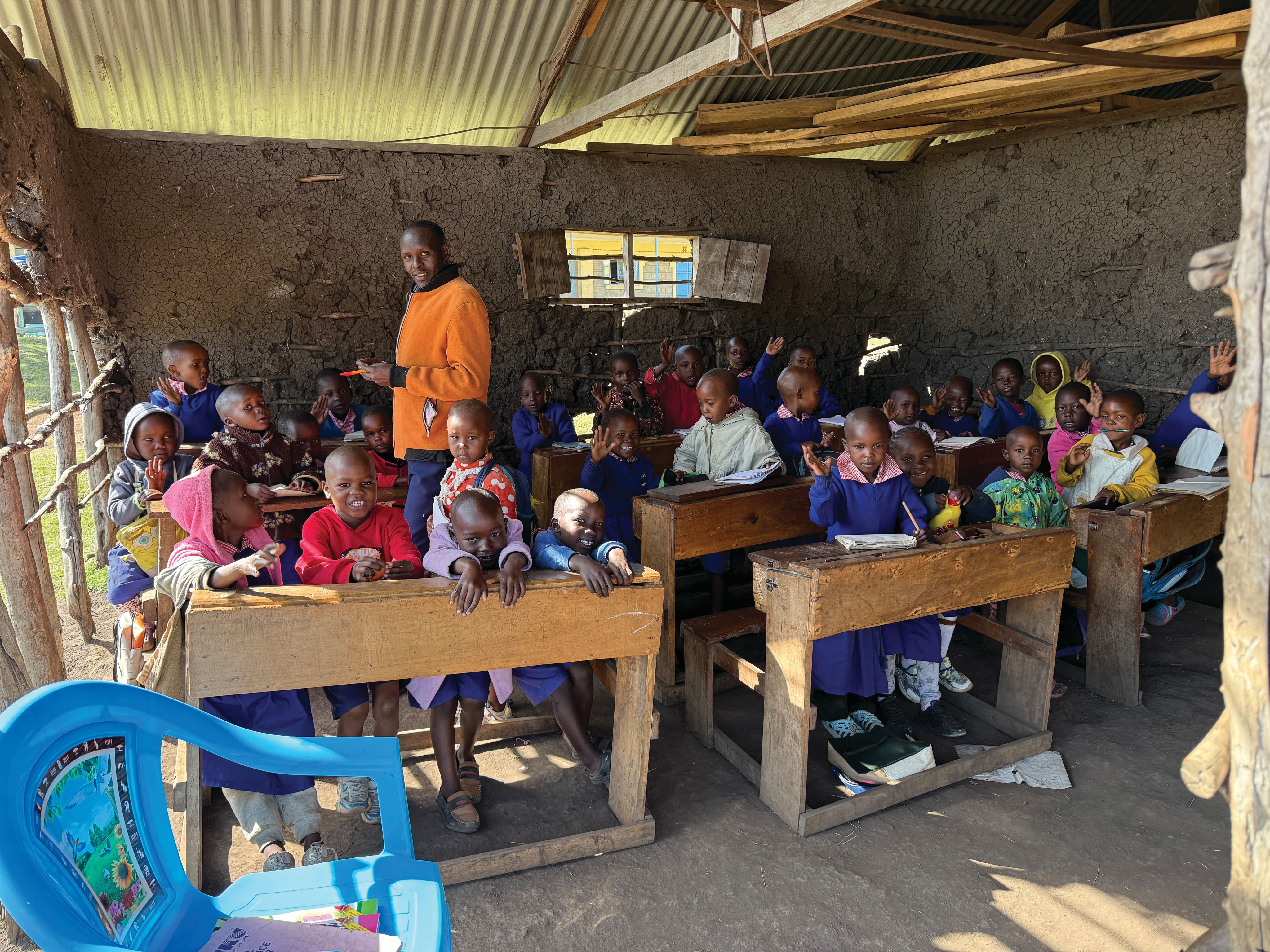
A classroom at the Partakilat school. (Photo by Jeri Clausing)
A classroom at the Partakilat school. (Photo by Jeri Clausing)

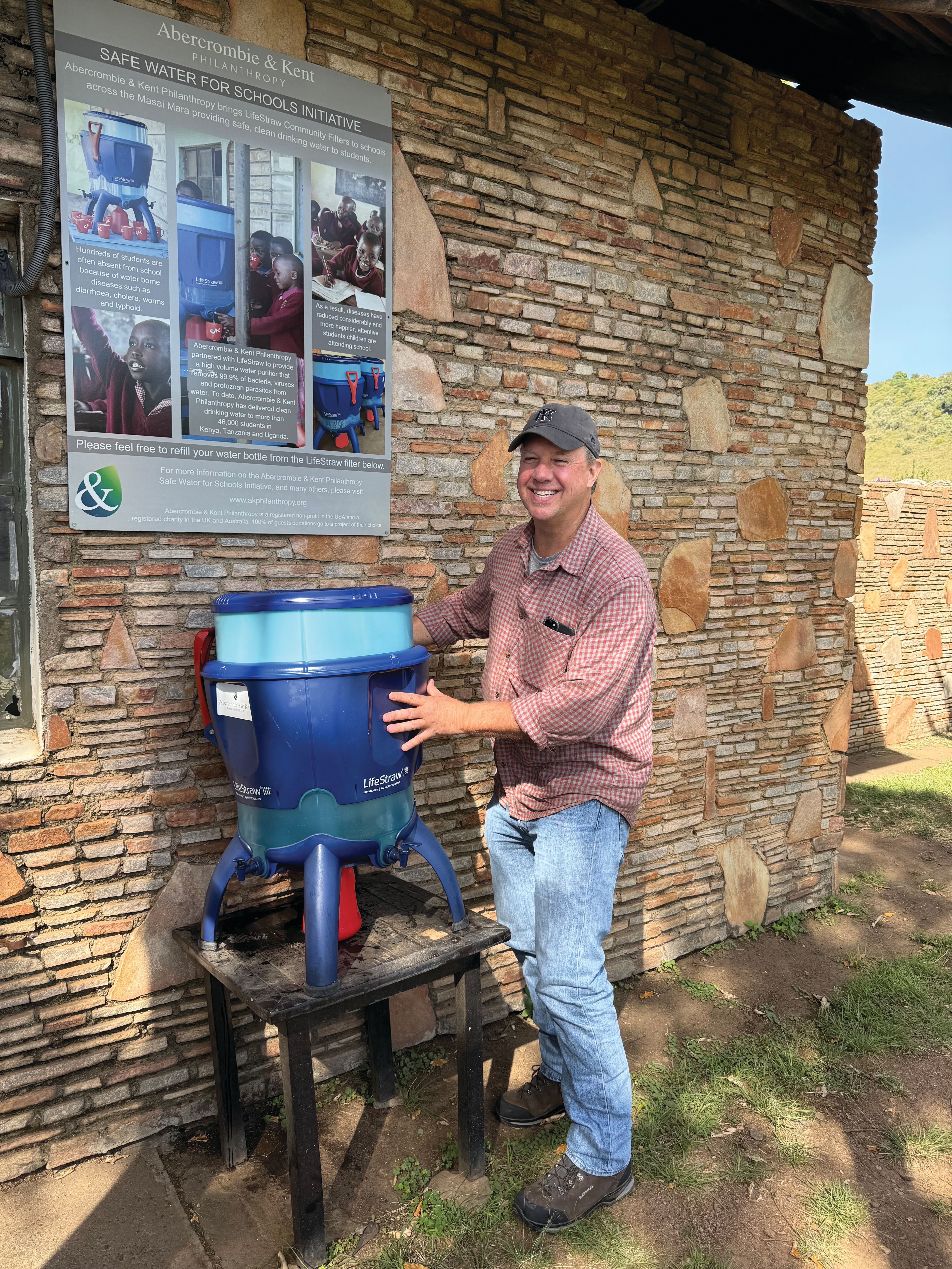
AKP executive director Keith Sproule poses with one of the water filtration units the group funded. (Photo by Jeri Clausing)
AKP executive director Keith Sproule poses with one of the water filtration units the group funded. (Photo by Jeri Clausing)

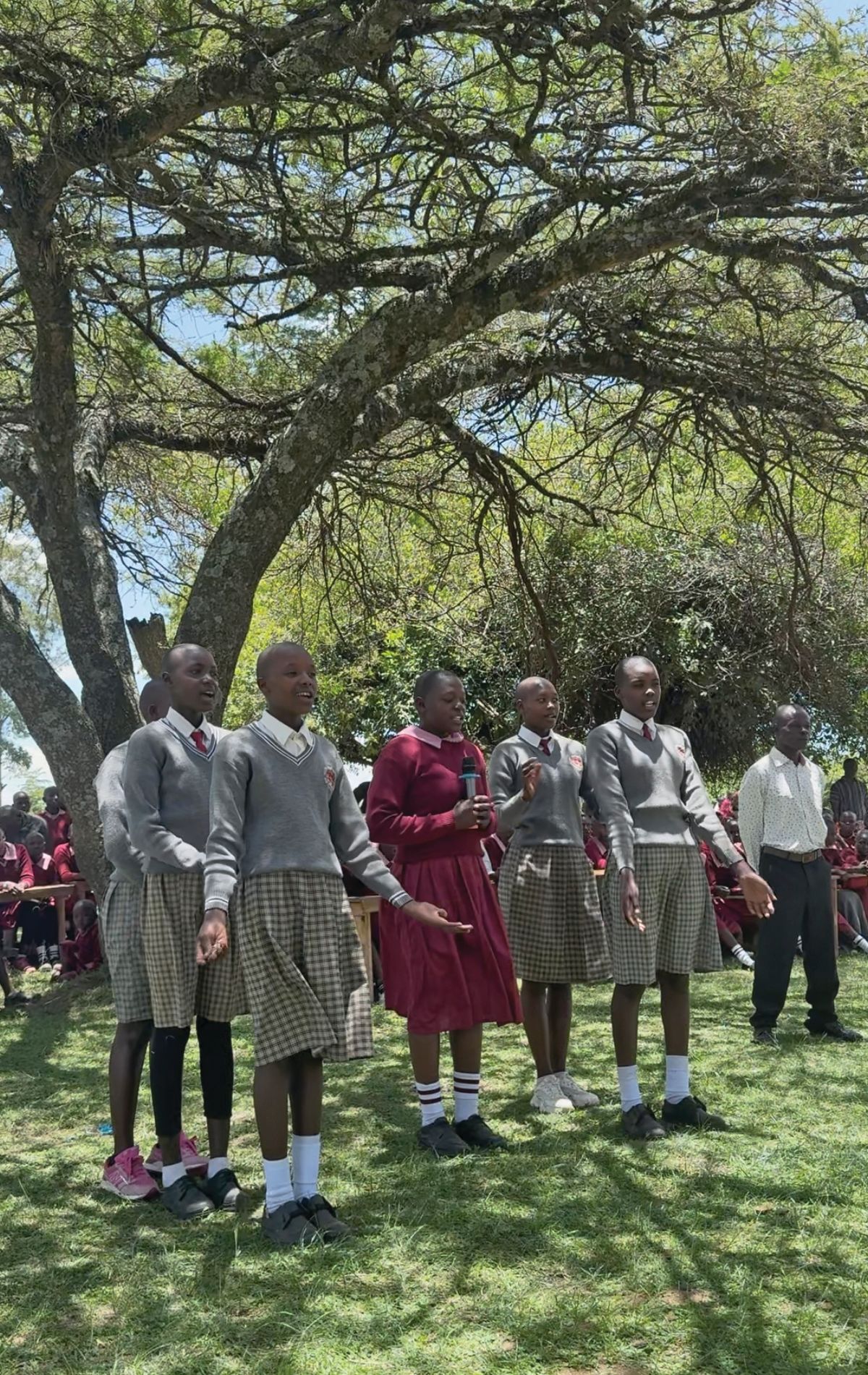
Girls chant about staying in school at a ribbon-cutting ceremony for a library at a Masai Mara school. (Photo by Jeri Clausing)
Girls chant about staying in school at a ribbon-cutting ceremony for a library at a Masai Mara school. (Photo by Jeri Clausing)

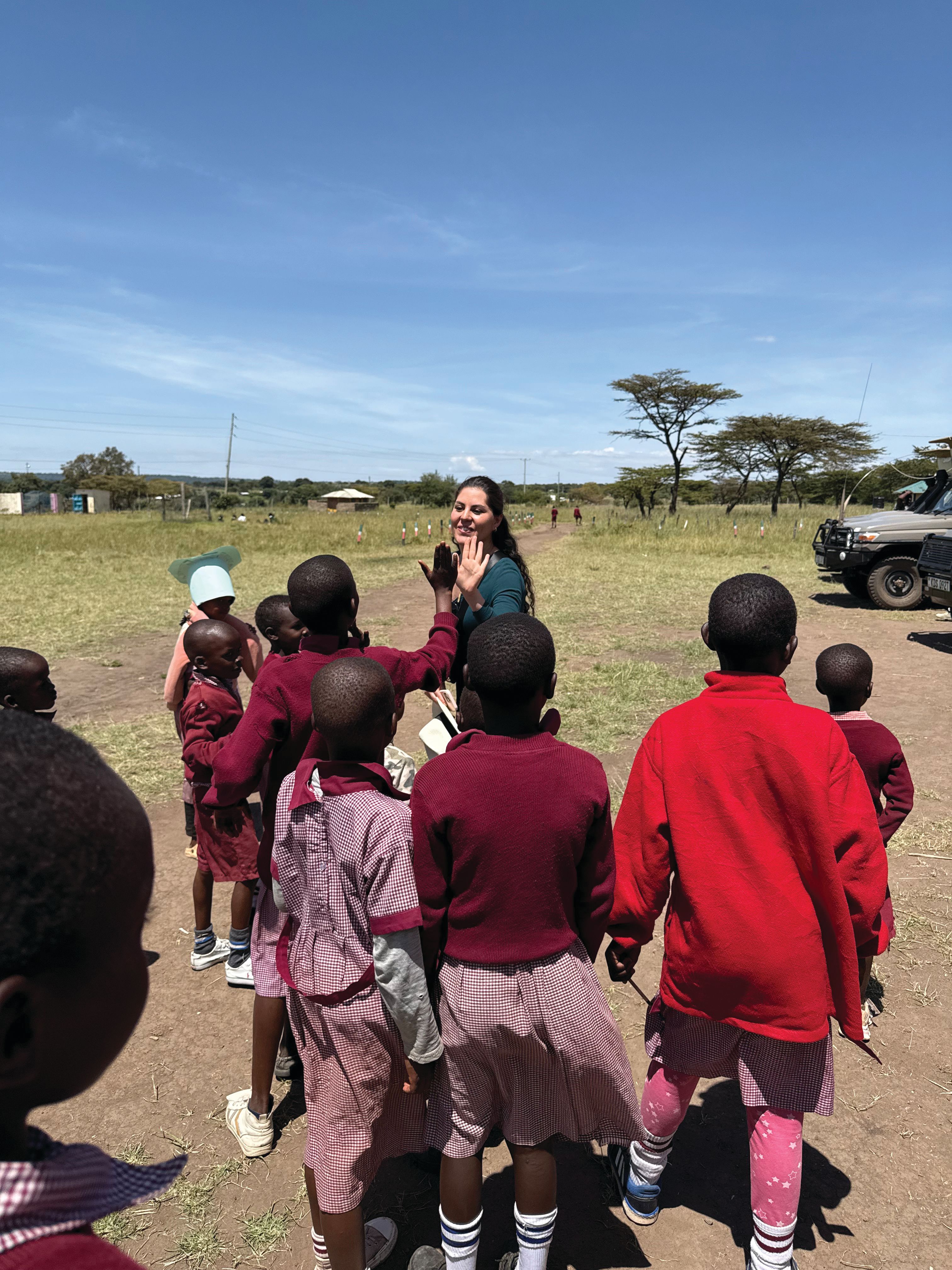
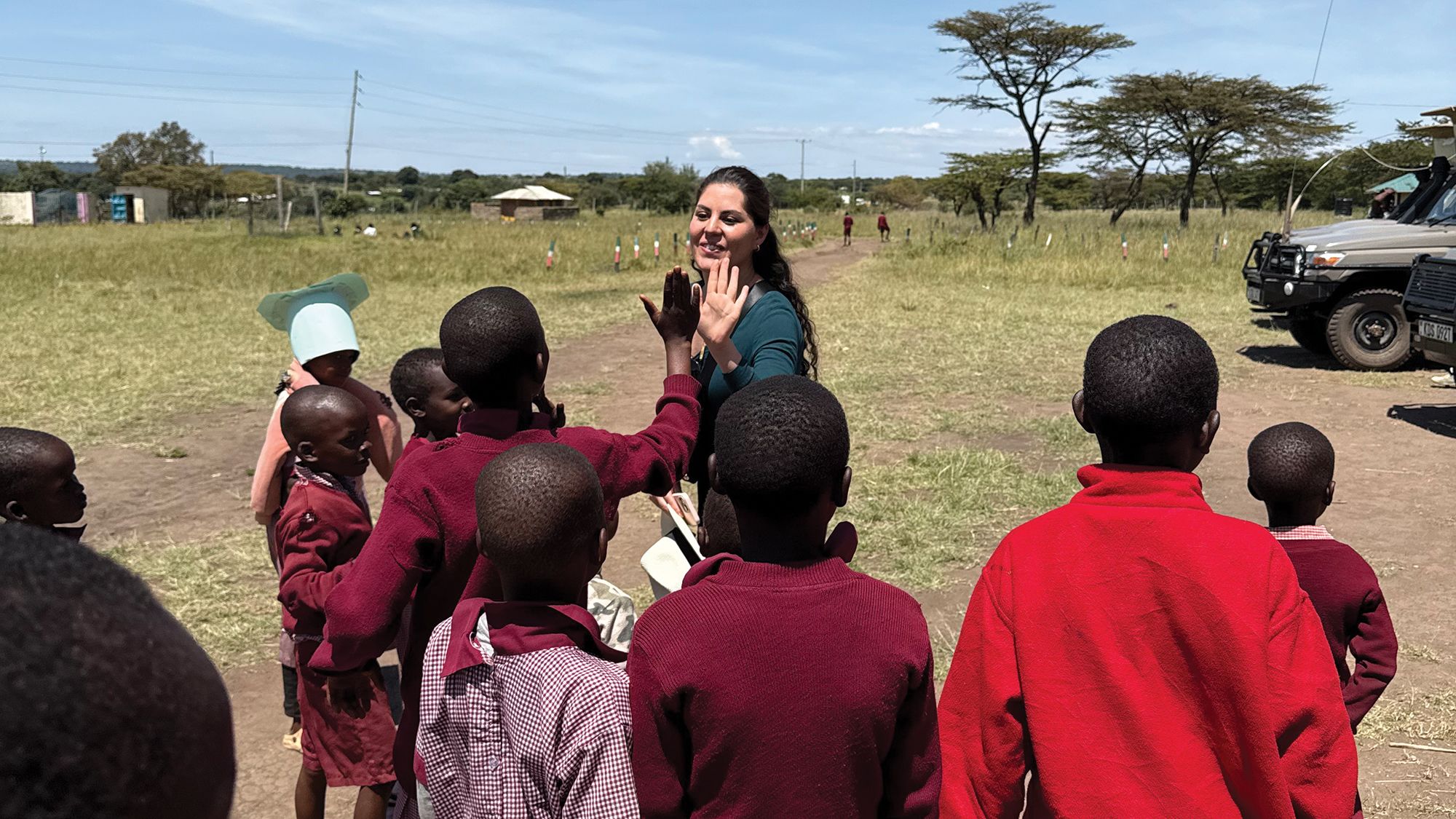
Sandra Solis, Abercrombie & Kent Philanthropy’s (AKP) coordinator in Peru, high-fives students in Kenya’s Masai Mara. (Photo by Jeri Clausing)
Sandra Solis, Abercrombie & Kent Philanthropy’s (AKP) coordinator in Peru, high-fives students in Kenya’s Masai Mara. (Photo by Jeri Clausing)
Meeting community needs
For years, tour operators, cruise lines, hotels and consortia have worked with and created nonprofit divisions and organizations to advance education, health, conservation and cultural and environmental protection. The programs are as diverse as the global travel and tourism landscape — both in who they seek to serve and how they are implemented and developed.
But even as study after study shows travelers are looking to work with companies that are socially responsible, it can be hard to gauge the breadth and impact of the varied efforts across the globe. Efforts range from simple no-plastics rules to building hospitals. They may focus on providing wells and water filters or on programs that feed schoolchildren and provide school supplies. Some focus on rebuilding reefs and reforestation, others train workers. Still others focus on protecting cultural heritage.
So when A&K offered Travel Weekly an opportunity to get an in-depth look at its decades-old A&K Philanthropy (AKP) program during a retreat for the philanthropy’s newly expanded global team, I jumped, hoping to get some insight into best practices and how the program can continue to advance.
During the retreat at A&K Sanctuary’s Olonana Lodge, I learned that A&K has doubled down in recent years on its support for AKP partnerships and programs that focus on education, health and community development. That expansion is funded by both an increase in the stipend A&K dedicates from each booking, and a doubling — to more than $2 million — of the money it receives from guest donations.
That has enabled AKP executive director Keith Sproule to grow his team of coordinators from one when he started in 2014 to 20 today.
And it was eye-opening to see the passion and commitment of that team as members updated colleagues on their projects and how they continue to evolve through ongoing community and government coordination to maximize impact.
“I think what distinguishes AKP, we benefit from having the corporate commitment to these multiyear programs,” Sproule said. “Year after year, we’re there, we’re always with them, putting skin in the game.”
That allows for what one might call “mission creep.” In the corporate world, that term often has negative connotations of projects that drift from their original goals. For AKP, it’s a measure of success that shows they’ve gained the knowledge and ability to evolve efforts to meet individual community needs.
“Often it begins with education. But then you realize, actually now they are talking about HIV, or they’re talking about needing a medical clinic, or we can expand with a social enterprise,” Sproule said,
For example, coordinator Dennis Nyambworo talked about a center AKP helped establish in Uganda for expectant mothers who live far from medical care, which gives them a place to stay while waiting to give birth. After the center opened, he said, his team quickly learned those women were getting bored and nervous waiting around to give birth. So they added programs to help them develop skills, such as making table mats and beads for chandeliers that the company used in A&K Sanctuary’s Gorilla Forest Lodge.
In Kenya, what started as a simple program to provide filtered water and meals to schools evolved into building libraries and dining halls that double as community centers.

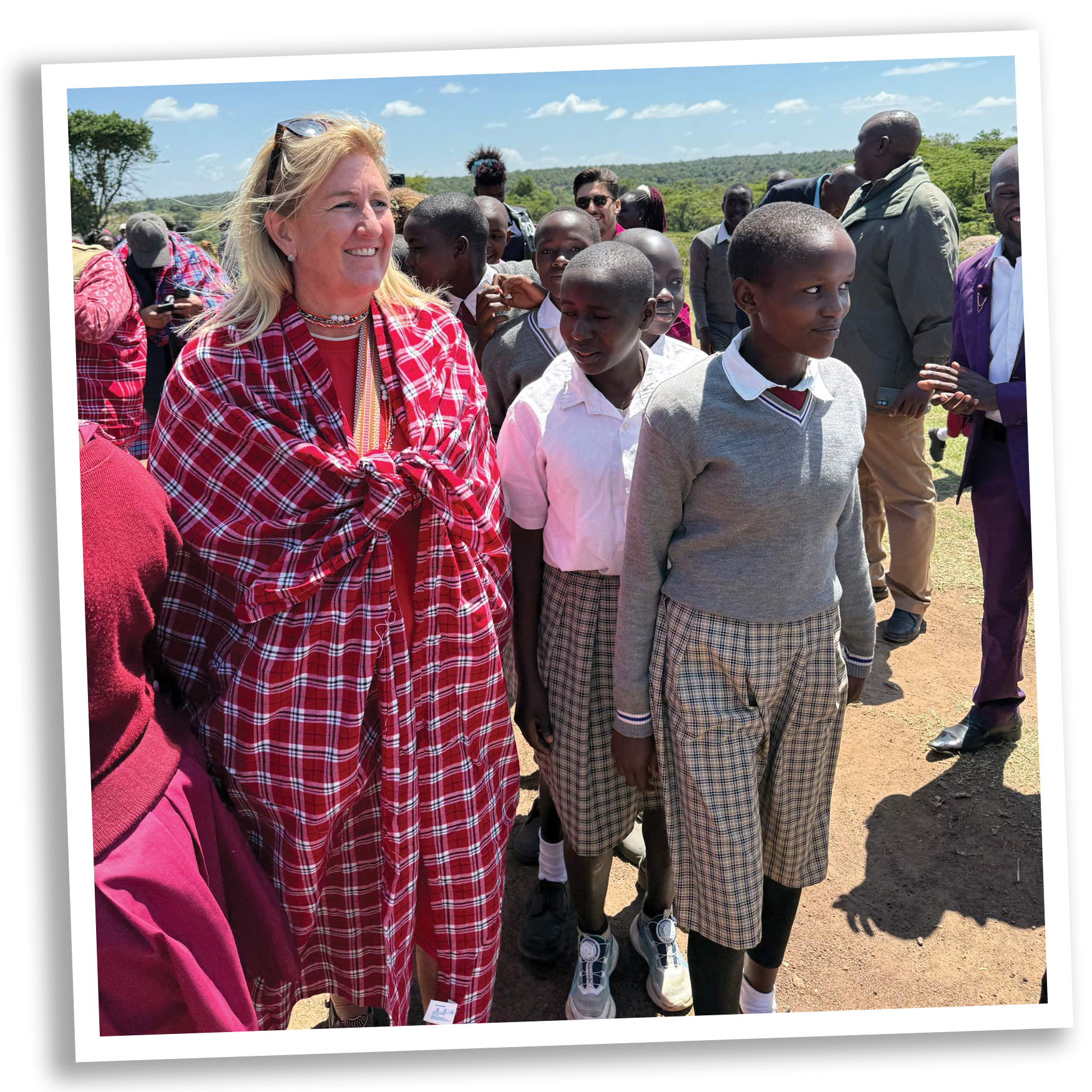
A&K Travel Group advisory board chair Marett Taylor, whose grandparents and uncle, Geoffrey Kent, founded A&K. (Photo by Jeri Clausing)
A&K Travel Group advisory board chair Marett Taylor, whose grandparents and uncle, Geoffrey Kent, founded A&K. (Photo by Jeri Clausing)
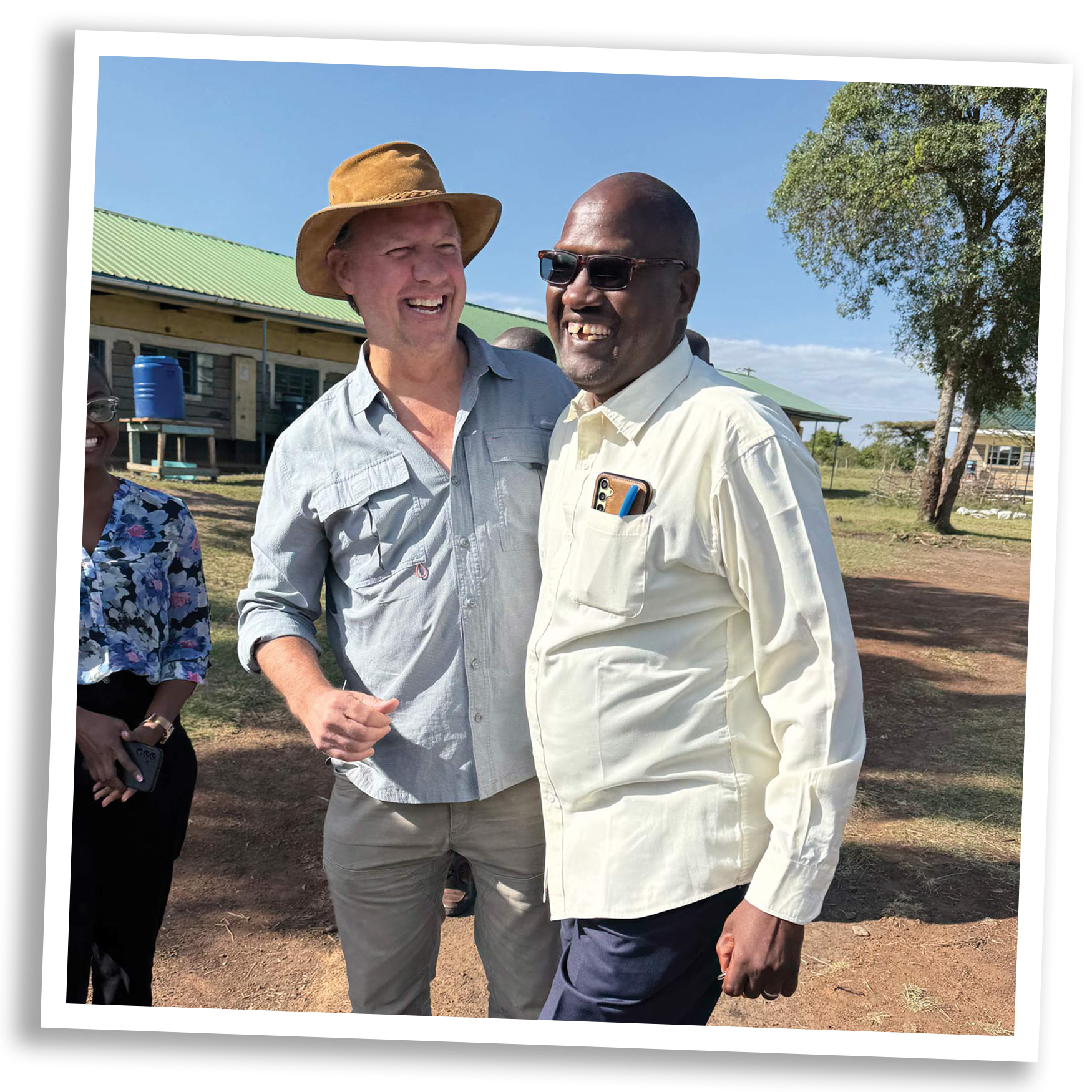
AKP’s Sproule and Partakilat head teacher Daniel Rokoi. Partakilat is one of the Masai Mara schools where A&K Travel Group’s philanthropic arm provides water filtration systems as well as builds kitchens and funds school meals. (Photo by Jeri Clausing)
AKP’s Sproule and Partakilat head teacher Daniel Rokoi. Partakilat is one of the Masai Mara schools where A&K Travel Group’s philanthropic arm provides water filtration systems as well as builds kitchens and funds school meals. (Photo by Jeri Clausing)
Other travel industry efforts
As one of the world’s largest tour operators, A&K has an expansive portfolio of philanthropic projects around the globe. But it is far from alone in its philanthropic efforts.
G Adventures’ nonprofit, Planeterra, and The Travel Corporation’s TreadRight Foundation, for example, focus more on helping communities preserve their cultures and crafts while also developing those skills into businesses that benefit from tourism. Intrepid’s foundation also has a strong focus on climate-friendly travel and community-based tours and experiences led by locals.
Micato Safaris, which promises that every safari sold sends a kid to school, has for 20 years through its AmericaShare nonprofit operated a school in the slums of Nairobi that Lorna Macleod, executive director, said has grown into an oasis of sorts for the whole community, with a library, computer labs and park area.
It also runs a program that distributes reusable menstrual pads through a separate entity, the Huru Foundation, that works with the U.N. and received funding from USAID. Since the USAID funding cuts, Macleod said private support has continued, enabling her to focus on getting those kits to northern Kenya’s Dadaab refugee camp, one of the largest in the world, where 95% of the population are Somali refugees.
Macleod just returned from Kenya in late October, spending months dealing with bureaucracy in order to distribute the kits to the camp.
“One of the things we knew that would fall off the list immediately is how girls would manage periods,” she said. “Because they were worried about food and medicine.”
Many tour operators, including A&K, Micato and G Adventures, The Travel Corporation and Intrepid, incorporates site visits into their tours so guests can see some of their projects in action. Micato just recorded its millionth visitor to its school in Nairobi. That can have a big impact in driving guest donations.
Others keep it private, some for fear that customers will think they are paying more for their vacation to subsidize the projects, said Alex Sharpe, CEO of Signature Travel Network, which operates the Travel Elevates nonprofit focused on education and businesses that empower women.
For instance, he said, a major river cruise line built a school in Cambodia, but its owners were deeply divided over whether to advertise it to guests or create any experiences around it.
But if done right, he said, guests love the experience and often become lifelong customers who also tell their friends about it.
“It’s like we are scared to talk about the commercial side of this, but it just makes sense — and it’s the right thing to do,” Sharpe said.

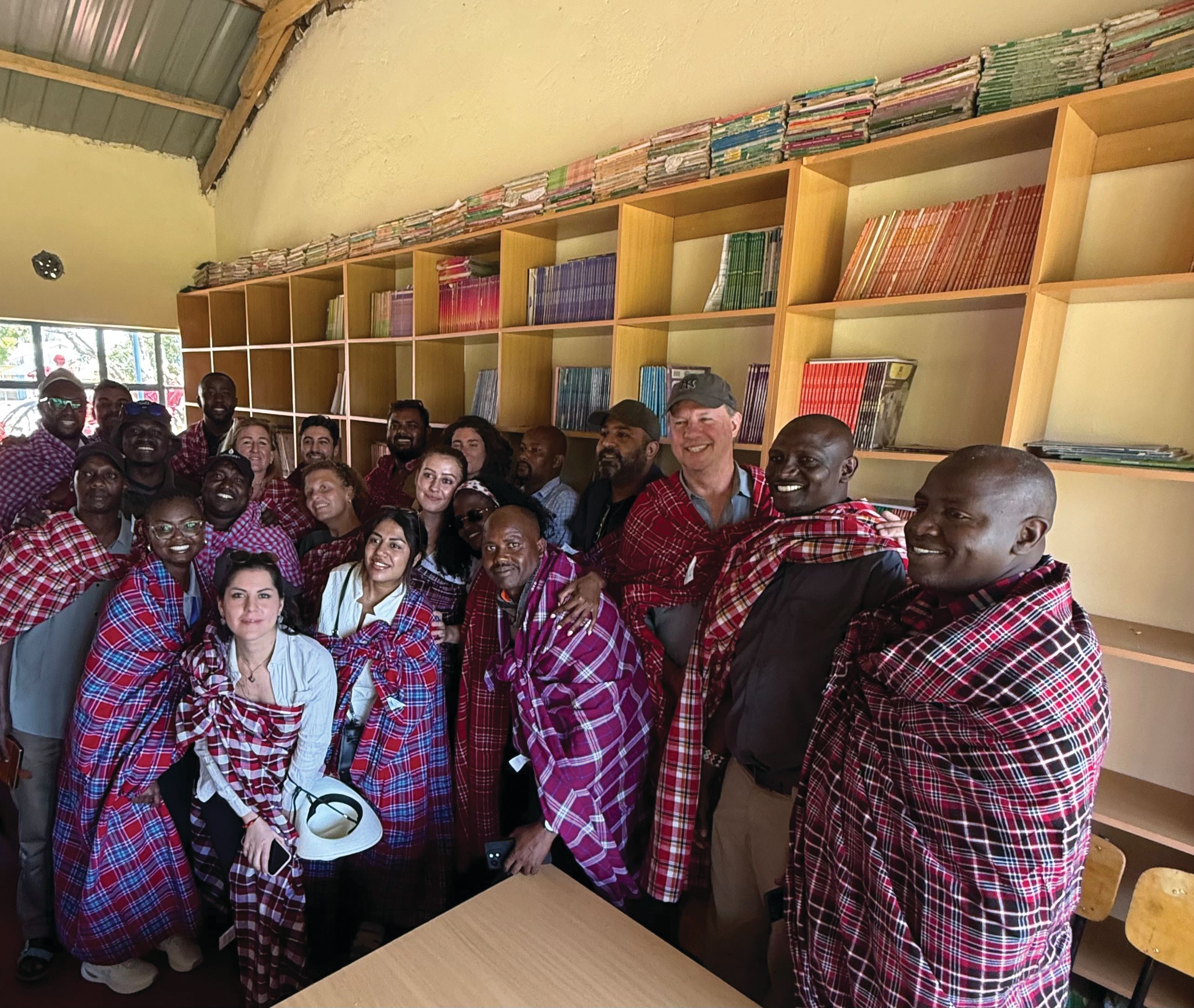
Abercrombie & Kent’s philanthropy team at the dedication of a school library the group built in the Masai Mara. (Photo by Jeri Clausing)
Abercrombie & Kent’s philanthropy team at the dedication of a school library the group built in the Masai Mara. (Photo by Jeri Clausing)
Moving forward
While support for these programs continues to grow, “the need for us to be in this work is more important with climate change, USAID cuts, all of these things,” Vlamings said. She noted that some of the world’s most vulnerable communities are also some of those most impacted by weather changes.
“There is so much pressure on the industry now with so many people traveling, which is speeding up the pressure on the natural environment,” she said. “Everyone in this industry needs to have sustainability embedded in their business model for any of us to thrive.”
Macleod, Sproule, Sharpe and Vlamings all agreed that collaboration, while still rare among competitors, is key to helping communities meet the growing challenges of — and to benefit from — increased tourism.
“I think for the right projects, bringing people together is critical,” Sharpe said. “I also think it’s great to bring people together to just to learn from each other’s best practices.”
Signature’s Travel Elevates, for instance, partnered with AKP to build a school in Cambodia.
And in the Masai Mara — in what may be a first — Sproule and Sharpe are working with other camps near A&K Sanctuary’s Olonana Lodge to build a much-needed secondary school.
“Wilderness Safaris, Angama Mara, AndBeyond, Mara West and A&K, we have all agreed to make this mission happen,” Sproule said. “Incredibly, fortunately, Signature has been party to the discussions and has expressed readiness to support. This will be the year to elevate secondary school for an entire region of one of the most spectacular protected areas in Africa.”
‘We’ll always be struggling. With the defunding of USAID, this work is more important than ever. We all have to double down.’
Sharpe said partnerships with AKP are good for Signature’s foundation because he knows there will be local oversight.
“I don’t have the resources to check in on the building of a school,” Sharpe said. “But they’ve got people there. That’s why it’s such a great story.”
Sproule said that while “institutional ego” has been a barrier to such collaborative efforts among competitors, “we had that conversation early on in the context of this effort in the Mara, like let’s just celebrate the destination. We have the upside of enhancing the destination profile and the upside of being able to represent what the industry is capable of.
“And you can bet the Kenya Tourism Board will amplify our message that … the rising sea lifts all ships. That’s us if we can really pull this off.”
Private partnerships, Sproule said, are key to the future of tourism’s philanthropic efforts, both in response to challenges like the USAID cuts and tensions created by overtourism.
“To the extent that host communities feel a sense of benefit, that’s a win,” he said. “You want people to stop protesting or to actually smile when they see that they are getting something in return.”
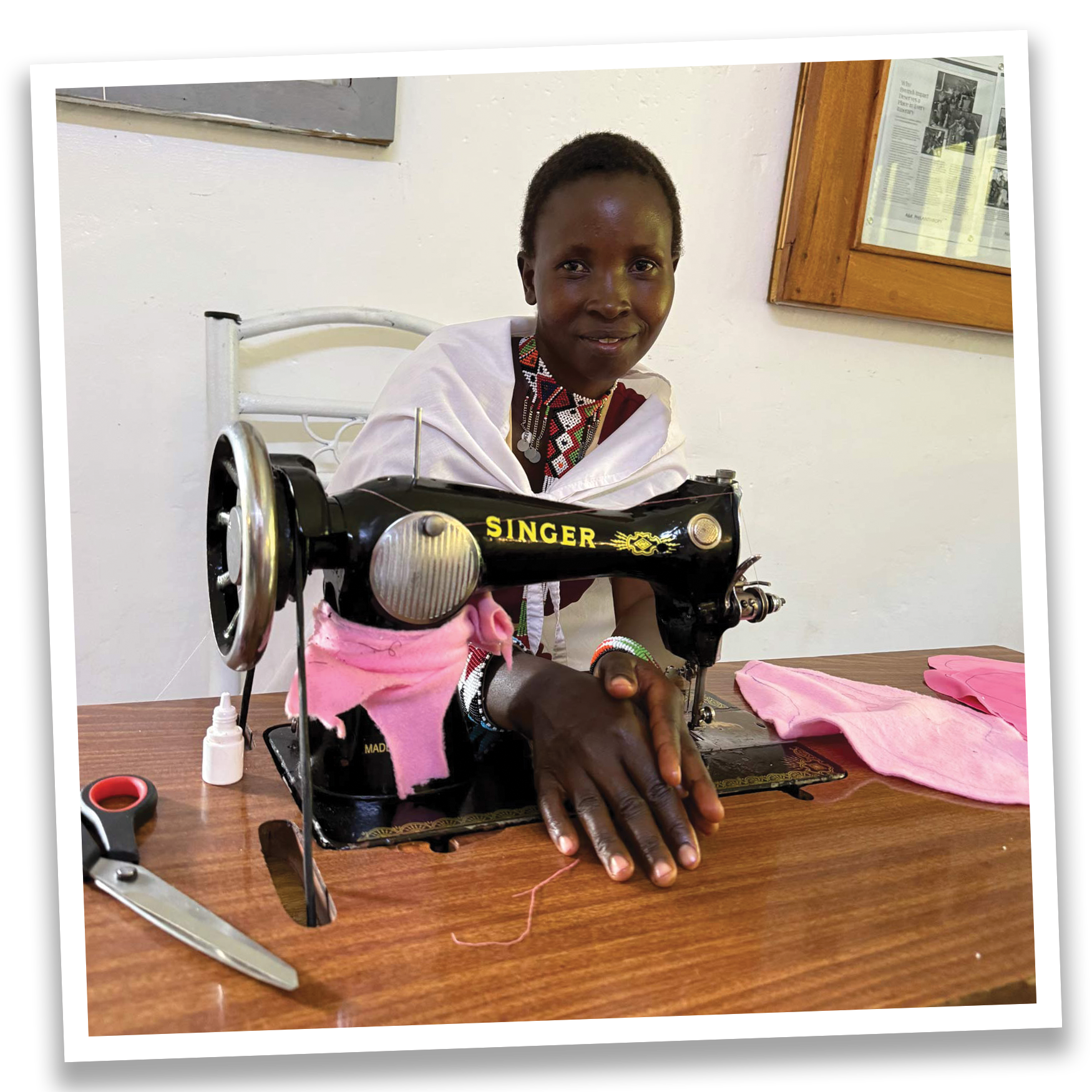
Women make reusable menstrual pads in Kenya’s Masai Mara through a program that Abercrombie & Kent Philanthropy runs through the Huru Foundation, which works with the U.N. and received funding from USAID. (Photo by Jeri Clausing)
Women make reusable menstrual pads in Kenya’s Masai Mara through a program that Abercrombie & Kent Philanthropy runs through the Huru Foundation, which works with the U.N. and received funding from USAID. (Photo by Jeri Clausing)
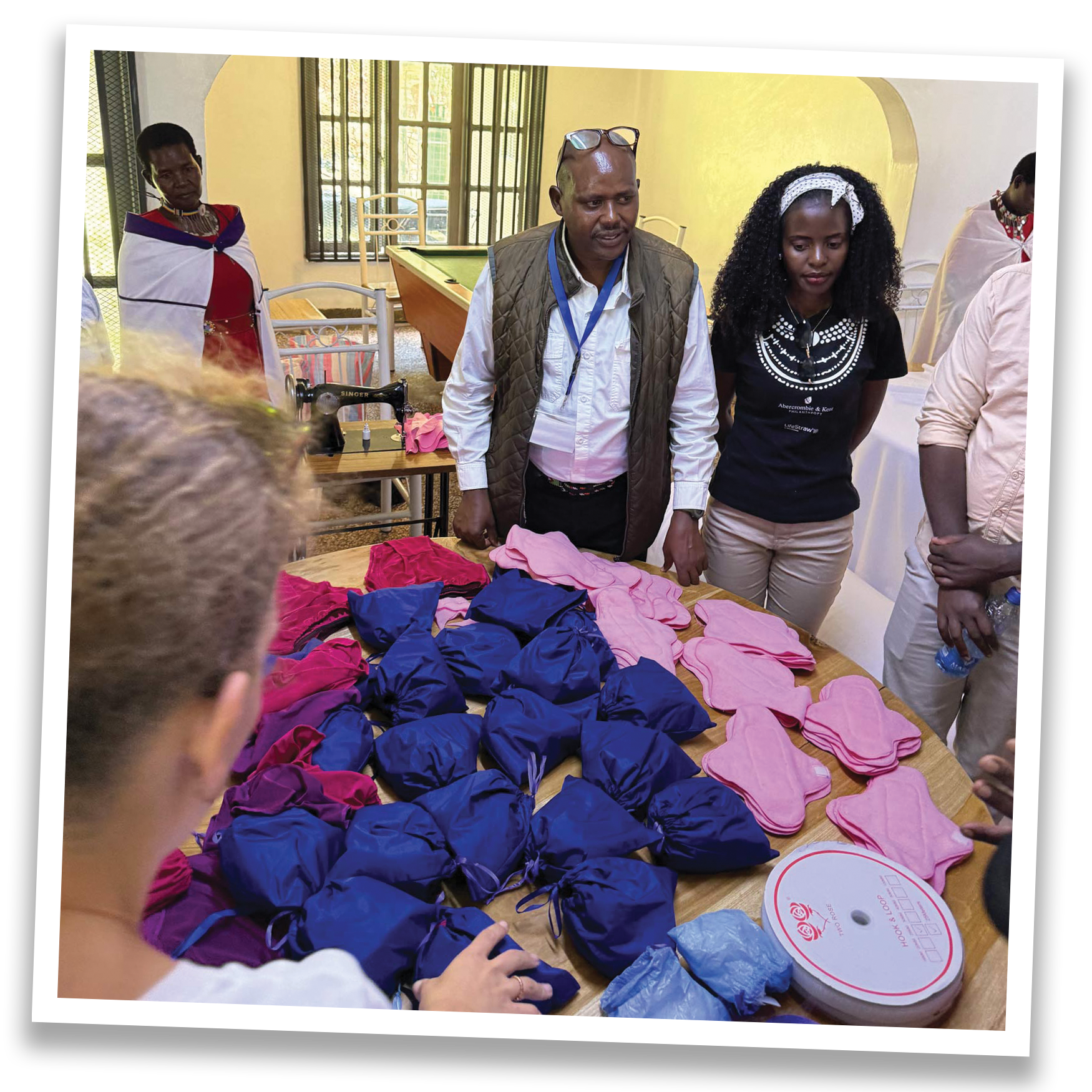
Gathering packaged reusable menstrual pads. (Photo Jeri Clausing)
Gathering packaged reusable menstrual pads. (Photo Jeri Clausing)
The impact of AKP’s philanthropic programs
The flagship of Abercrombie & Kent Philanthropy’s (AKP) Cycle of Giving program, which trains women in Zambia to operate bicycle sales and repair shops with used bikes donated from the U.S., this year celebrated its 10th anniversary.
During that time, participating women have refurbished and sold more than 6,500 bicycles that were saved from landfills.
“The deal is, ‘Ladies, these bikes and your training are your starting capital,” said AKP executive director Keith Sproule. “Every bike you sell, you set aside a percent as salary; a percent for small parts and business licensing; and set aside a big percentage to pay for your resupply.
“What is remarkable is that it works,” he said. “The ladies in Zambia, at the Chipego bike shop, have resupplied 17 times.”
Across 25 countries, AKP has helped develop everything from schools and hospitals to water filtration systems, feeding programs, toilets — even a cochlear implant program for children in Kenya.
In the Masai Mara, a program to make reusable menstrual pads has done more than provide a much-needed staple to keep girls from missing school when they have their periods: It has reduced urinary tract infections caused by girls wearing costly disposable pads for too long and created employment for the women who make the kits. And as with so many of these programs, the impact runs deeper. It has also reduced the stigma around menstruation and brought about more open conversations about sex education, both for girls and boys, Sproule said.
It is one of many AKP endeavors that provides professional training, often complementing Abercrombie & Kent’s tourism offerings.
In Sri Lanka’s Central Highlands, AKP partnered with the Pekoe Trail Organization to provide a trail guide training program for seven locals who graduated to become AKP Trail Champions, accompanying hikers on the Pekoe Trail, not only for A&K but for other tour operators.
In India, where tigers in Rajasthan’s Ranthambore National Park pose a threat to livestock, straining relations between locals and wildlife conservation organizations, AKP partnered with the Tiger Watch organization to support a cattle compensation program that provided financial relief for livestock losses. With AKP’s help, the program will also help to build feeding systems that reduce the number of livestock wandering into the forest. To learn more about AKP’s projects, go to https://www.akphilanthropy.org/projects.
—J.C.