
Paul Szydelko
Clark County director of aviation Rosemary Vassiliadis is retiring on Sept. 12 after almost three decades in the department. She has served as the director of the system, which includes Harry Reid Airport in Las Vegas, since 2013 after about 16 years as deputy director. Senior director of aviation James C. Chrisley will succeed Vassiliadis as director.
I had a chance to speak with Vassiliadis about her accomplishments and the future of the system. The conversation was edited for brevity and clarity.
Q. What are you most proud of?
A. I'm most proud of our team and how we work together -- Department of Aviation employees, our airlines, federal agencies, concessionaires, all the tenants. When I look at the growth and evolution that southern Nevada, especially Las Vegas, as a destination has had, I am most proud that we have kept up with everything. I was here on 9/11 [as] deputy director. The director was out of the country and was not able to get back for a bit. Airspace never closed before. Airports never closed before. Not one of us who is at a commercial airport ever had to recertify and reopen an airport before. But we did. We were the first large airport to reopen.
Q. The city has become more of a sports destination. How did that change the airport's dynamics?
A. It's a completely different mindset, completely different set of behaviors, when [passengers] get to the airport, what they want at the airport. That's been invigorating. We had a lot of fans coming through. For hockey (the expansion Golden Knights joined the NHL in 2017), they're different days of the week, so that surge would come through the airport depending on what day the game was. Fast forward to the NFL stadium [and the Oakland Raiders' arrival in 2020]: the home team, the visiting team, everybody goes! When fans were able to come [after the pandemic], we still had a good number of Raiders fans coming from the Bay Area as well as some still filtering in from the L.A. basin [who] could come and go the same day. And that was in addition to whoever the visiting team was -- [like] us poor, pathetic Chicago Bears fans making a weekend out of it! The most surprising thing was the surge of general aviation traffic. Oh, my gosh, these fans come every which way. Ownership, corporate planes, sponsors -- it's amazing!
Q. What's most important about Harry Reid Airport's planned expansion and renovation?
A. To modernize the A and B gates. They are configured with round cluster buildings that were designed in the '60s and built in the '70s. They are the most inefficient layout, and so many airports have them. But it does not accommodate today's most common aircraft. We're going to convert all those to piers, like the D gates. We're going to be able to build the first pier, in design as we speak, on the footprint of old Terminal 2, which was demolished and is just ramp space. So it's not going to impact operations. We will still operate the four cluster buildings, all the A and B gates, until that one is done, then we'll start that domino effect [to build and replace gates]. That is going to give us more gates but more than anything, more efficiencies.
Q. What stakeholder feedback did you get on what will likely be the airport's last major expansion?
A. They were concerned about hold rooms. There's not a hold room in the A and B gates that accommodates today's [larger] aircraft. The airlines wanted to make sure that we had that in our plan. The other thing that they asked for [is space for] lounges. They're getting rolled out everywhere, including here. We just opened one in the D gates. We're opening one in the C gates shortly. It's just this travel phenomenon!
Q. What other airports do you admire?
A. Everybody loves Singapore; they're always No. 1. Everybody loves Salt Lake City Airport; it's nice that they have some new features in it. [But] that's not our business here. Our business, with partnering with the hospitality industry and the resorts, is not to lure [passengers] to hang out at the airport. It is to get them through the airport and onto the properties.
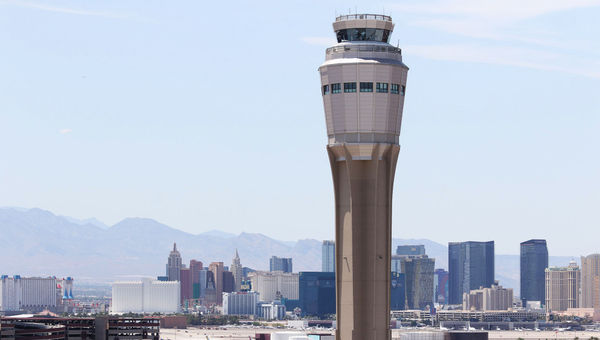
Expansion and renovation are in the plans at Harry Reid Airport. Photo Credit: Clark County Department of Aviation
Q. Besides slot machines and proximity to the tourist corridor, what makes Harry Reid Airport unique?
A. When TSA created an innovation unit, they wanted to test new technologies and everything that they had been working on in a confidential manner. When they wanted to roll it out to the public [in 2019], I invited them out. They named us the Innovation Airport. We have the only operating innovation checkpoint in the lower level of Terminal 3 that has been so successful. We have the latest, greatest equipment. People love new technology and being part of the test market. It's very cool, because there's been a lot of pieces and elements tested in that checkpoint that have been rolled out nationwide.
Q. While Reid Airport will remain the system's flagship, planning is underway for the Southern Nevada Supplemental Airport 30 miles to the south. Any parting advice?
A. What we have learned through constantly building here on this little footprint [at Harry Reid Airport] is to have flexibility to build without interrupting the current operation; so that's in the design. When [the second airport] opens in 2037, it's not going to be an entire build-out of every inch of terminal, every single gate, because we're not going to operate it that way. We'll continue to encourage general aviation aircraft to utilize North Las Vegas and Henderson Executive airports to maximize our limited airspace at Harry Reid. We'll also be able to offer airlines additional efficiencies and elements that are no longer feasible here at [Reid]. What we can assure everyone is that there's going to be [ground transportation] connectivity between that [secondary] airport and our airport system here at Reid. That's a must!