
Japan
by sea
Mitsui Ocean Cruises was conceived and created for Japanese travelers. But there’s a cabin for anyone who has a passion for Japan and an interest in getting off the beaten path.

Just a few hours after boarding the Mitsui Ocean Fuji in Yokohama, Japan, last summer, it struck me that it was the most familiar, and yet the most unfamiliar, cruise I’ve been on.
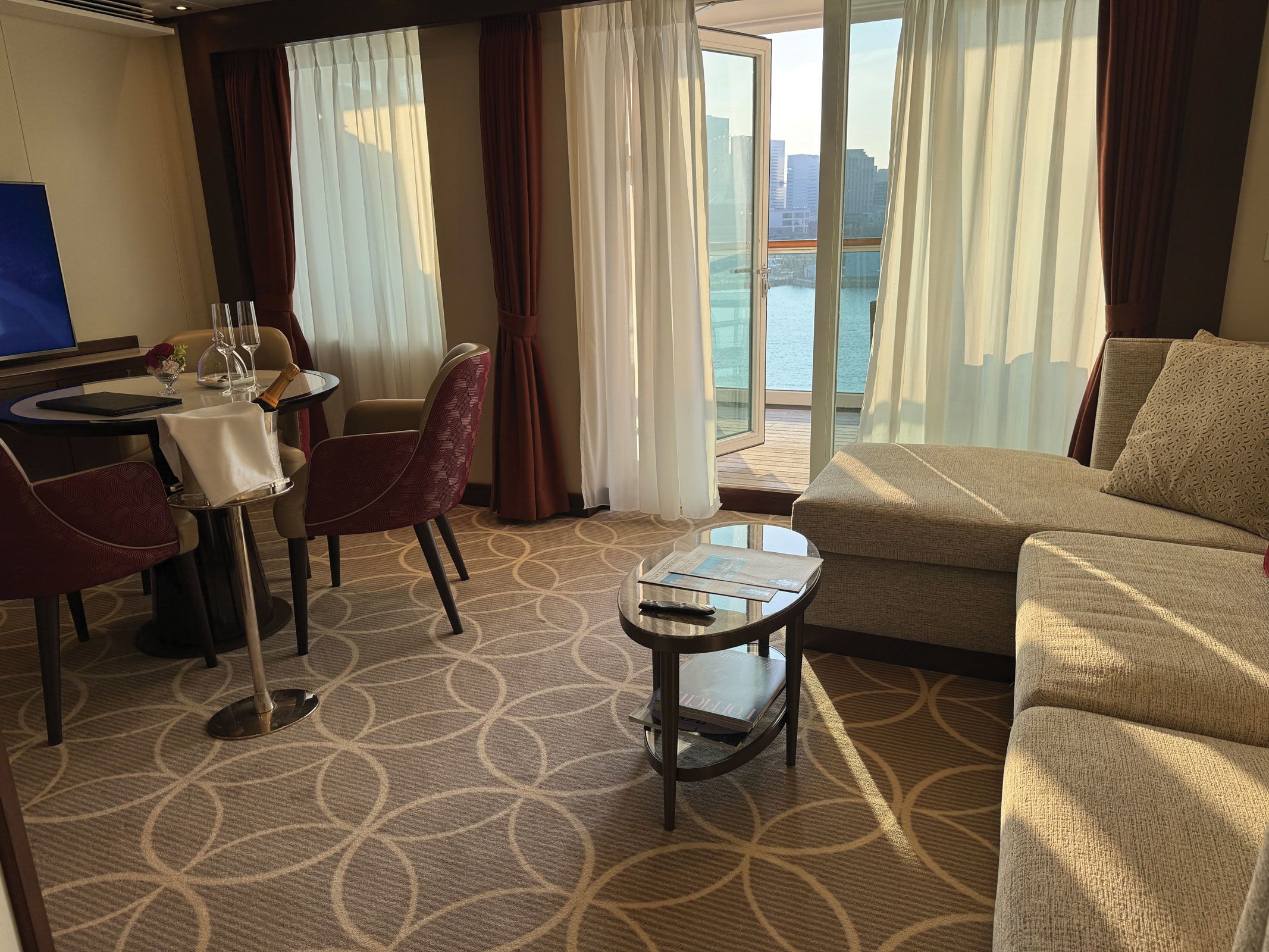
The embarkation process was fairly straightforward (show documents, get security card, etc). And since the Fuji is the former Seabourn Odyssey, it felt to me like reuniting with an old friend. Seabourn ships have a signature central staircase that connects the main restaurant with the public rooms and suite decks. Our penthouse cabin had a glassed-in bedroom, spacious living and dining areas, a pretty sizeable balcony and ginormous walk-in closet. A printed program in English told us of the onboard events and restaurant hours.
But elsewhere, the Fuji is different.
It caters almost exclusively to its home market of Japanese travelers, which means announcements are in Japanese and the food and program events are created for Japanese tastes. “Ohiyo gozaimasu” is the standard morning greeting.
There’s no question that Japan, as a travel destination, is hot. The country recorded more than 35 million visitors and counting as of October. In 2024, a record 36.8 million people visited, a nearly 45% increase over 2023 (and a more than 800% increase over pandemic-era 2022, when less than 4 million people arrived). The U.S. vies with Hong Kong for Japan’s third-largest source market; in 2024, about 2.7 million Americans visited.
The country has taken on a new energy for the English-speaking market, travel-wise, perhaps as China has remained fairly muted for North American visitors. The USTOA ranked it third in popularity in its 2025 members survey. Virtuoso members ranked it second in its list of popular global destinations for 2026 and eighth in its list of popular cruising destinations. Signature took a deeper dive, putting the island of Kyushu on its list of recommended hot spots. Chase Travel is suggesting Osaka.
Cruise lines like Windstar and Azamara are increasing capacity, and Princess, which arguably has the strongest connection to Japan among major U.S. lines, has said that 2027 will be its “most expansive Japan season ever.”
But Mitsui Ocean Cruises is taking it a step further. For people who want the immersive experience, a Japanese cruise — created and sold to Japanese people — might be an interesting way to do it. Mitsui is marketing about two dozen 2026 cruises on its website that it thinks would appeal to North Americans, with themes like “Blossoms and Horizons” and “Pearl Coast Passage.” But no matter which sailing, the onboard experience, from food to entertainment, is not extensively modified to fit the U.S. market.
And that’s how Anthony Kaufman, Mitsui’s head of commercial strategies, likes it.
An industry veteran with more than 20 years at Princess dating back to the P&O days, he’s passionate about Japan, and he’s adamant that the Mitsui product is something separate from U.S.-focused lines that offer sailings in or through Japan.
‘It’s a truly Japanese product, built and created and nurtured in Japan by the Japanese culture.’
“For many years, many cruise lines have gone to Japan to take their existing customers to Japan and around Japan, so that product itself is their normal product,” Kaufman said last month during an interview on the Folo by Travel Weekly podcast. “Princess was a little bit different … you get the Princess product tailored to the Japanese market and a mix of Japanese and international passengers traveling together.”
Mitsui Ocean Cruises, he continued, “is the reverse of that ... a truly Japanese product, built and created and nurtured in Japan by the Japanese culture, with mostly Japanese on board. And now we are slowly expanding a limited amount of capacity to some other markets.”
And how much would the experience be adjusted to appeal to a non-Japanese-speaking market?
“As little as possible,” Kaufman said.





A new era for Mitsui
Mitsui isn't the first line to offer U.S. travelers a chance to cruise on ships with different nationalities, but it seems to be unusual in Japan. (Another company, NYK, operates Asuka Cruises with two ships.)
In conversation, Kaufman has occasionally referred to Mitsui as “a startup,” and in August Mitsui invited a handful of travel advisors, media and guests, including my teenage daughter and me, to see the new product.
But in reality, the line has an old and storied history. Parent Mitsui O.S.K. Lines is a large shipping company. For the last 20 years its cruise ship Nippon Maru has plied Japanese waters. But the Maru is an older build with classic ocean liner vibes, and it will be retired in May. Later in 2026, Mitsui Ocean will bring on a second Seabourn vessel, the Seabourn Sojourn, to be named the Mitsui Sakura.
The Sakura will be a Japanese-flagged ship when it enters service this year, enabling it to do short, domestic cruises that are popular with the local crowd.
The second ship will be helpful because, at least on our voyage, the Fuji was pulling double duty: We were sailing a 10-day cruise but it had also sold shorter segments. Thus, the ship was sometimes full of people and sometimes quiet, as groups embarked and disembarked along the route.

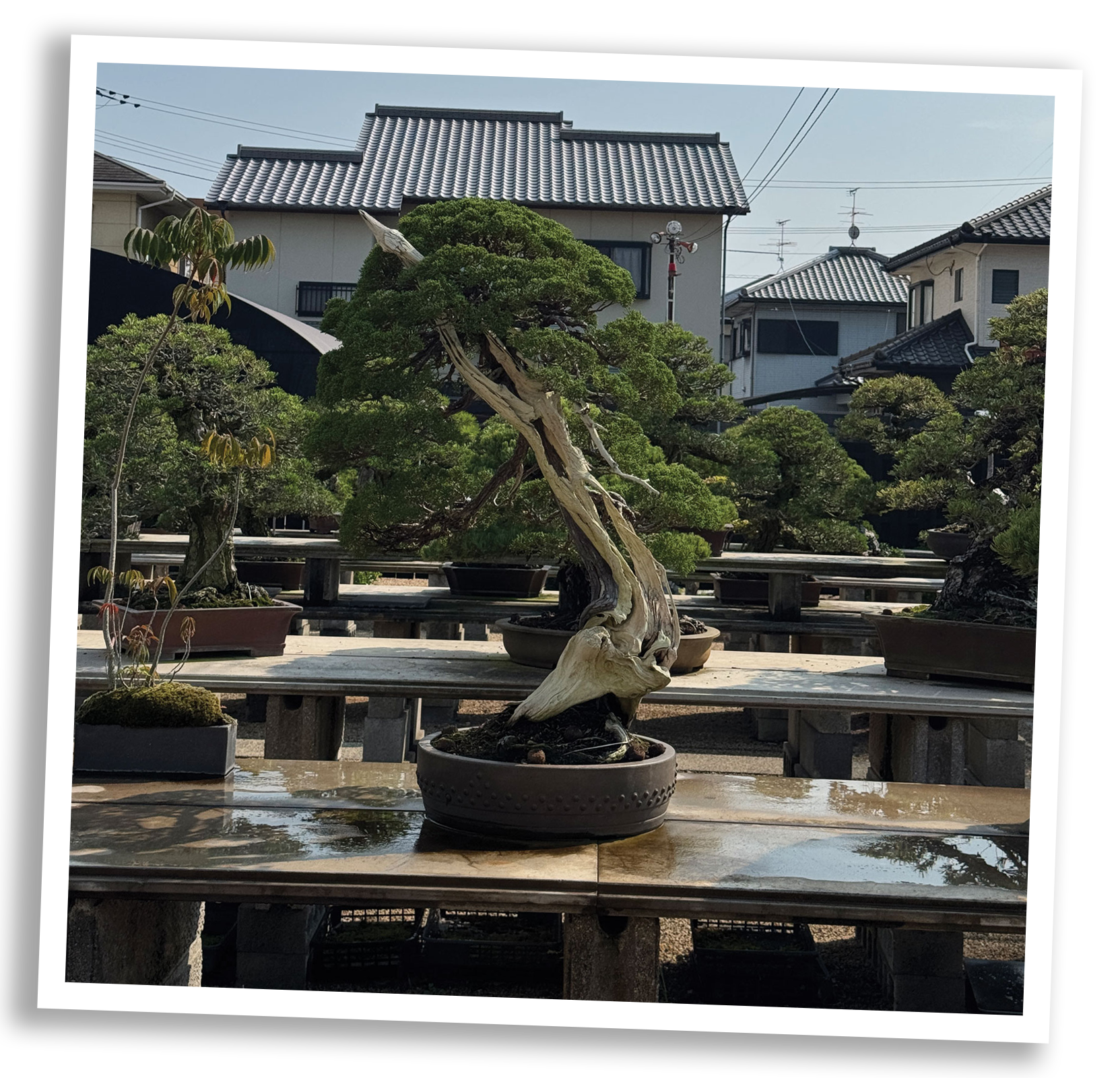
Bonsai plants at a farm near Takamatsu, Shikoku. (Photo by Rebecca Tobin)
Bonsai plants at a farm near Takamatsu, Shikoku. (Photo by Rebecca Tobin)
Commitment to culture
On the final day of our cruise, a quartet of travel advisors from Cruise Travel Outlet — Michelle Saklad, Claudine Colarusso, Jeanie Rocco and Dawn Brockett — gathered in the Ocean Square cafe over coffee to talk over their experiences.
They agreed the experience was authentic, as one said, “in the true sense of the word.”
“I think the difference is that we got to experience Japan and not just see Japan,” Brockett said.
Advisors on the Fuji cruise also said the product would likely appeal most to adventurous, well-traveled clients, perhaps repeat visitors who were looking for a different side of Japan. The Cruise Travel advisors said it would also be good for groups.
But those who enjoy cruising specifically for its built-in social aspect might find the Mitsui life tricky. Although the cruise staff and crew was accommodating and friendly, the language barrier with other passengers was formidable. Advisors said that clients often enjoy chatting with other passengers at the bar or meeting someone new over dinner, something that would be difficult on Mitsui unless there was a big enough cadre of English-speaking guests onboard.
Kaufman said the language barrier could, and should, be thought of as an asset.
“I want it to stay Japanese,” he said. “That’s not to say it’s difficult to get around the ship at all; everything is translated, the menus are all bilingual. There’s plenty of people that speak English on a ship … but it is an issue for me if we start anglicizing the entire product. I do not want that.
“I want people to ask questions about what does this mean? What does that mean? Why is it done this way? Why is it done that way?”
Advisors and Mitsui sales execs both noted that Mitsui could be a good option for clients who want to see Japan beyond the usual stops of Tokyo, Kyoto and Osaka. Mitsui does not package pre- and post-cruise stays, but executives suggested that this could be a smart way for advisors to showcase their value by building their own FIT itineraries: A few days in a marquee city like Kyoto, perhaps, followed by a cruise.
Our voyage billed itself as an arts-forward sailing, to coincide with the Setouchi Triennale, a contemporary art festival that features pop-up sculptures and installations throughout the islands of the Seto Inland Sea.
Half-day, guided tours are included in the fare, and Kaufman again stressed that the tours were the same for Japanese and North American travelers — except, of course, that the tours for English speakers are in English. Full-day excursions can also be arranged. Ours didn’t specifically feature an art tour, which was a little disappointing to me, but during our call at Shodeshima, on the island of Shodo, we saw several works, including a giant octopus, a pompadoured olive and, at the ferry terminal, my favorite, “Ship’s Cat” by Kenji Yanobe.
Everywhere, we ate well. In Takamatsu we tried the local udon style, with big, ropey noodles that were perfectly cooked and delicious.

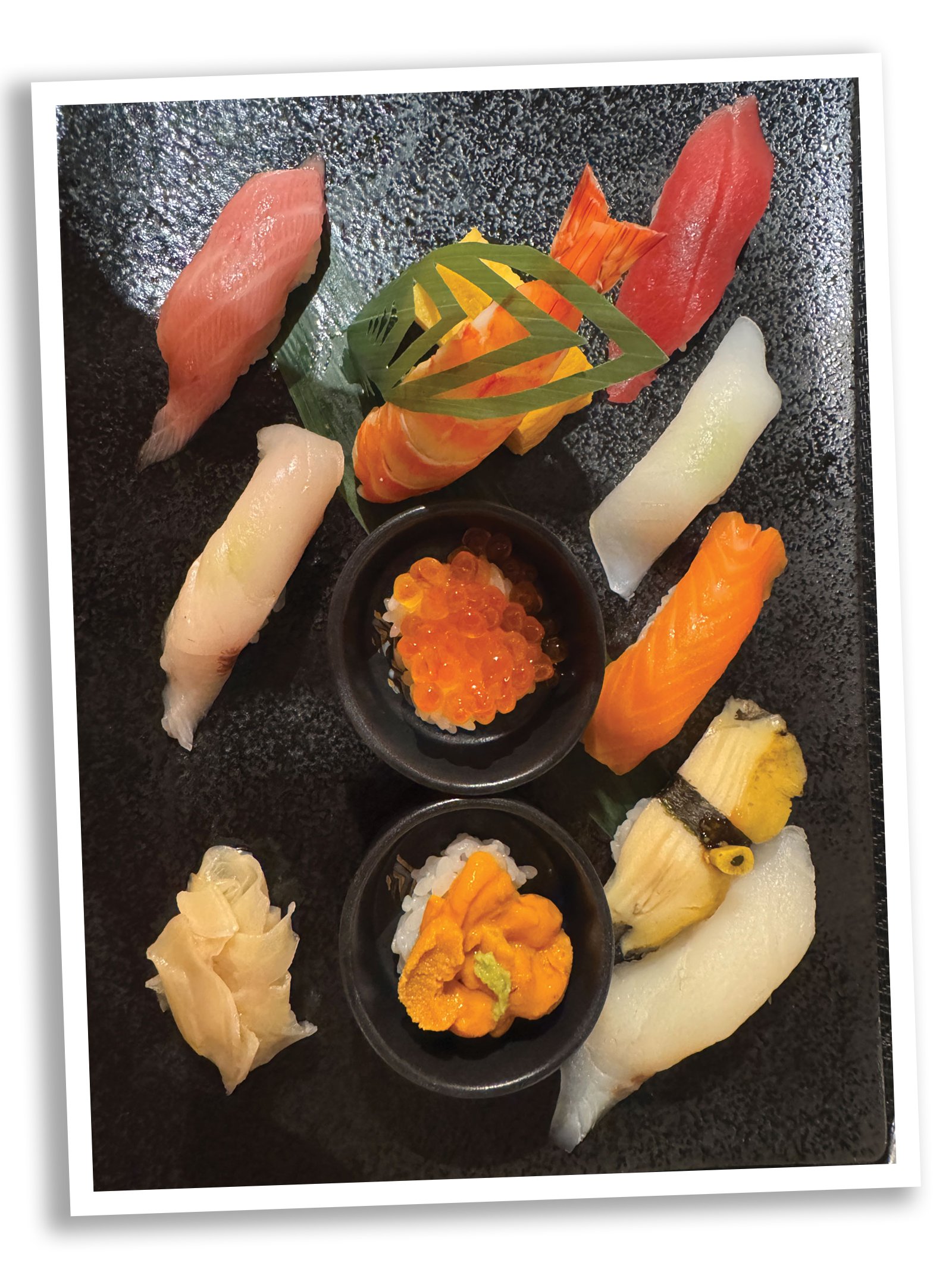
A beautifully arranged sushi presentation on the Mitsui Ocean Fuji. (Photo by Rebecca Tobin)
A beautifully arranged sushi presentation on the Mitsui Ocean Fuji. (Photo by Rebecca Tobin)

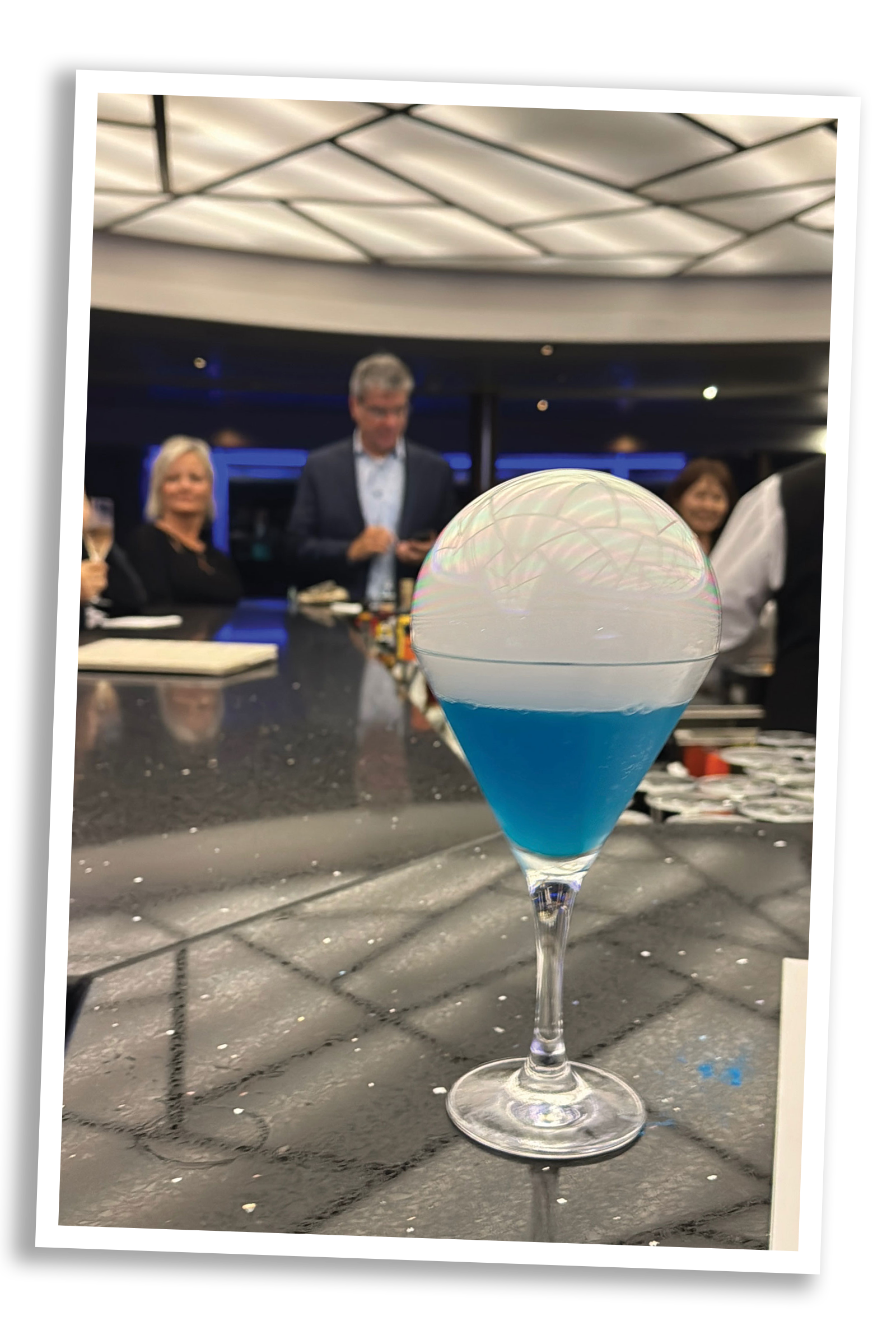
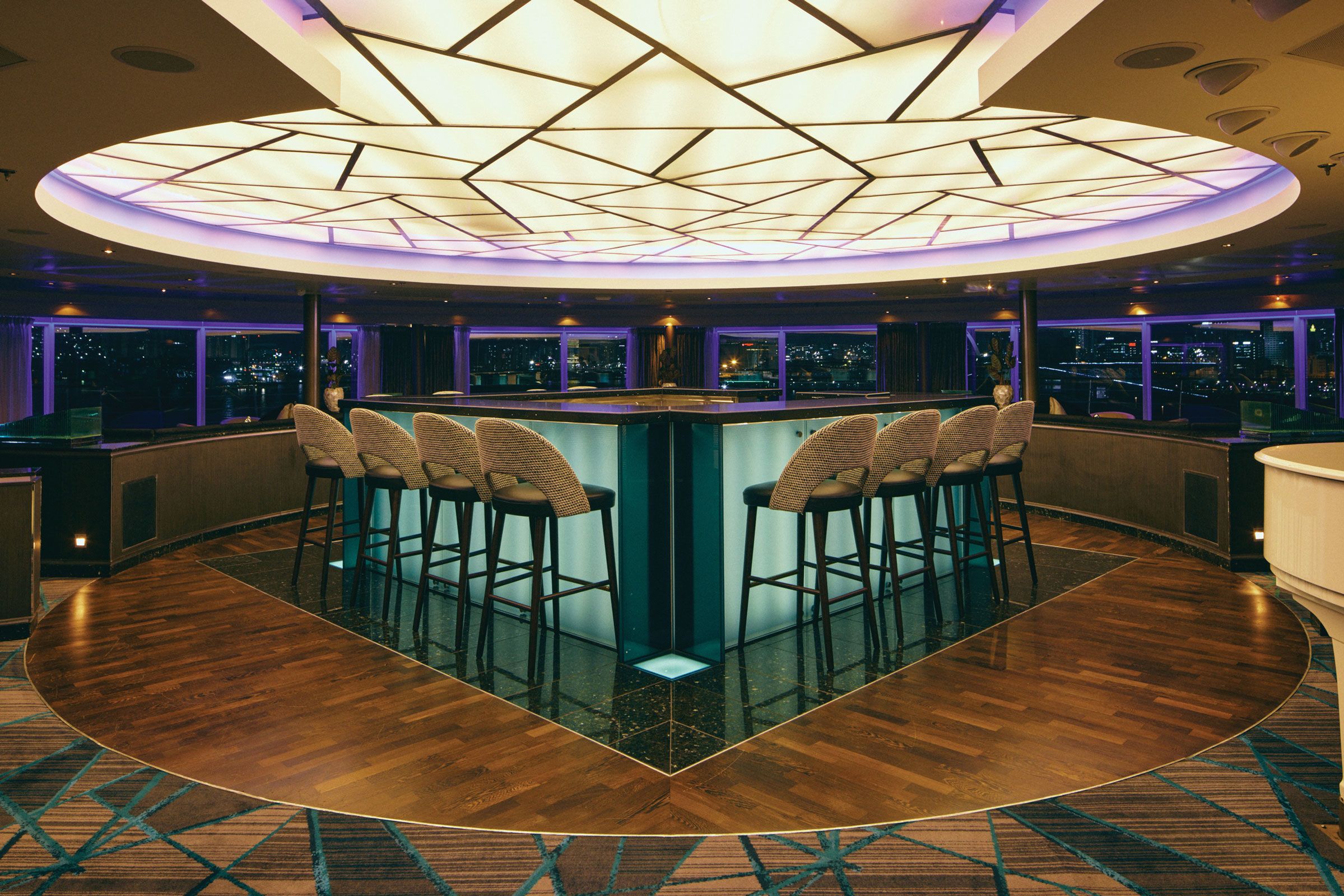
A complicated cocktail at the Observation Bar 36. (Photo by Rebecca Tobin)
A complicated cocktail at the Observation Bar 36. (Photo by Rebecca Tobin)
Above all, the U.S. travel advisors on the Fuji praised the food. The ship’s pricing is also inclusive, so drinks are included throughout the ship. Upstairs, the specialty dining restaurant Hokusai, where the refined menu has been created in partnership with Japanese chef Kiyomi Mikuni, has an upcharge for a wagyu beef dinner, and it’s worth every penny. The Hachiyo lido restaurant offered breakfast, lunch and dinner buffet options, but passengers could also sign up for an evening sushi meal, which was excellent and, of course, beautifully presented.
I was delighted with the chicken karaage burger, with just the right amount of spicy mayo, at the restaurant on the pool deck.
The food was memorable throughout, from multicourse meals in the main restaurant to the pool burger. But there was at least one person on the ship who didn’t completely appreciate the cuisine: my teenage daughter, who hasn’t yet broadened her palate to include seafood. And that’s where the accommodating crew — like Ryan, Edward and Barrani Lofti, the maitre d’ — stepped in: They added french fries and steak to her plate.

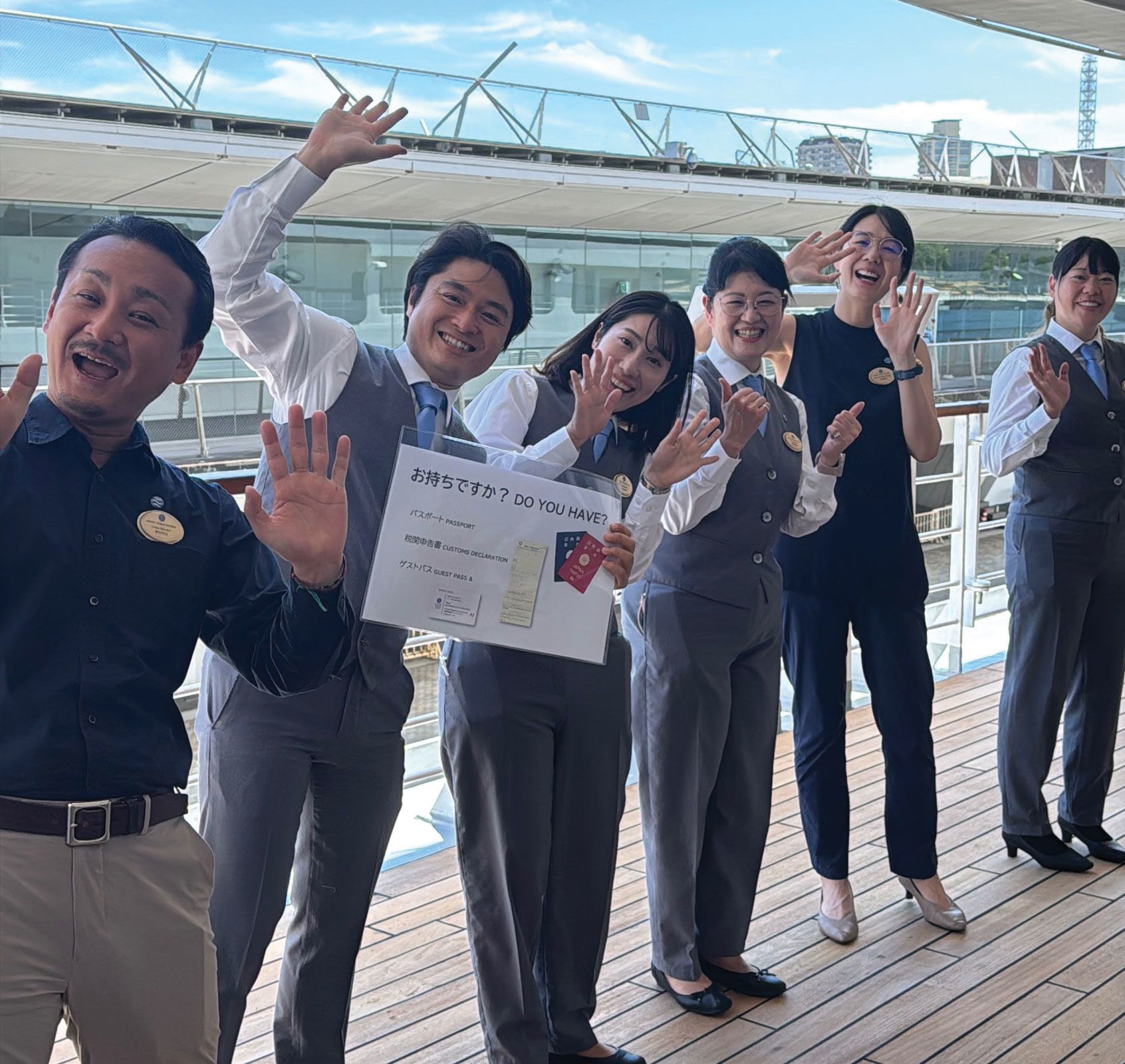
At disembarkation in Yokohama, the ship’s staff, with Ryota “Toyota” Kiyokawa, far left, gathered to say goodbye. (Photo by Rebecca Tobin)
At disembarkation in Yokohama, the ship’s staff, with Ryota “Toyota” Kiyokawa, far left, gathered to say goodbye. (Photo by Rebecca Tobin)

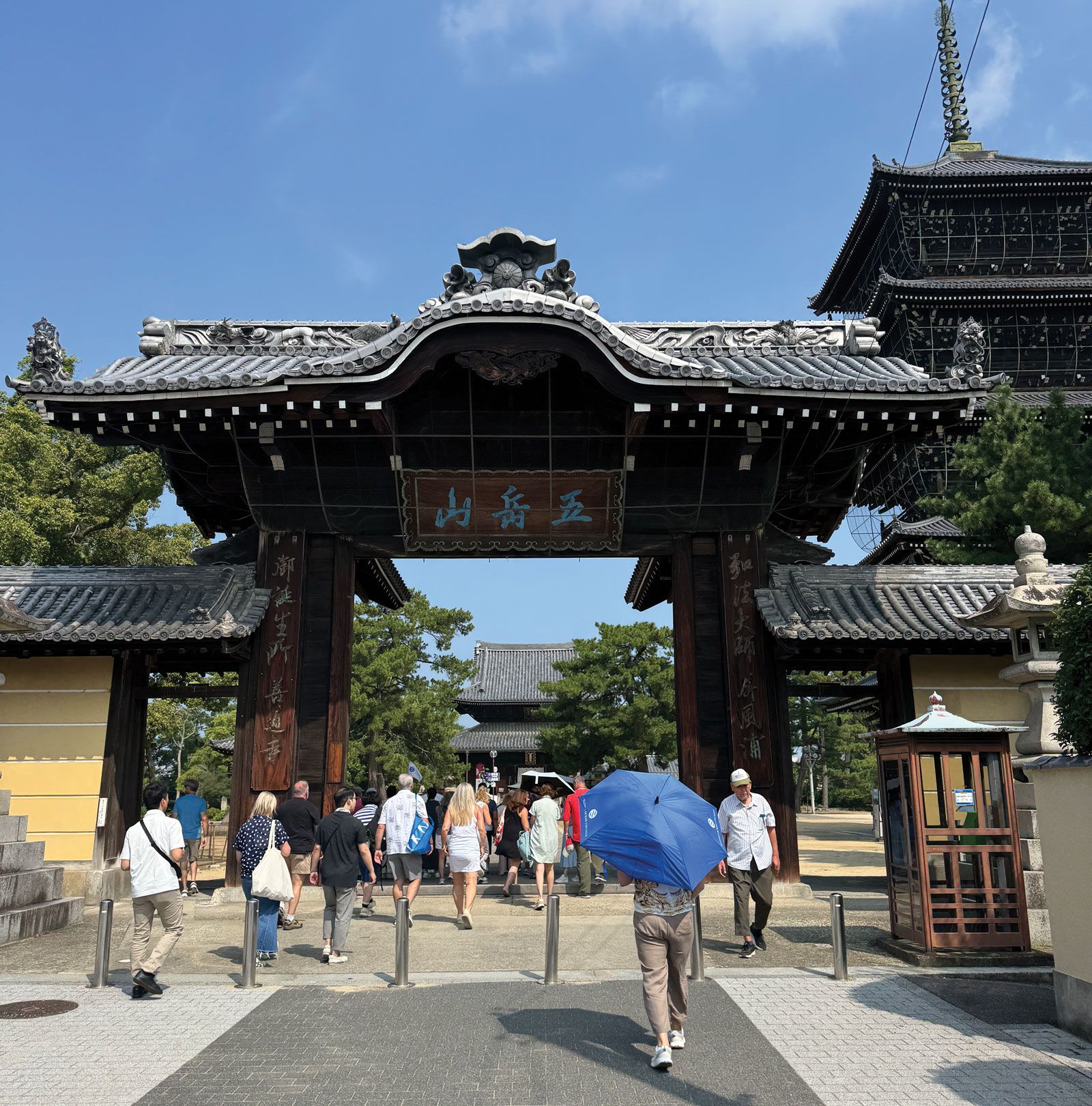
A shore excursion took English-speaking passengers to Zentsuji Temple, a Buddhist temple on the island of Shikoku. (Photo by Rebecca Tobin)
A shore excursion took English-speaking passengers to Zentsuji Temple, a Buddhist temple on the island of Shikoku. (Photo by Rebecca Tobin)

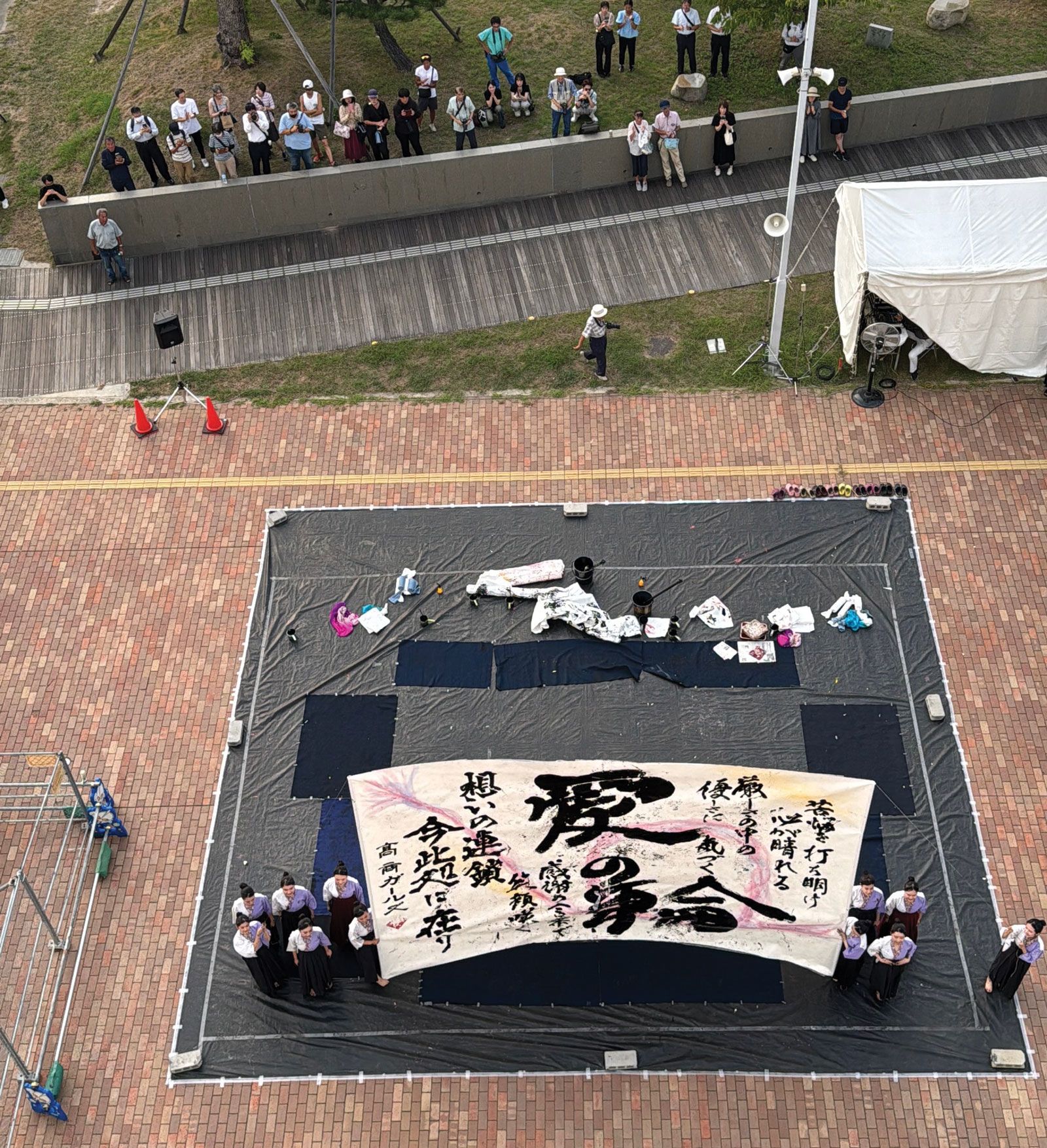
During the Ocean Fuji’s call in Takamatsu, a group created a welcoming sign pierside. (Photo by Rebecca Tobin)
During the Ocean Fuji’s call in Takamatsu, a group created a welcoming sign pierside. (Photo by Rebecca Tobin)

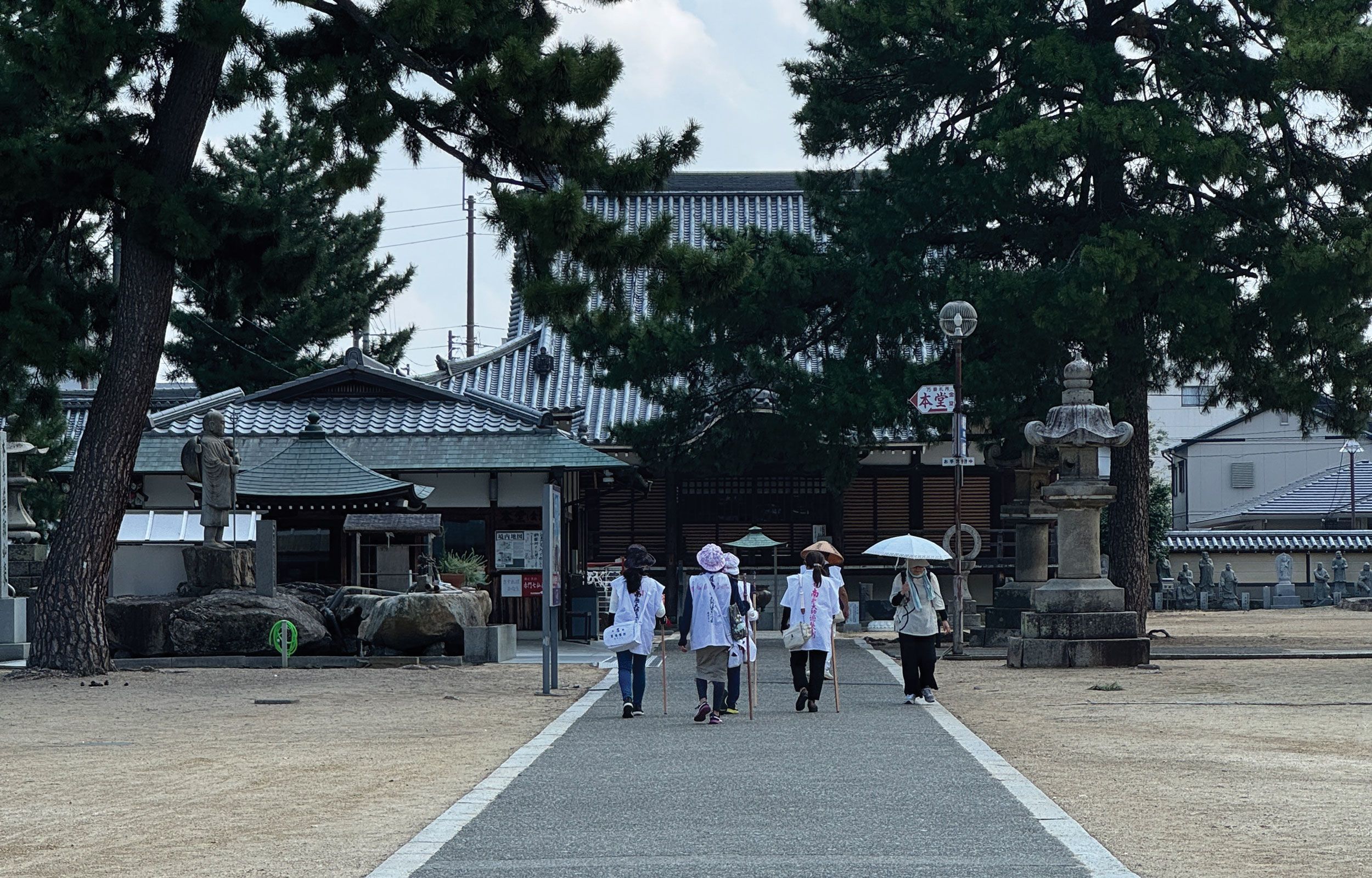
Pilgrims at the Zentsuji Temple near Takematsu; there are 88 temples on the island of Shikoku. (Photo by Rebecca Tobin)
Pilgrims at the Zentsuji Temple near Takematsu; there are 88 temples on the island of Shikoku. (Photo by Rebecca Tobin)

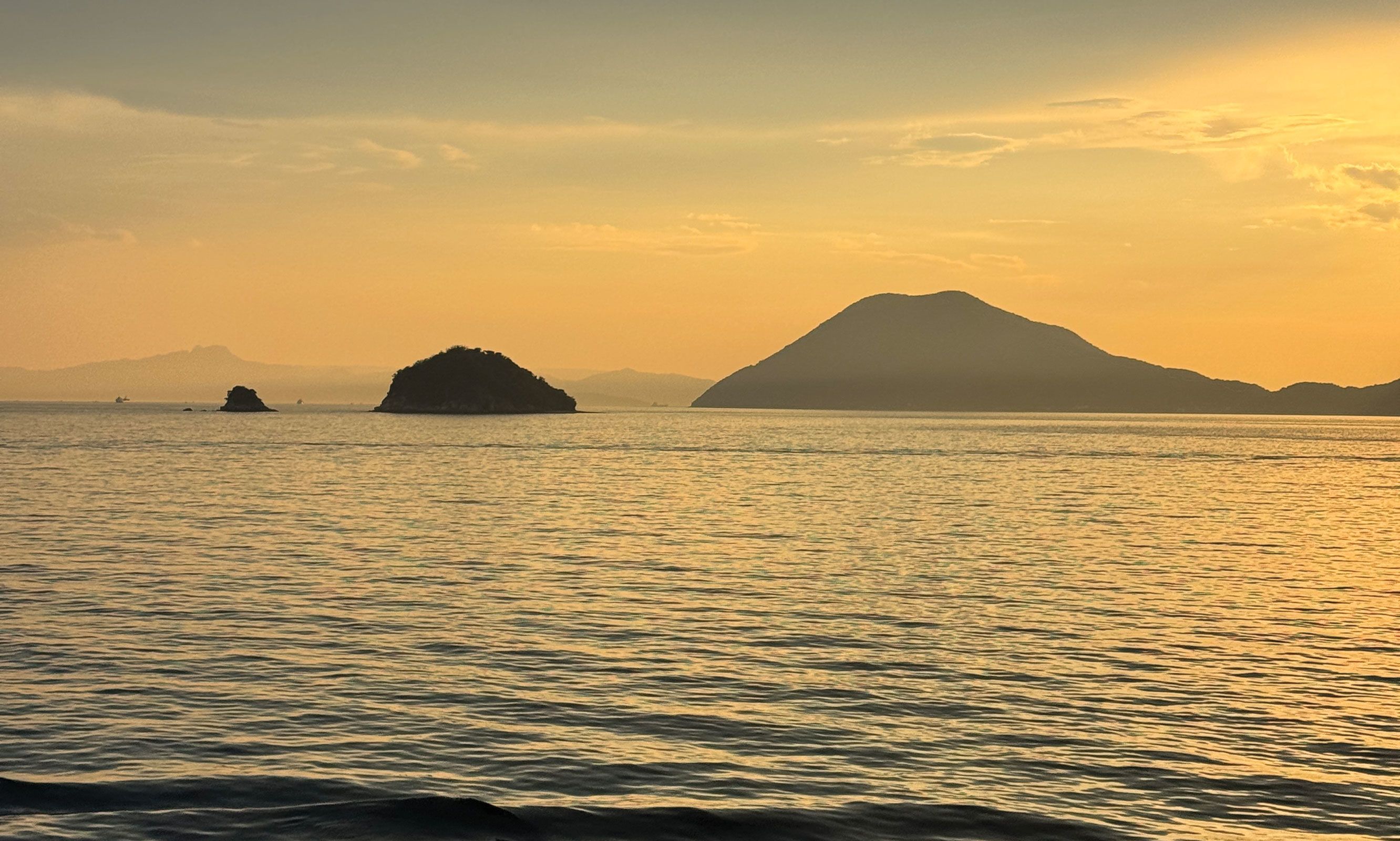
The sunset in Japan's Seto Inland Sea. (Photo by Rebecca Tobin)
The sunset in Japan's Seto Inland Sea. (Photo by Rebecca Tobin)

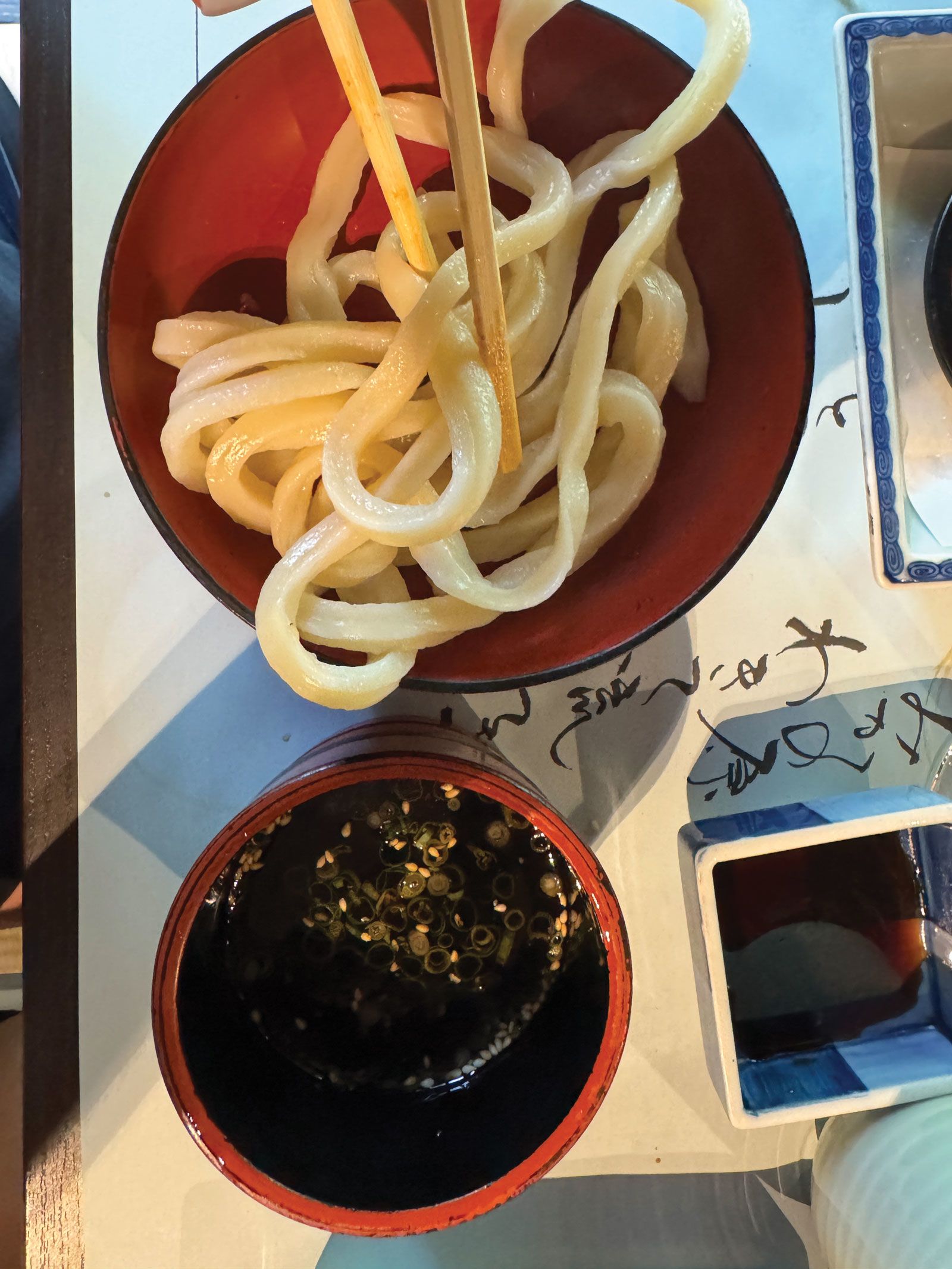
A local style of noodle in Takamatsu on the island of Shikoku. (Photo by Rebecca Tobin)
A local style of noodle in Takamatsu on the island of Shikoku. (Photo by Rebecca Tobin)
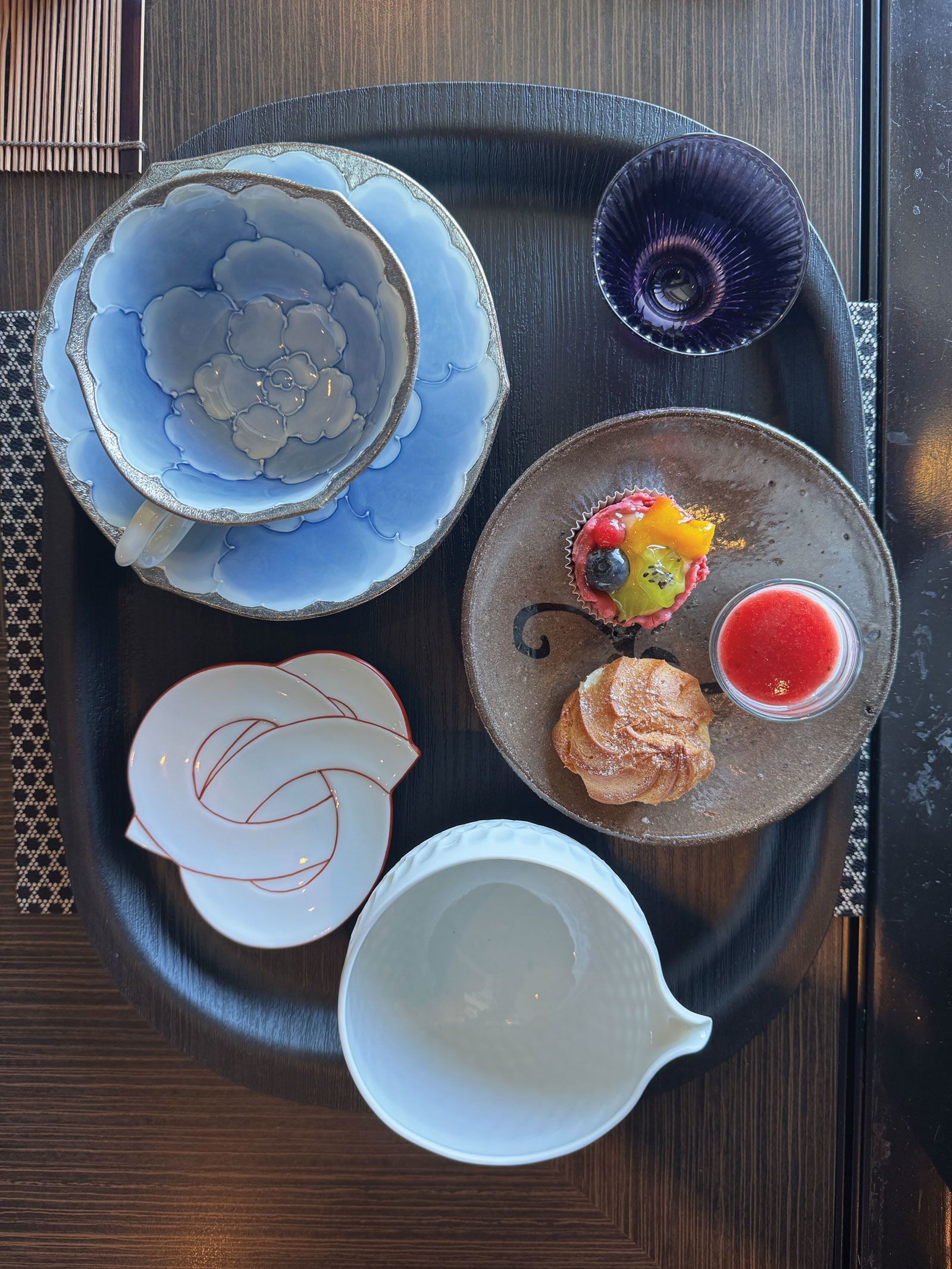
One of the activities as part of Mitsui’s Funatabi program was to select and arrange table ceramics in a harmonious and pleasing way. (Photo by Rebecca Tobin)
One of the activities as part of Mitsui’s Funatabi program was to select and arrange table ceramics in a harmonious and pleasing way. (Photo by Rebecca Tobin)

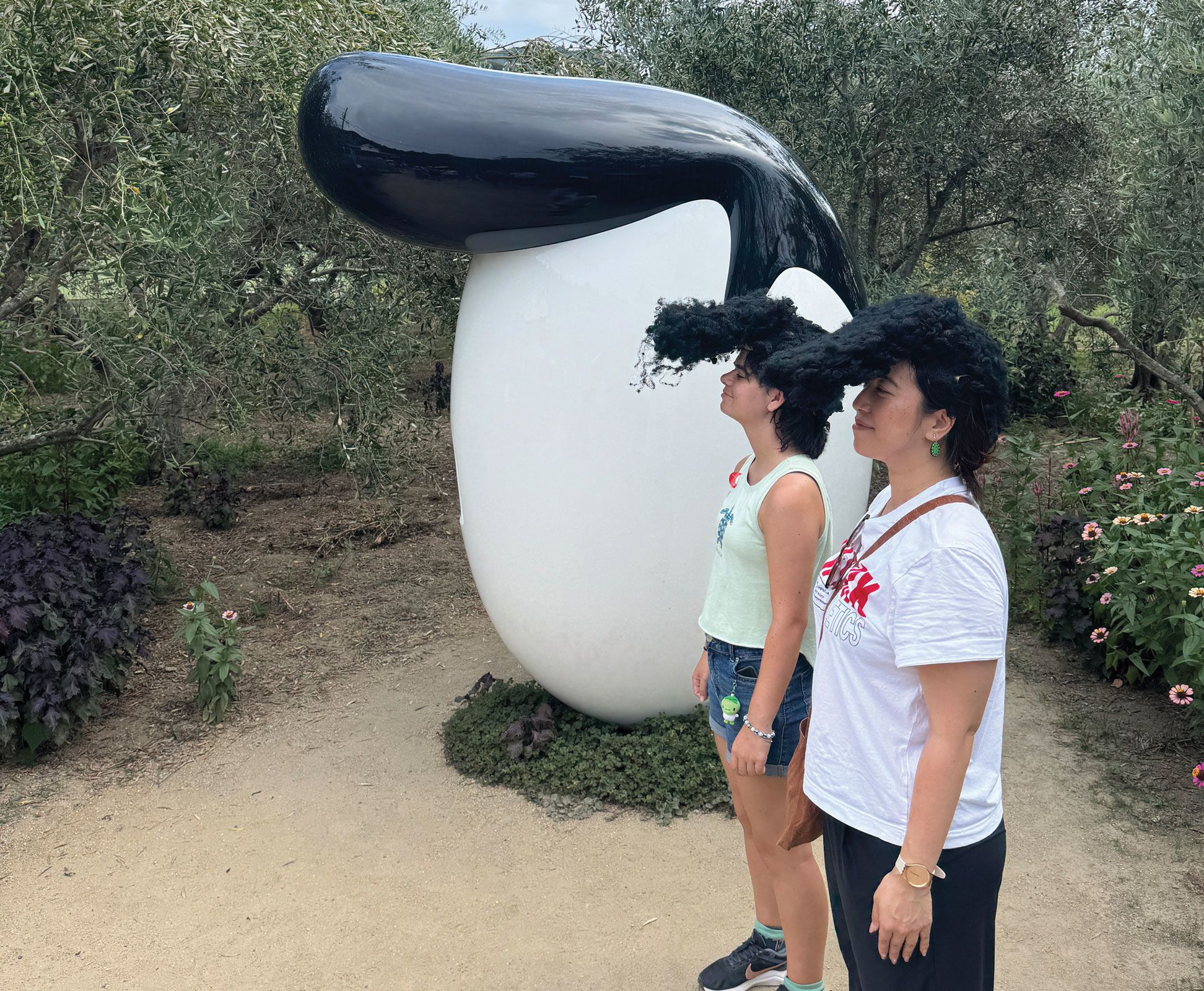
The author’s daughter and Sae Ichikawa, Mitsui general manager, port operations and destination experience group, grabbed props and posed near “Regent in Olives,” an art installation by Hisakazu Shimizu that is part of the Setouchi Triennial, an art show spread out over islands in the Seto Inland Sea. (Photo by Rebecca Tobin)
The author’s daughter and Sae Ichikawa, Mitsui general manager, port operations and destination experience group, grabbed props and posed near “Regent in Olives,” an art installation by Hisakazu Shimizu that is part of the Setouchi Triennial, an art show spread out over islands in the Seto Inland Sea. (Photo by Rebecca Tobin)

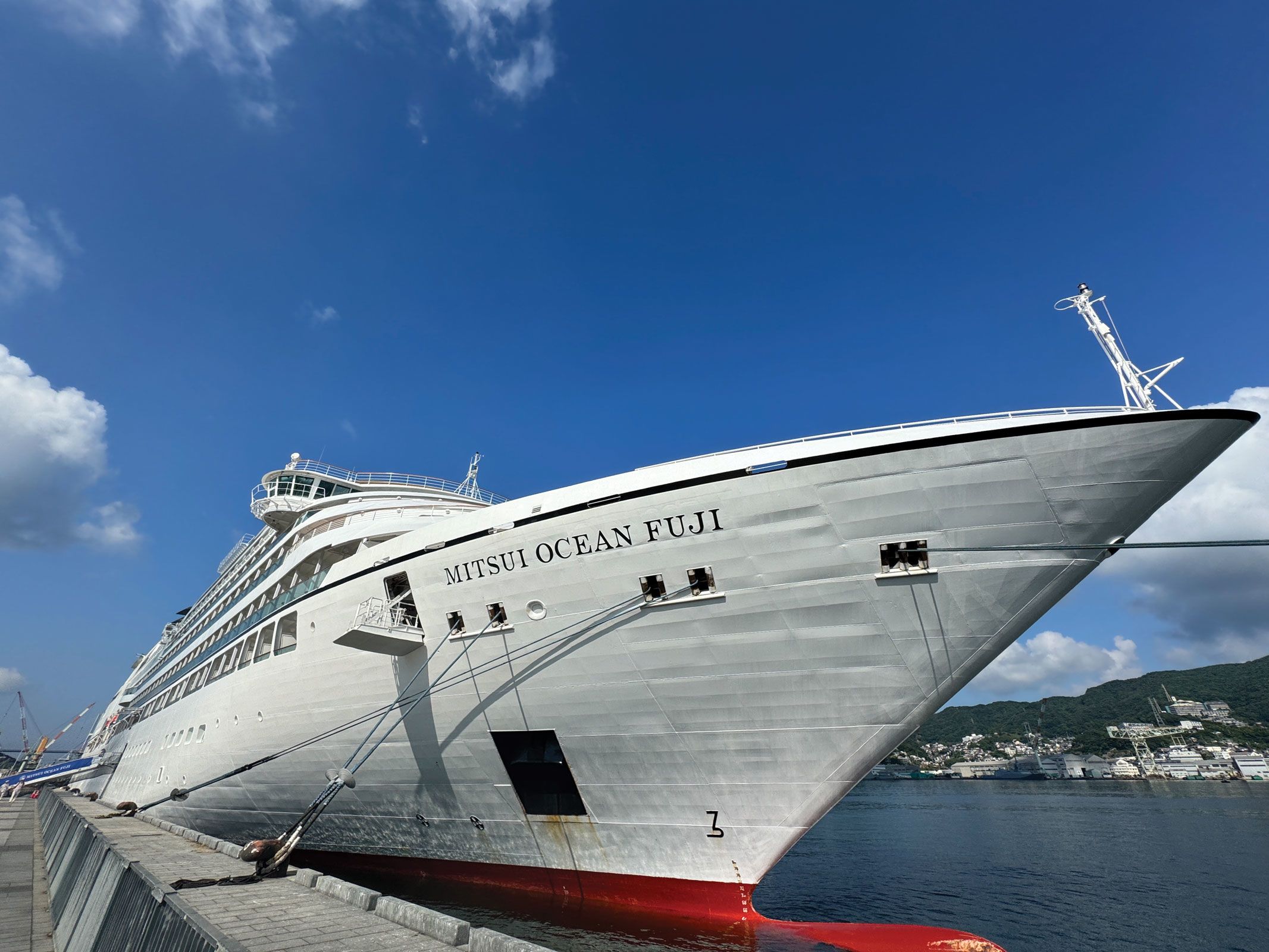
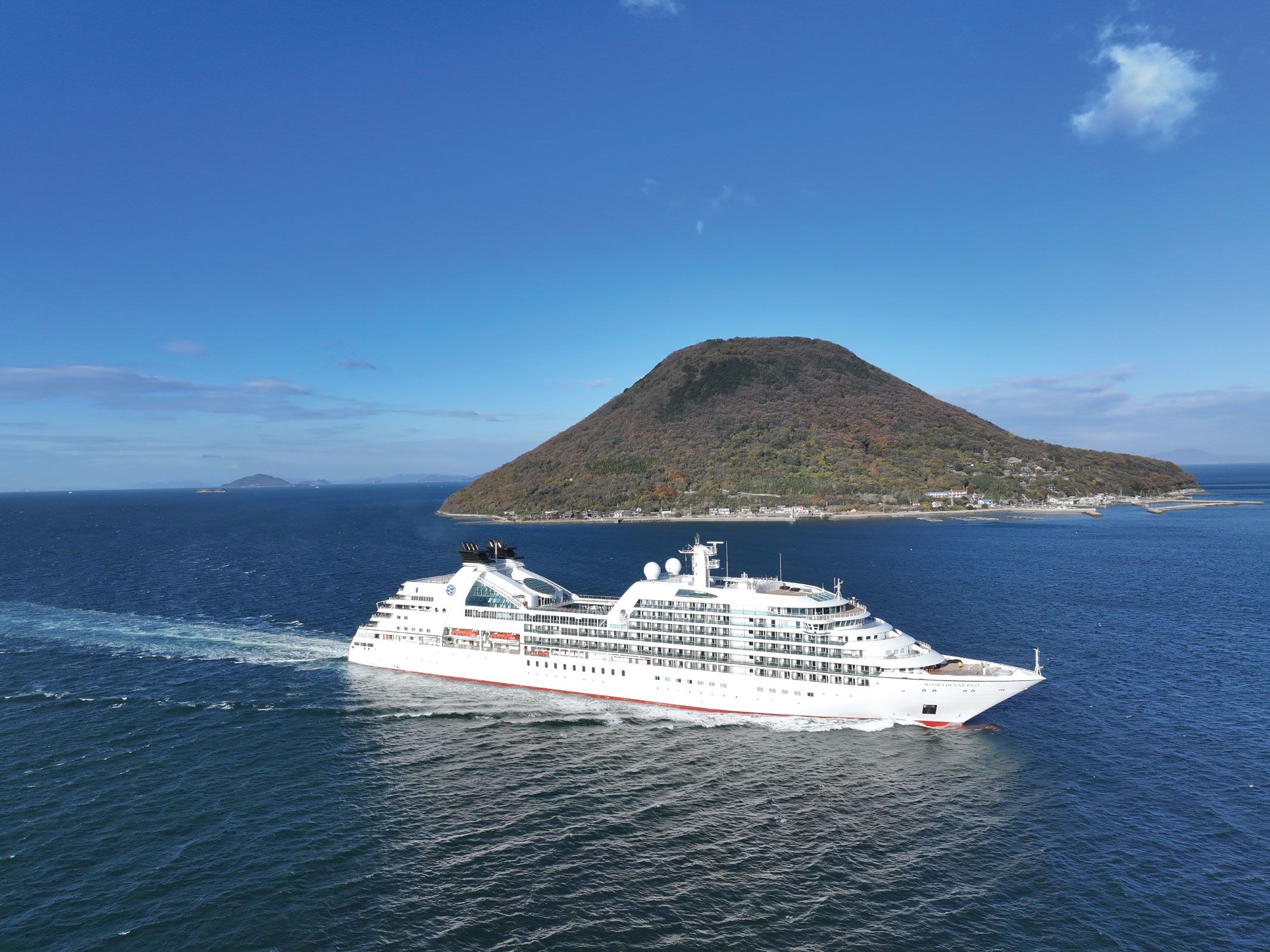
Mitsui Ocean Cruises' Ocean Fuji cruise ship. (Photo by Rebecca Tobin)
Mitsui Ocean Cruises' Ocean Fuji cruise ship. (Photo by Rebecca Tobin)
The onboard experience
As was previously mentioned, Japan is a hot destination. But in August, it’s also literally hot. I stood midship on the Mitsui Fuji and felt the hot puffs of the humid summer heat wash over me. The Inland Sea was a bright blue, reflecting the sun’s shimmering rays back across the decks.
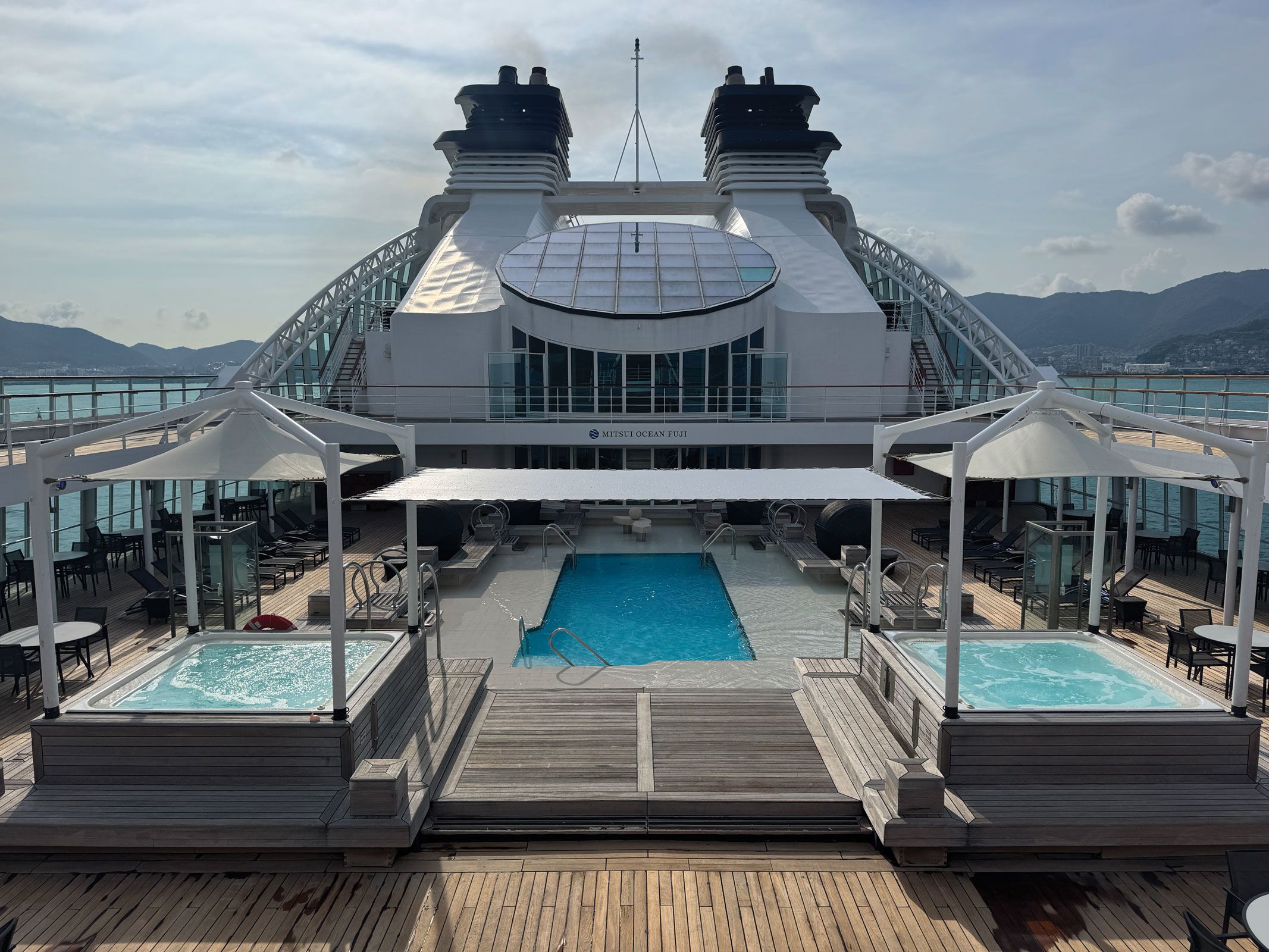
For North Americans, a sizeable chunk of the activities on a warm-weather cruise revolve around the pool deck: swimming or sitting in the hot tub, working on vacation tan lines, reading, drinking a pina colada, observing or participating in trivia or games.
Not so on the Fuji. Tanning is not a thing in Japan, and anyone braving the pool areas did so in full coverage: Wide-brimmed hats, long-sleeved shirts, mesh gloves and head-to-toe wetsuits were in, bikinis were out. At lunch, people sat at the tables shaded by the promenade deck. A sun deck above the bridge was so empty that the crew didn’t even bother setting up the chaise loungers.
For folks who want to dig deeper into cultural activities, Mitsui is unique in its offerings of the Japanese arts, a program it calls Funatabi. These activities, highlighted in the daily program (on paper, if you please; no app), were often exercises in domestic arts.
I participated in as many Funatabi events as I could. I went to a folk dancing class strictly in Japanese and tried to mimic the dancers, who moved in a slow, deliberate circle. I sat in on a presentation by a woman who had won national contests for creating pleasing table arrangements. When the she asked for volunteers to arrange ceramics on trays, I pushed my embarrassed daughter forward. The audience cheered for her as she moved around dishes and bowls to create the most harmonious display.
At many of these activities I was surrounded by Japanese women; some were highly proficient in the activity. I embraced my role as the earnest but clueless American visitor, but I was assisted by the friendly and helpful cruise staff, who spoke enough English to help me out. If the lecture was in Japanese, I’d sit near a staffer who would translate. And then I’d smile and nod at my fellow cruisers, who would smile back. That’s how I learned to make a scarf into a shoulder bag or a pretty wrap for a wine bottle. Another popular, and competitive, activity was kendama, where participants try to catch a wooden ball on a wooden stick.
At night, I went to game shows where, again, cruise director Ryota “Toyota” Kiyokawa and his staff would loop in the English-speaking crowd by tacking on translations, so I had no problem following or participating in the game. The games were often followed by dancing to ’60s or ’70s hits performed by a live band. Line dancing is popular, which suited me just fine, as I didn’t have to worry about making up my own steps. Young and old joined in — it was probably one of the most crowded dance floors I’ve seen on a ship.
I sat in on a Japanese storytelling session. Called rakugo, it’s a one-man show where the storyteller recounts a long story using subtle cues to indicate different characters. There was no translation for this one, so I just laughed whenever the audience laughed.
A highlight of the Funatabi sessions was trying on a yukata, the light, casual kimono made of cotton that’s worn during hot summer months. The staff brought out a dozen or so colorful robes and obi (sash) for men and women, and we could try them on for a photo op or borrow them for the evening and wear them to the ship’s summer festival dinner, which was held alfresco on the pool deck.
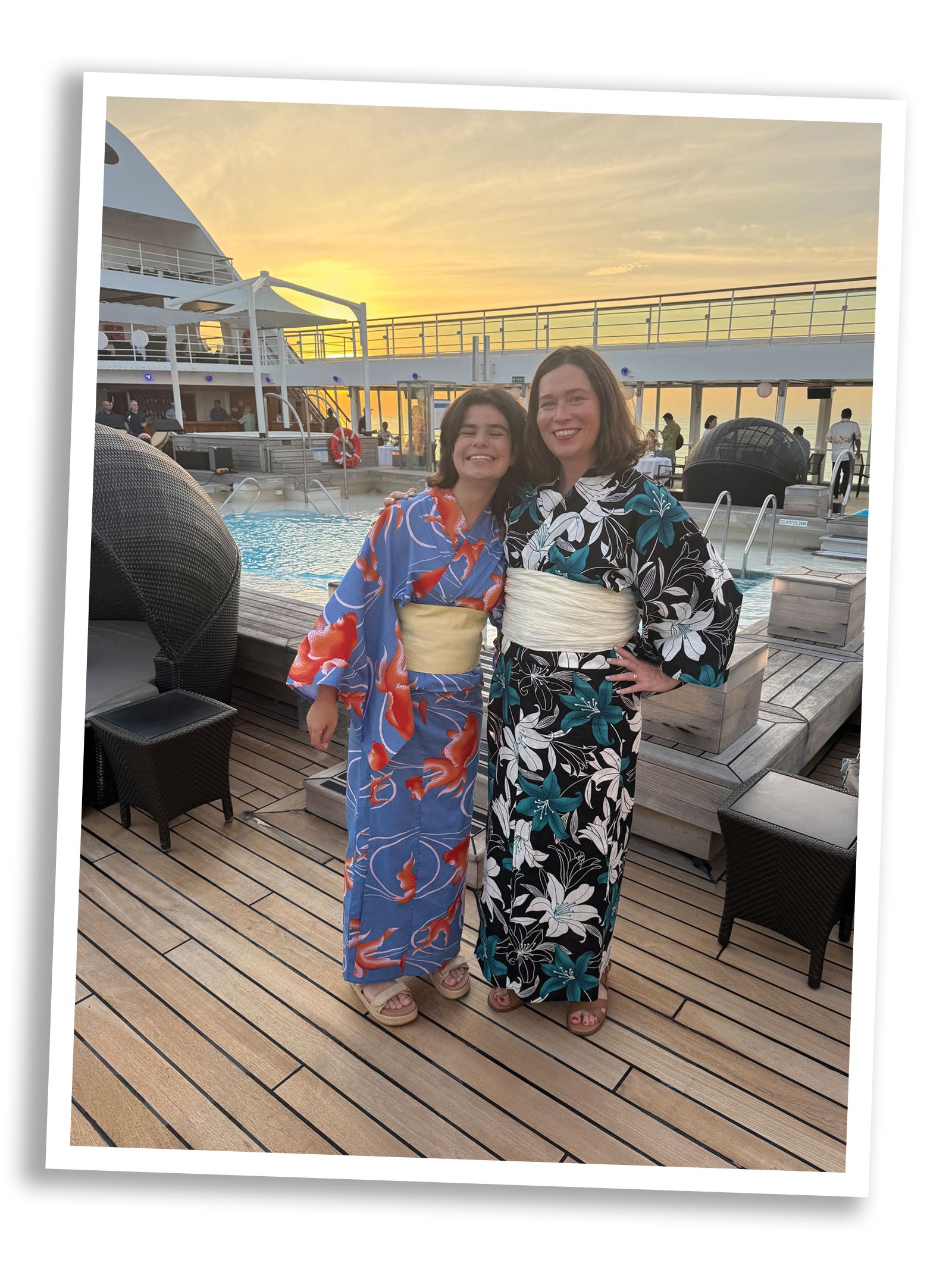
The author, right, and her daughter in traditional summer kimonos on the deck of the Mitsui Ocean Fuji. (Photo by Rebecca Tobin)
The author, right, and her daughter in traditional summer kimonos on the deck of the Mitsui Ocean Fuji. (Photo by Rebecca Tobin)
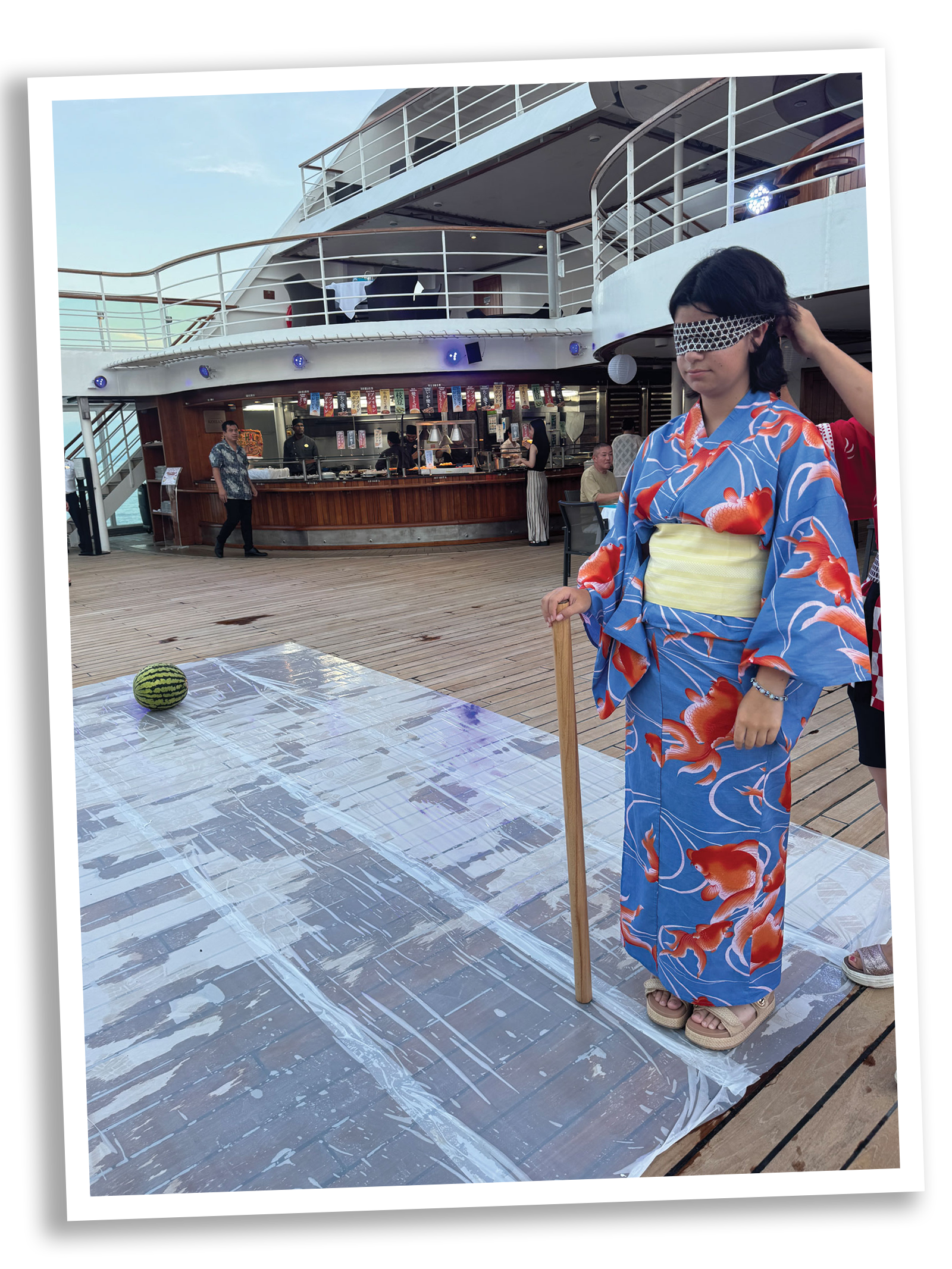
The author's daughter, wearing a yakuta, is being blindfolded for a traditional summer Japanese game where the participant tries to smash open a watermelon. (Photo by Rebecca Tobin)
The author's daughter, wearing a yakuta, is being blindfolded for a traditional summer Japanese game where the participant tries to smash open a watermelon. (Photo by Rebecca Tobin)
My daughter and I were wrapped up snugly in our yukata (additional praise goes to the staff for being extremely deft with tying obi knots). That evening we made our appearance on deck, where I realized that Americans were among only a handful of diners wearing traditional garb.
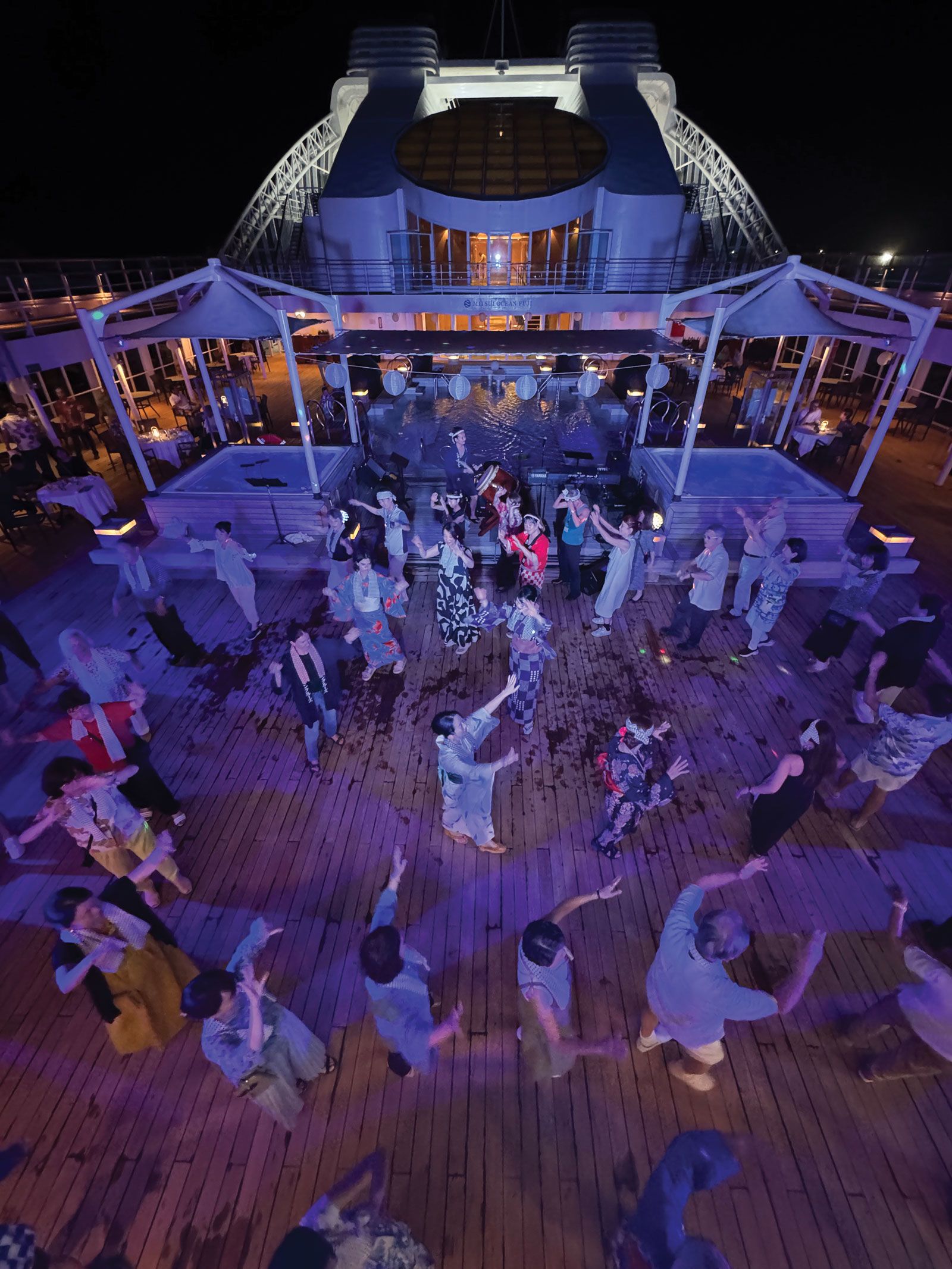
Undaunted, we dove into as many activities as we could. My daughter participated in suikawari, a watermelon smashing contest (like a pinata, but with a watermelon on the ground instead). We ate delicious food from stations set up around the deck. Then, I put the folk dancing to use. As the staff played a taiko drum, we moved slowly and deliberately in a circle. The steps were mostly unfamiliar, but as an activity, it felt familiar: It was fun.
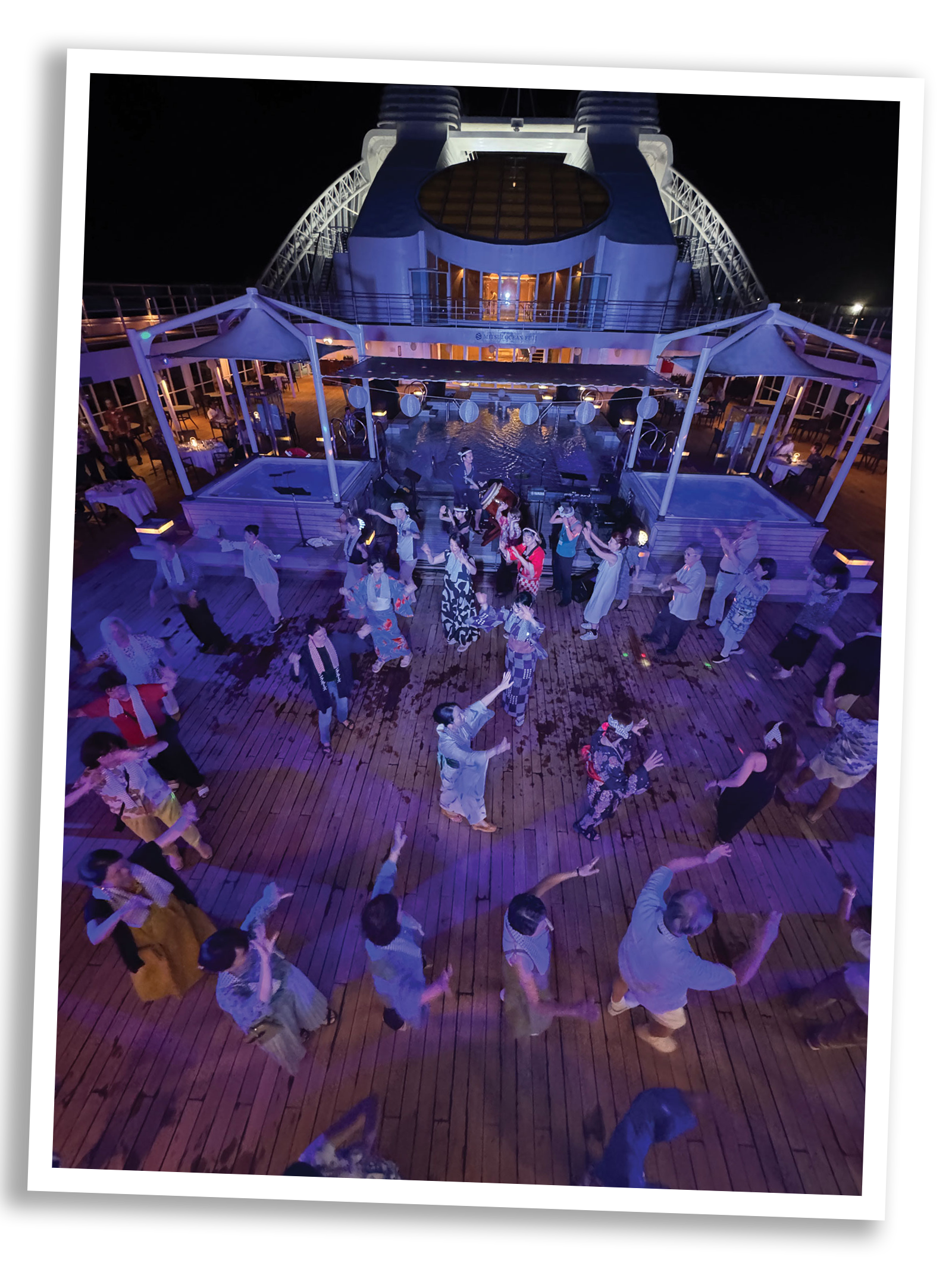
Mitsui Ocean Cruises passengers dance on the deck of the Ocean Fuji during the summer festival party. (Photo by Rebecca Tobin)
Mitsui Ocean Cruises passengers dance on the deck of the Ocean Fuji during the summer festival party. (Photo by Rebecca Tobin)