
Growing inclusivity at sea
Being a welcoming and inclusive cruise line for diverse audiences requires intention. Black travel professionals have some ideas about where to start.


In 2022, the expedition cruise company Hurtigruten Group invited six Black members of the travel industry on a sailing to Antarctica.
The group was the company’s newly formed Black Traveler Advisory Board, and Hurtigruten wanted the members’ feedback. What could the line do better, not only to reach more travelers of color like themselves, but to offer a welcoming and inclusive experience for those who ultimately would decide to book a sailing?
One place to start, Hurtigruten heard from board members, was as simple as the language it used. For example, it could avoid referring to Antarctica as “the white continent,” a suggestion the company immediately implemented, said Anders Lindstrom, who launched the advisory board and manages Hurtigruten’s North American communications.
Language is just one of the many elements of a cruise experience that can shape whether travelers of color feel embraced, beginning with the search and booking process and continuing on the trip itself. In conversations with travel advisors and influencers of color as well as advocates for more inclusion in travel, everything from onboard activities to the specific influencers a company partners with were all said to make a difference.
Becoming more welcoming and inclusive for diverse audiences is an area with plenty of room to grow, these sources said, and doing so requires intention. It must originate from an authentic desire to do better by travelers of color and members of other minority groups, not just create an image of being diverse.
“I think that’s what’s most complicated about all of this, is that it can’t just be lip service, and it can’t just be part of a strategic plan or checklist,” said Kareem George, CEO of the luxury-focused agency Culture Traveler. “There has to be an authentic interest in the engagement and a thoughtful consideration of what the engagement opportunities may be.”
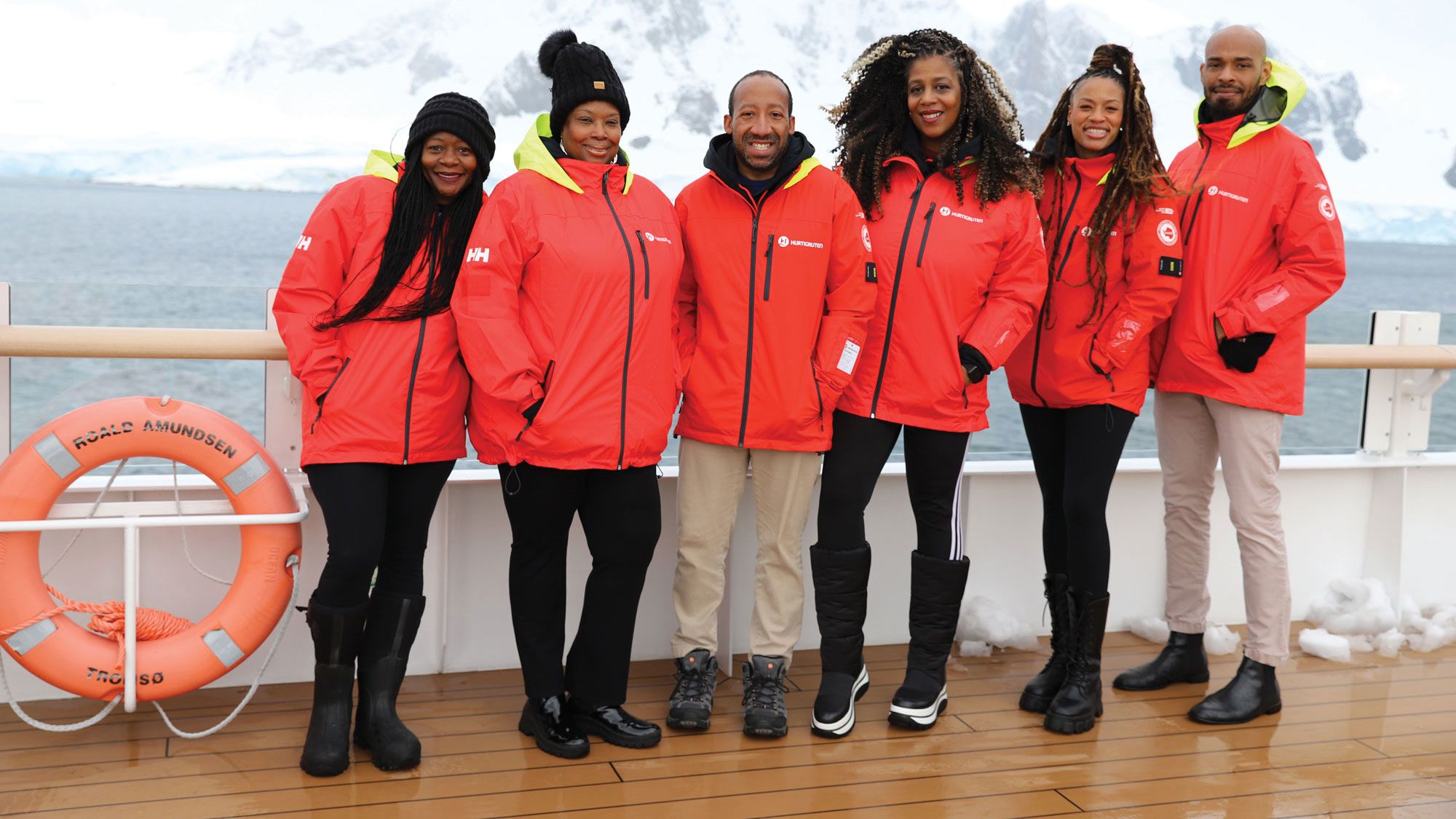
Members of Hurtigruten’s Black Traveler Advisory Board on a 2022 expedition cruise in Antarctica. From left, Naledi Khabo, Stephanie Jones, Kareem George, Rue Mapp, Martinique Lewis and Anthony Gould. (Photo by Anders Lindstrom, Hurtigruten)
Members of Hurtigruten’s Black Traveler Advisory Board on a 2022 expedition cruise in Antarctica. From left, Naledi Khabo, Stephanie Jones, Kareem George, Rue Mapp, Martinique Lewis and Anthony Gould. (Photo by Anders Lindstrom, Hurtigruten)
Representation
One thing everyone agreed on is that a telling component of a cruise is how the line presents itself through marketing. If a traveler sees someone with their skin tone, in a relationship that looks like theirs or looks their age in advertising materials, not only are they likely to feel as if the cruise line wants them there but they feel more confident that they’ll see other people like themselves once onboard.
“If we don’t see ourselves represented, it’s a red flag for us,” said Martinique Lewis, president of the Black Travel Alliance (BTA), during the alliance’s annual state of the industry webinar. “For a lot of people, they say, ‘If I don’t see myself, I’m not coming.’”
Intentionally bringing people of color into advertising is a change Hurtigruten has made in recent years, Lindstrom said, and a departure for the Norwegian company.
“Based in a country with a very homogeneous population, we had too many blond people in our ads by default as most content was created by a Norwegian company using Norwegians as models,” he said. “It had simply not been questioned before.”
Partnerships with social media influencers, a more modern form of marketing, are similarly impactful in shaping the impression of whether cruise lines are welcoming for travelers of color, said Vynnessa Smith, a travel content creator.
Cruise lines partner with influencers by inviting them on sailings and giving them the opportunity to create digital content. Smith said cruise companies typically ask for the demographics of her digital audience when deciding whether to work with her, and her audience by and large is a lot like her: a Black, single woman in her mid-30s.
When cruise lines partner with influencers like her, Smith said she considers it an indication that they want to see more young, Black, female solo travelers.
Cruise lines interested in embracing an array of customers have used the influencer marketing tool to their advantage, Smith said, calling out relative newcomer Virgin Voyages specifically.
The effort has been intentional, said Alex Zeitz, Virgin’s senior director of international operations, resilience and inclusion. “We partner with individuals who authentically mirror the modern traveler.”
Some cruise lines, however, end up excluding influencers who represent certain identities, Smith said.
“While they have diversified how they do their marketing, they’re also using it to segregate the space,” she said of some cruise brands. “I know I’ll never hear from certain cruise lines.”

‘I know I’ll never hear from certain cruise lines.’
Her audience uses her reviews to evaluate whether they will enjoy a cruise, Smith added. That’s why she likes to promote travel experiences where she feels most welcome; she knows that booking a vacation is a sizeable purchase.
“There are so many things that can go wrong on a vacation,” Smith said. “That could be weather, it could be the suite that you paid for. But then when you add social context to it, like you had an unsavory exchange with somebody, and you’re wondering, ‘Is it because I’m old? Is it because I’m this color? Is it because I’m gay?’ When you add on those kind of interactions on top of a holiday that’s already not up to par, then it really feels like, ‘Where are my dollars going?’”
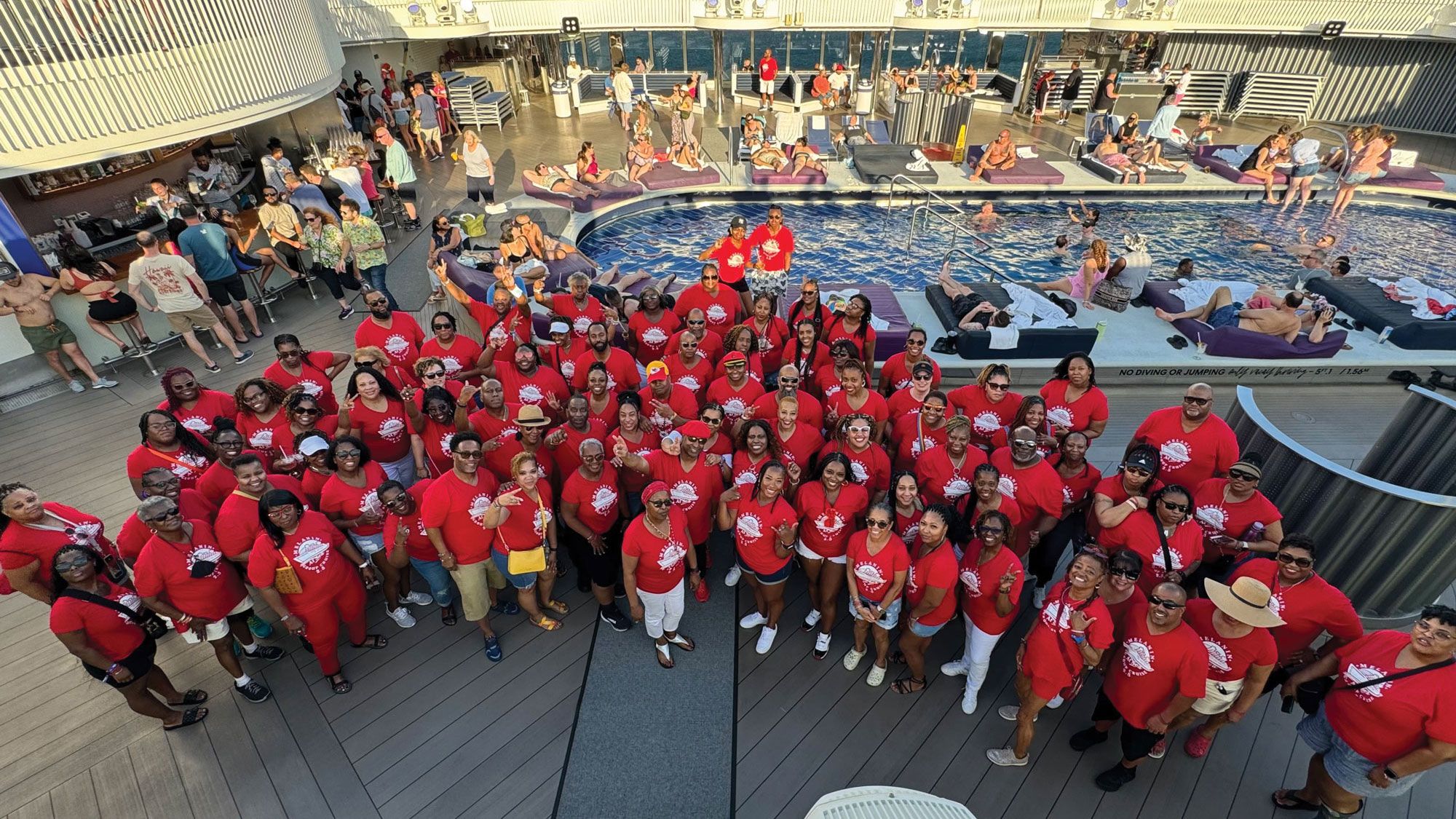
A Melanin at Sea group photo on a Virgin Voyages sailing in February 2024. (Photo by WGrayPhoto / Sherik Gray)
A Melanin at Sea group photo on a Virgin Voyages sailing in February 2024. (Photo by WGrayPhoto / Sherik Gray)
Welcomed aboard
When exploring luxury cruises, some travelers of color are not surprised to learn that they will likely be one of just a few nonwhite customers onboard, should they choose to book, George said. A key factor that will help them determine whether to choose that line, he said, is whether they can still expect the same high quality of service as everyone else.
“To put themselves in an environment or situation where they’re going to be isolated in some way, they’re going to want to know that there’s a staff and a team there that values them and that’s going to offer them a consistent high level of service that they would offer to anyone else,” he said. “They’re not looking for special treatment, but they’re looking for the same treatment that everyone else is getting.”
A simple way to ensure everyone is receiving the same treatment is for service staff to use inclusive language, he said. For example, words like “partner” or “parent” rather than “wife” or “father” so as not to make assumptions about the makeup of a guest’s traveling party.
“I just can’t express how huge a difference those small language nuances can make,” George said.

‘I can’t express how huge a difference small language nuances can make.’
He has often experienced being the only guest of color or one of just a few on an entire ship. When demographics are that skewed, it behooves the cruise line to make an extra effort to make those guests of color feel included, such as by inviting them to a captain’s dinner, he said.
“Anything that can provide more of a sense of community, more of a sense of support, so that those folks don’t feel so much like the outsider,” he said.
When the Black Travel Alliance’s Lewis sailed with Hurtigruten to Antarctica, the ship had a library full of books about the continent and explorers, she said.
She said she was disappointed to see that missing from the collection was anything about George Washington Gibbs Jr., the first African American explorer to visit Antarctica. (After getting that feedback, Hurtigruten added a book about Gibbs’ Antarctica journey written by the explorer’s daughter, Lindstrom said.)
The activities, resources and amenities on a cruise shape whether the experience feels inclusive of diverse identities, said Lewis. Others agreed, naming everything from cuisine to music to trivia questions as details that make a difference.
Black cruise enthusiasts warmed up significantly to Virgin after it introduced Black DJs onboard, said Jasmine Ramnarine, a travel advisor and co-creator of the digital and in-person group cruise community Melanin at Sea.
She said Black cruisers who traveled with Virgin started reporting better experiences after those DJs were brought on, saying that they initially found the DJs mostly played techno and house music rather than a wider variety.
“After initial feedback indicated our musical lineup leaned too heavily in one direction, we expanded to include DJs and music curation that broke the cruise mold,” Zeitz said.
Activities like trivia can also be a way to make people feel like they belong, Ramnarine said.
“Have something on a Black artist that we all would know about,” she said. “I get it. It’s all cultures and all different types of people on every cruise line. You have to cater to every type, but it would be nice to see that type of representation on the cruises.”
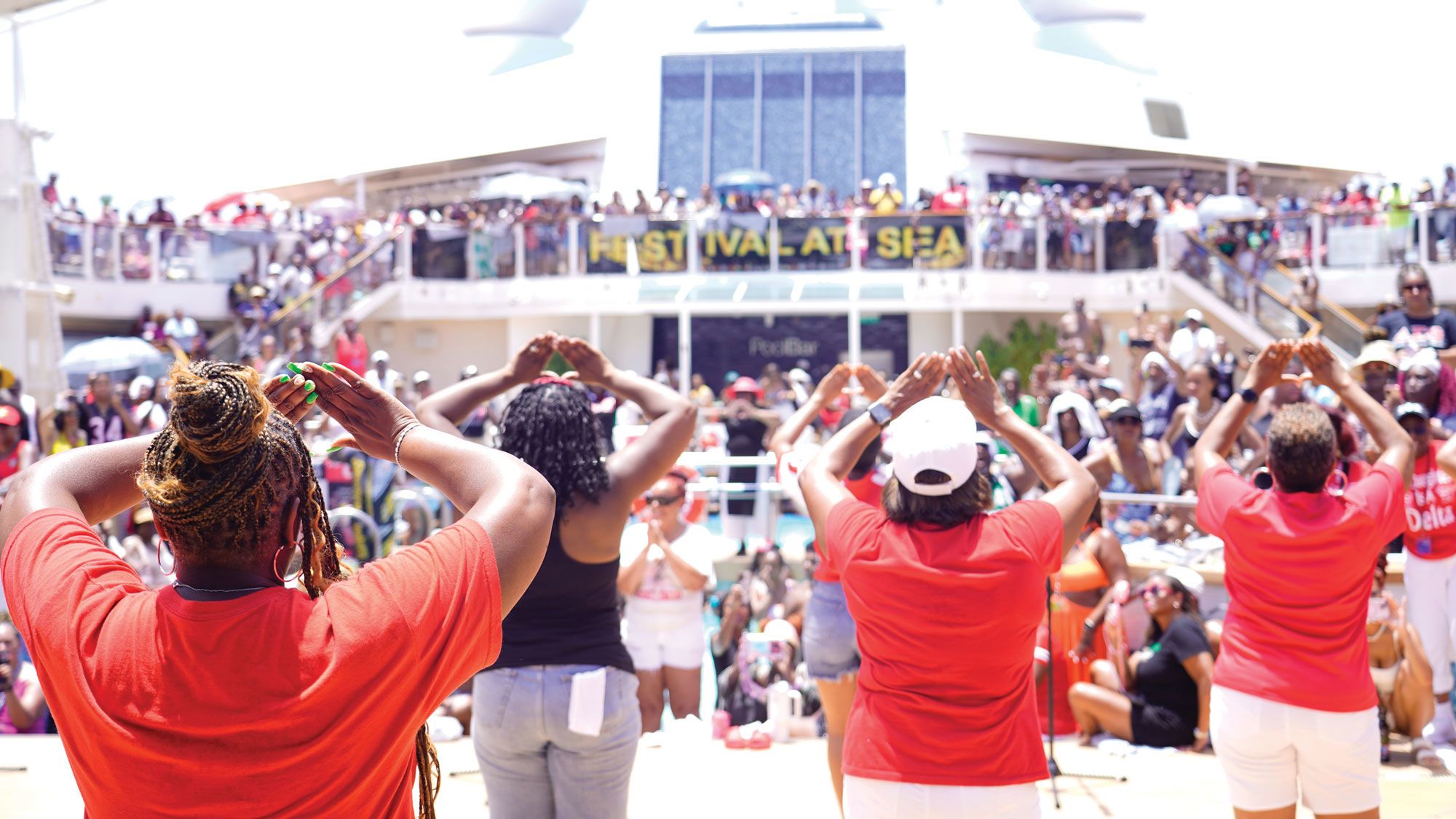
“Stomp the Deck,” a step show during the annual Festival at Sea charter cruise that celebrates African American culture, on the Celebrity Reflection in 2024. (Photo by Dexter Nixon and students in the Morgan State University Visual Arts Department)
“Stomp the Deck,” a step show during the annual Festival at Sea charter cruise that celebrates African American culture, on the Celebrity Reflection in 2024. (Photo by Dexter Nixon and students in the Morgan State University Visual Arts Department)
Group dynamics
One way that cruisers looking for assurances that a cruise will be more reflective of who they are or what they are interested in is to look for preformed groups.
A growing number of group cruise experiences cater to specific demographics, hosting activities that speak directly to the cultures represented and establishing a sense of community.
Lewis works with Festival at Sea, now in its 33rd year, which charters ships and curates African American cultural cruises.
“There’s dominoes tournaments, there’s two-on-two basketball, there’s step class every day,” she said. “There’s literal programming that speaks to what Black people do in their everyday lives and what they place value on.”
Jasmine Ramnarine and her husband, Richard, host group cruises from the Melanin at Sea Facebook group. Their experience doesn’t have a theme beyond just bringing cruisers of color together, but Richard noted other groups are more customized, such as a cruise for line dancing.
“I think a lot of travel advisors could niche down into something that they already do, like if it’s crocheting, you could do a Black crochet group,” he said. “There’s a Black Peloton group that does extremely well.”

‘Travel advisors can niche down. If they do crochet groups, do a Black crochet group.’
Cases for inclusivity
Even when companies are intentional about enhancing inclusivity, the unpredictable nature of business can create challenges for keeping the matter at the forefront.
After the Black Traveler Advisory Board’s Antarctica sailing and a second cruise on another of the brand’s ships, the group met in Oslo in June 2023 with Hurtigruten Group executives, Lindstrom said. It was there that the board shared its recommendations, some of which were quickly implemented.
But then, the company announced internally that Hurtigruten and Hurtigruten Expeditions — now HX — were splitting. Remaining projects based on the advisory board’s recommendations were paused or canceled as a result, Lindstrom said.
“The split also resulted in shifting brand priorities and more limited budgets,” Lindstrom said. “Now that the two brands are fully independent, we at Hurtigruten are once again committed to taking a leading role in diversity and inclusion.”
Other lines expressed their commitment to inclusivity.
“Our guest profile is diverse and our workforce includes team members from more than 120 countries around the world,” Carnival Cruise Line said in a statement. “At all times, our ships are filled with people from every background, culture and walk of life, and it’s important to us that everyone feels at home onboard.”
A Norwegian Cruise Line spokeswoman said, “Encouraging tolerance and harmonious relations for our guests, crew and global shoreside team is core to our corporate ethos.”
Cultural inclusivity is central to Virgin’s brand identity, Zeitz said, and the company encourages crew members to come to work as themselves and express their identity through dress, hairstyles and tattoos. Women make up 36% of shipboard staff, he added, a number he wants to increase to 45% by next year.
“This commitment is not only the right thing to do but also a strategic advantage, ensuring Virgin Voyages remains authentically inclusive and reflective of the world we serve,” Zeitz said.
Making cruise products as inclusive as possible is also smart business, the Black Travel Alliance said. The U.S. Black leisure travel market accounted for $145 billion in travel spending in 2023 and represents 11% of the leisure market, according to a study MMGY Travel Intelligence produced with the BTA and the National Coalition of Black Meeting Professionals.
“We’re going to travel, and we’re going to spend money,” said Jason Dunn, the coalition’s CEO, during the BTA webinar. “And so the issue is, do you want it? Want our cash?”
Lewis said that since the BTA was founded, in the aftermath of the 2020 killing of George Floyd, the group continues to preach the same argument every year.
“We want to see ourselves reflected,” she said. “We want to be taken seriously.”