




If you’re in
Tokyo ...


An elite dining experience at the new Janu hotel that brings diners up close and personal with cuts of some of Japan's finest, and famous, wagyu beef.
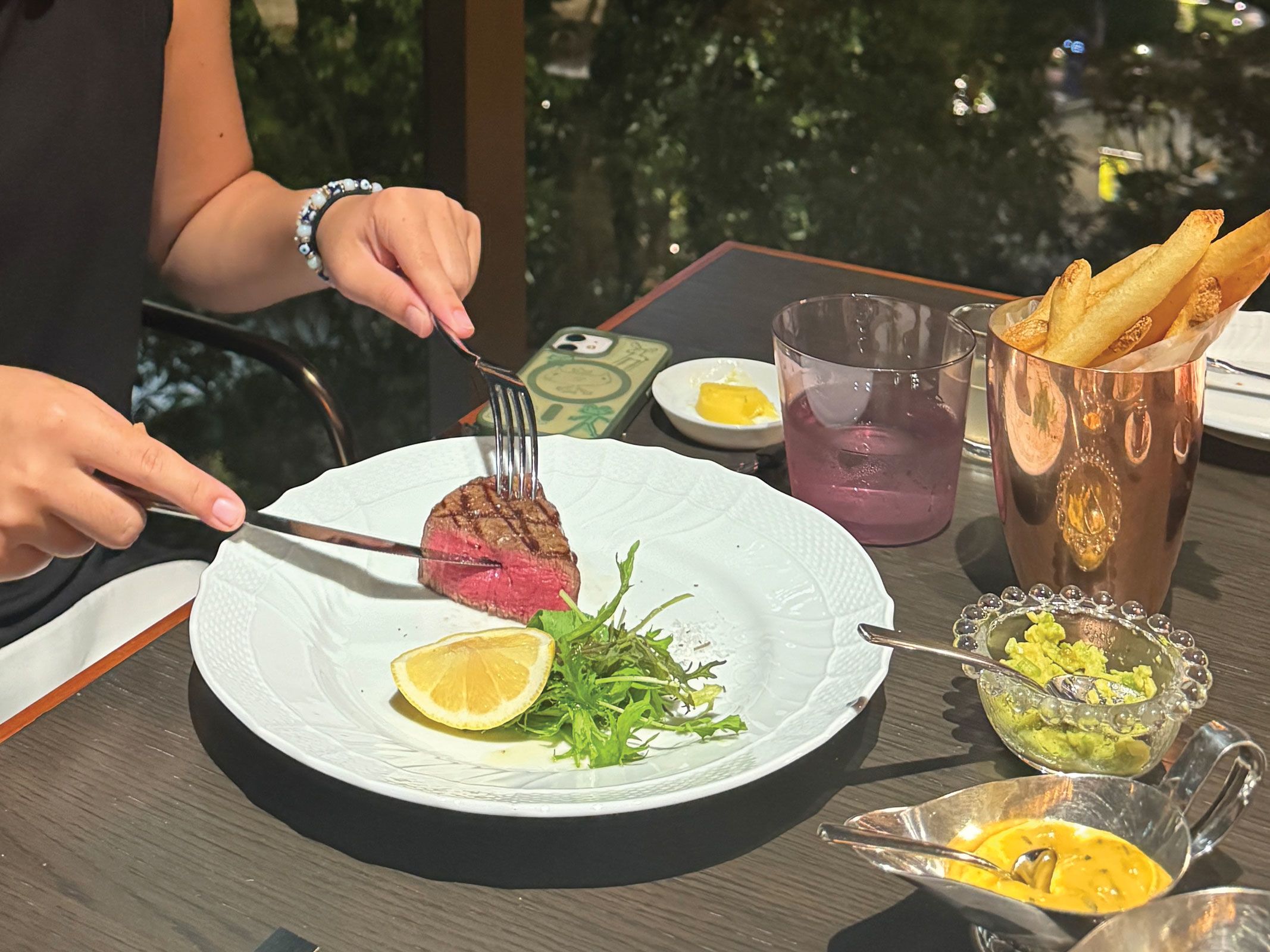
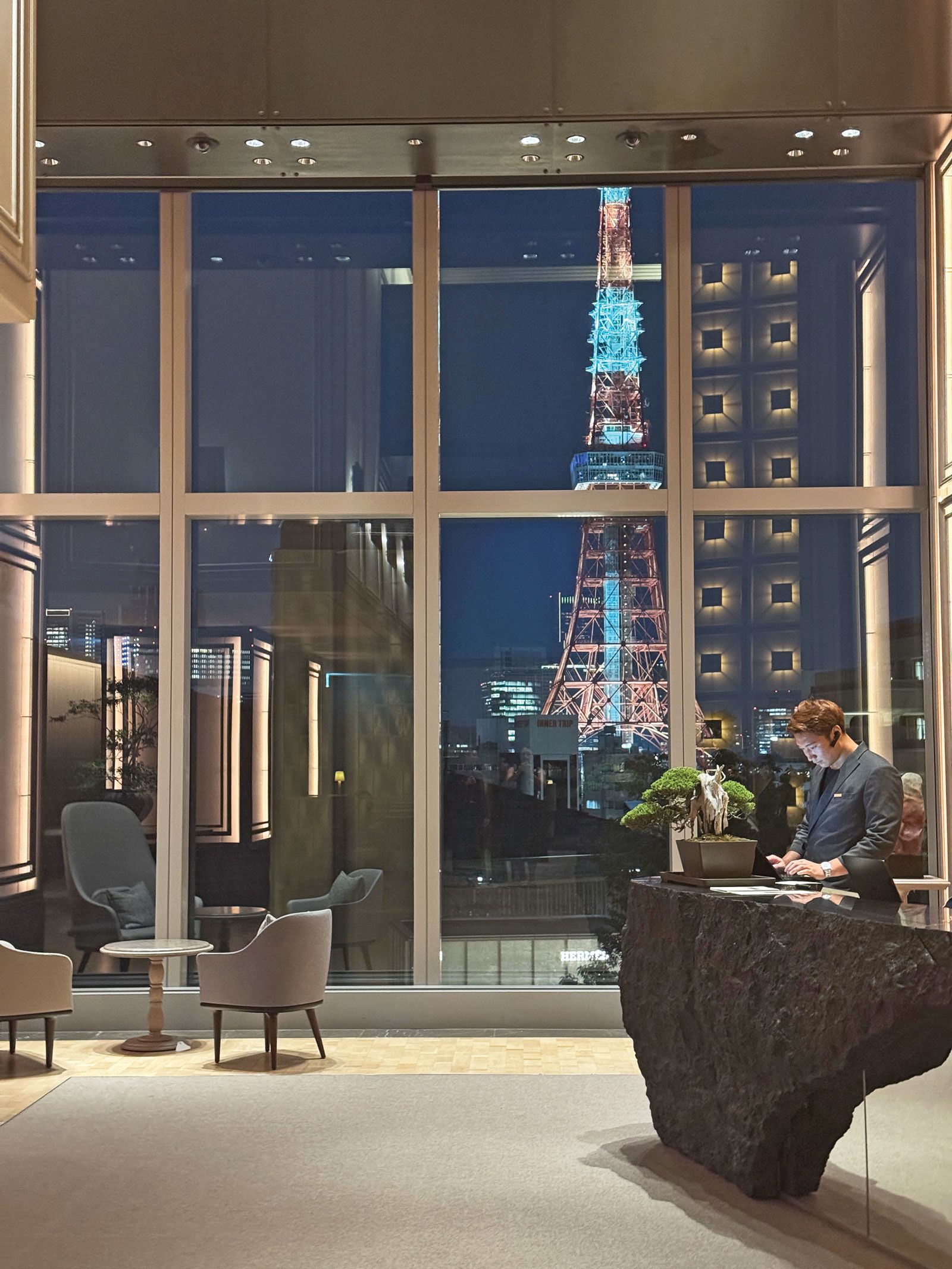
My daughter and I were seated at the Janu Grill in Tokyo, well placed at a table to admire the views of the Azabudai Hills neighborhood and the Tokyo Tower. But our eyes were drawn to the kurohana beef tenderloin in front of us.
It was the kind of cut you pressed with your fork to watch its springy action. Inside its crispy grilled exterior, it was perfectly pink. And yes, it dissolved in my mouth.
“Oh my God,” I said to my daughter. “This could be a top contender for Best Steak Ever. Could it be?”
“Mmmm. Yeah, this could be.”
(Another mouthful) “Best steak?”
“Mmmhmmm!”
Now, it might be that we’d just touched down after a 14-hour flight and had hurried over to the Janu Tokyo in a taxi for a tour and dinner. But jet-lagged as I was, I don’t think anything really would have altered the taste of the kurohana beef.
Travelers coming to Japan to indulge in high-quality beef, take note: The term wagyu technically means “Japanese cow” — but it actually refers to specific types of cattle raised in very specific ways. Most Americans are familiar with Kobe beef as a top example, but there are other renowned names, such as Omi and Matsusaka.
Above all, wagyu is known for its unique marbling, in which the fat is distributed throughout the meat, making it exquisitely tender and melty.
Janu called our kurohana cut “a lesser-known but high-quality wagyu brand, offering excellent texture and flavor.” We paired this springy, tender steak with a bearnaise sauce and ordered grilled asparagus and french fries (in deference to my daughter; I bet the garlic mashed potatoes would have been fantastic).


Jet lag or no, I’d recommend a Janu gin and tonic to kick off the evening meal.
The Janu, which opened last year in Azabudai Hills, the latest upscale neighborhood development from the Mori real estate conglomerate, is a sister brand to Aman, with a young, lively vibe. In an interview last year, Aman’s then-chief commercial officer Anna Nash (now with Explora Journeys) said the Janu would be “more integrated with the community.” And indeed, the hotel’s lobby and restaurants are easily accessible from the adjacent shopping complex that includes the Tokyo Metro or from an underground entrance for taxis.
If your tastes don’t run to steak, there are several other restaurants in the Janu fold, including Hu Jing, a modern-Chinese eatery that was bustling on this Friday night; Mercato, which serves Italian in a market-style setup, with glass counters displaying fresh seafood; and Iigura, a zen-like temple for omakase-style sushi. A patisserie off the lobby sells the kind of gorgeous pastries one only finds in Japan.
One of the busiest spots in the hotel during our visit was the Janu Lounge, where elegant women, including some in kimonos, were enjoying evening high tea service.
But if your tastes do run to award-winning wagyu, there’s more to discover at the Janu Grill. Each of the Janu’s restaurants includes bar dining around open kitchens, and at the Grill guests at the counter can watch the expert chefs in action. Perhaps the chefs will be tackling the Omi rib-eye, a famous type of wagyu that Janu said is known for “high marbling and deep umami flavor.”
The restaurant’s signature dish is matsunaga sirloin, a beef from Shimane Prefecture that not only is rich in flavor but conforms to the restaurant’s sustainability goals.
As is the case for most top hotel restaurants, be sure to bring your appetite and your wallet. Eight ounces of kurohana cost about $134.