
Focus on business travel


Corporate groups find value in wellness
Company gatherings are trading stuffy rooms and PowerPoints for plant-based meals, mocktails and mindfulness — all in pursuit of healthier, more engaged teams and a better return on human capital.


Forget the coffee.
Your next conference might jolt you awake with a high school marching band and the crash of cymbals or ease you into the morning with Tibetan sound bowls and aromatherapy. And neither choice would seem out of place today, even in the most buttoned-up boardroom setting.
Welcome to the new era of corporate gatherings, where a rigid schedule of back-to-back PowerPoint presentations has been replaced by balance-seeking agendas featuring yoga sessions, liquid IV hydration stations and chair massages.
TJ Abrams, vice president of global well-being at Hyatt, traces this shift to the pandemic’s aftermath, when companies were forced to reckon with new work-life balance expectations.
“We have seen this trend picking up over the last few years, coming out of Covid, as teams are having to think about not only how to drive performance but retention with their employees in a very different sort of competitive landscape than pre-Covid,” he said.

‘We have seen this wellness trend picking up over the last few years, coming out of Covid.’
The change in corporate attitudes is also being shaped by generational and cultural forces.
“Burnout is no longer cool,” said Rachel Andrews, global head of events at meetings, events and hospitality technology provider Cvent. “I remember when I first started in the industry, it was like, you’re only doing well if you’re working until 2 in the morning. Now, that’s no longer acceptable. And with the rise of Gen Z, and as a millennial myself, [we feel the need] to incorporate wellness into our events and our daily lives.”

‘Burnout is no longer cool. We want to incorporate wellness into our events, our daily lives.’

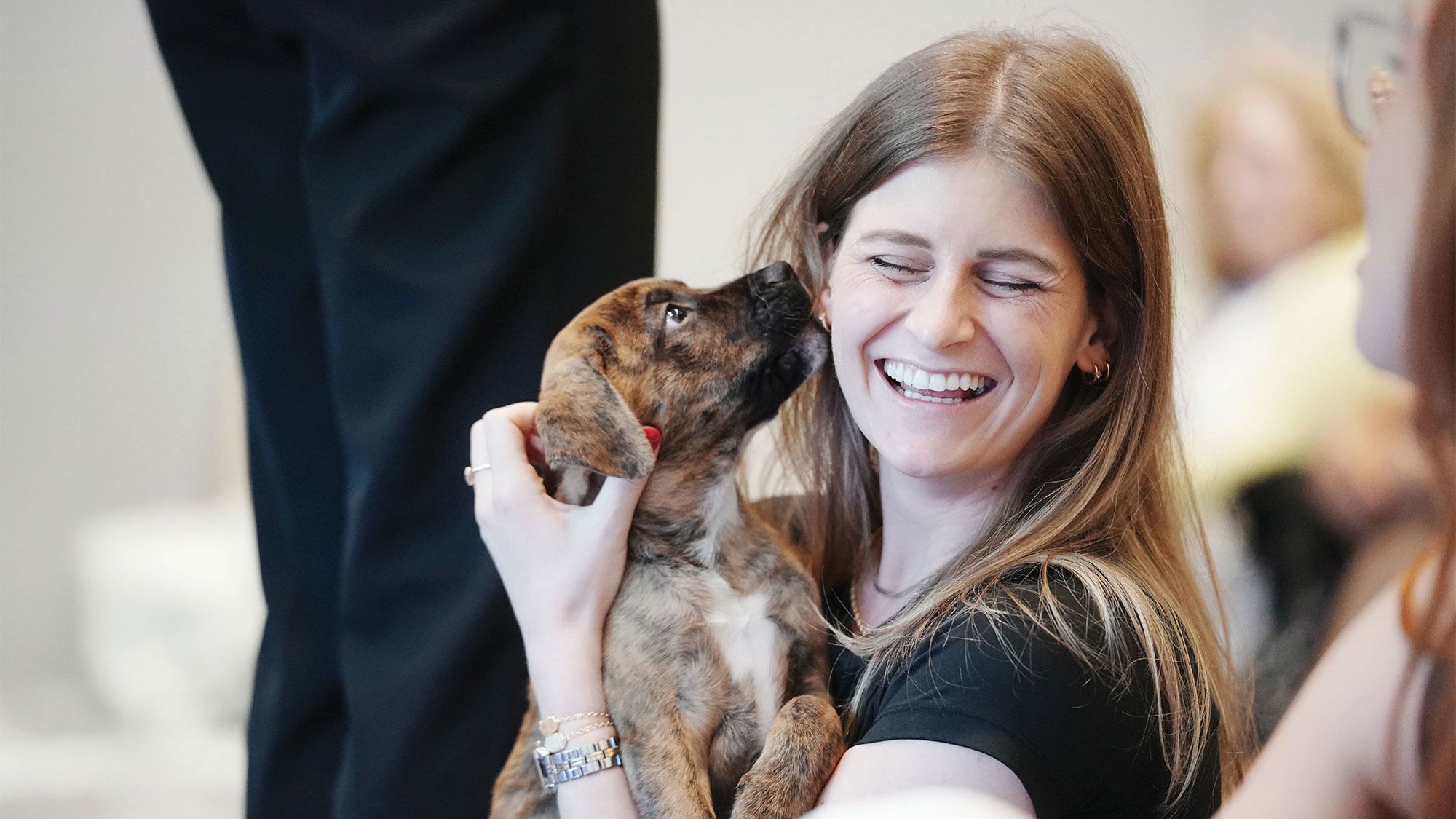
An attendee participates in puppy yoga during the annual Cvent Connect conference for event professionals, marketers and hospitality experts. (Courtesy of Cvent)
An attendee participates in puppy yoga during the annual Cvent Connect conference for event professionals, marketers and hospitality experts. (Courtesy of Cvent)
The shift toward wellness appears to reflect a broader corporate awakening about the true cost of employee burnout, with companies increasingly recognizing that “mental health and physical health is so important,” said Chris Reed, senior vice president of sales and marketing for The Ranch, which has wellness retreat properties in Malibu, Calif., and New York state’s Hudson Valley.
“Those days when people said, ‘I worked 14 hours today,’ like it’s a badge of honor are over,” added Reed. “There’s a realization of the need for balance and a physical and mental reset, because it’s proven that will help you be sharper, think more clearly and be a better employee.”
Properties and planners are taking note of this change in mindset. When Reed started building the corporate sales platform at The Ranch Hudson Valley, which debuted early last year, the property hosted maybe one corporate buyout every few months.
Now, they’re booking nearly one per week. The 26-room estate — situated on 200 acres, 45 minutes from New York City — can accommodate groups of up to 30 people for full property buyouts.

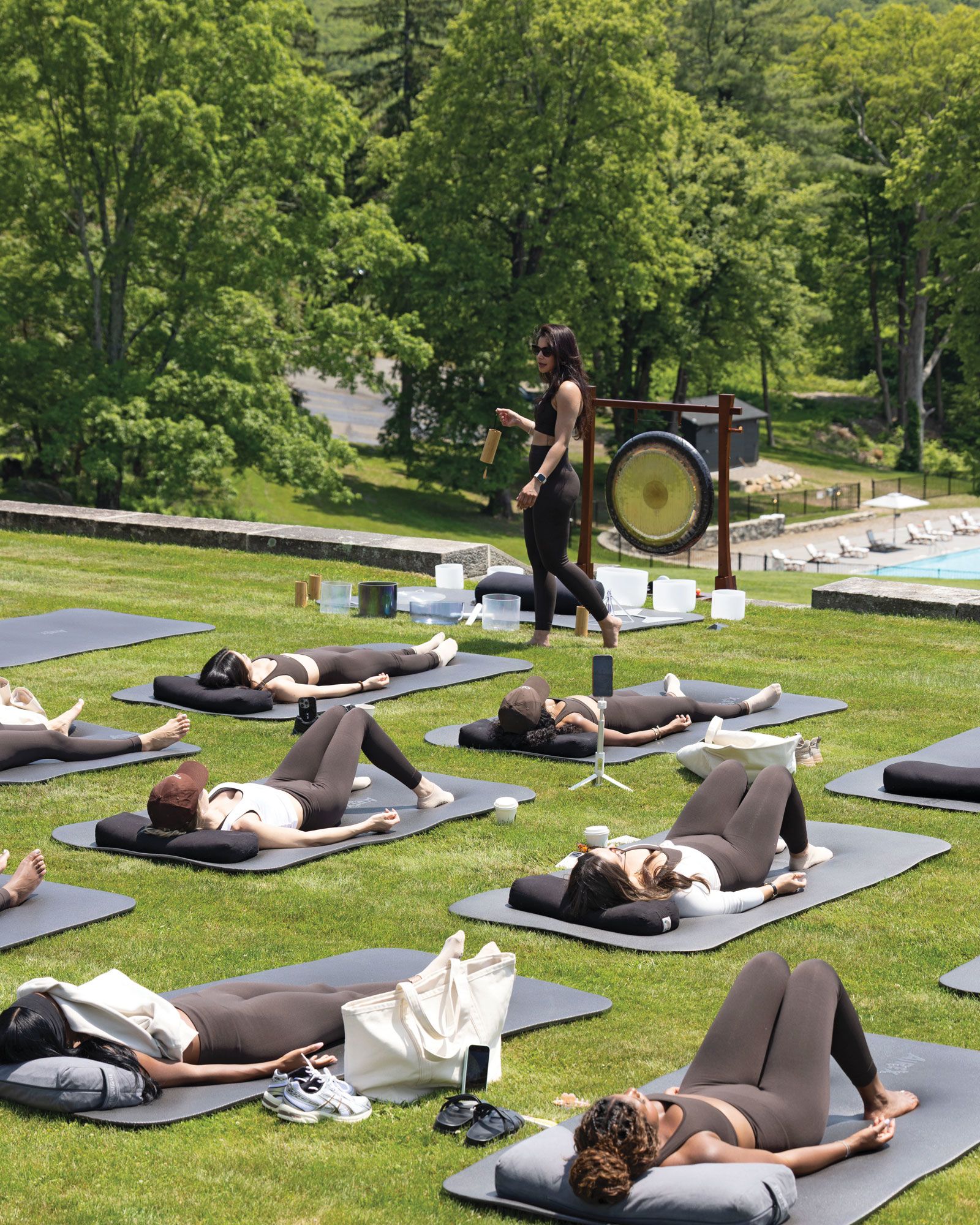
A wellness session featuring sound bath elements at The Ranch Hudson Valley in New York state. (Courtesy of The Ranch)
A wellness session featuring sound bath elements at The Ranch Hudson Valley in New York state. (Courtesy of The Ranch)
“Our sweet spot has been corporate takeovers,” Reed said, adding that these corporate groups can opt to follow the property’s signature retreat program or customize their experience. Some companies embrace the full Ranch treatment, involving extensive hikes, plant-based cuisine and an alcohol- and device-free environment, while others incorporate select classes into their meetings agenda or opt for alcohol and animal protein.
“We had one corporate group that came in, and they just wanted this very traditional meeting that you could have at any hotel,” said Reed, adding that The Ranch team encouraged them to incorporate a few wellness activities into the mix, such as morning yoga and a cooking competition. “We were able to persuade them. And the next year, they came back and said, ‘So we actually really loved those classes, can we do that daily?’”

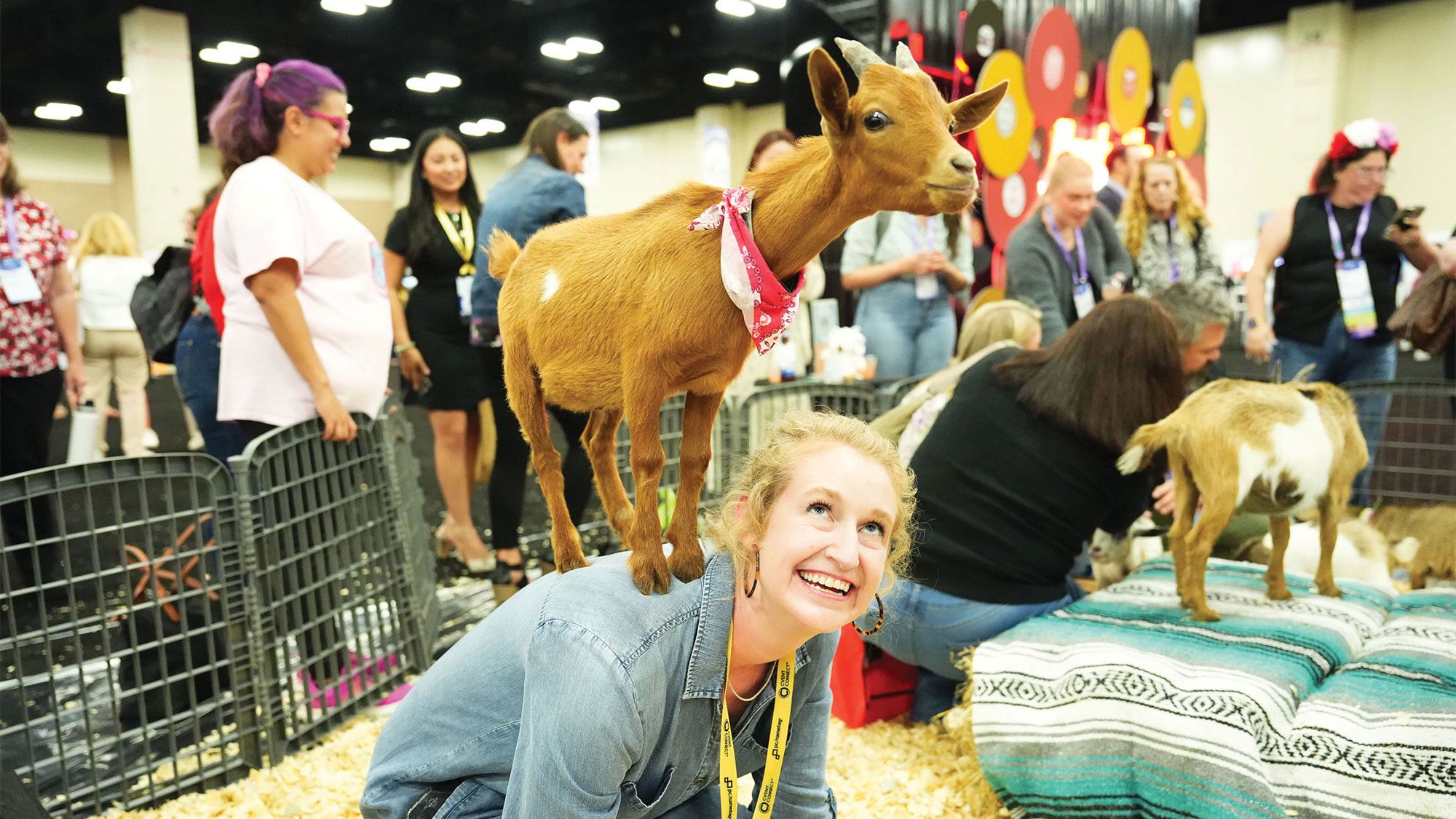
Cvent attendees take part in goat yoga. (Courtesy of Cvent)
Cvent attendees take part in goat yoga. (Courtesy of Cvent)
Small tweaks, big results
For meetings and event planners, splashing out on a luxe retreat package is just one way to incorporate wellness into corporate gatherings.
Sometimes, simple programming tweaks can prove surprisingly effective.
“We see breaks being given every hour now, which was something that was unheard of before,” said Julie Finn, director of conference services at The Inverness Denver.
The 302-room property suggests that corporate gatherings offer 15-minute breaks for every 45 minutes of programming, with some groups opting for add-ons like chair massages or five-minute hand massages during those pauses.

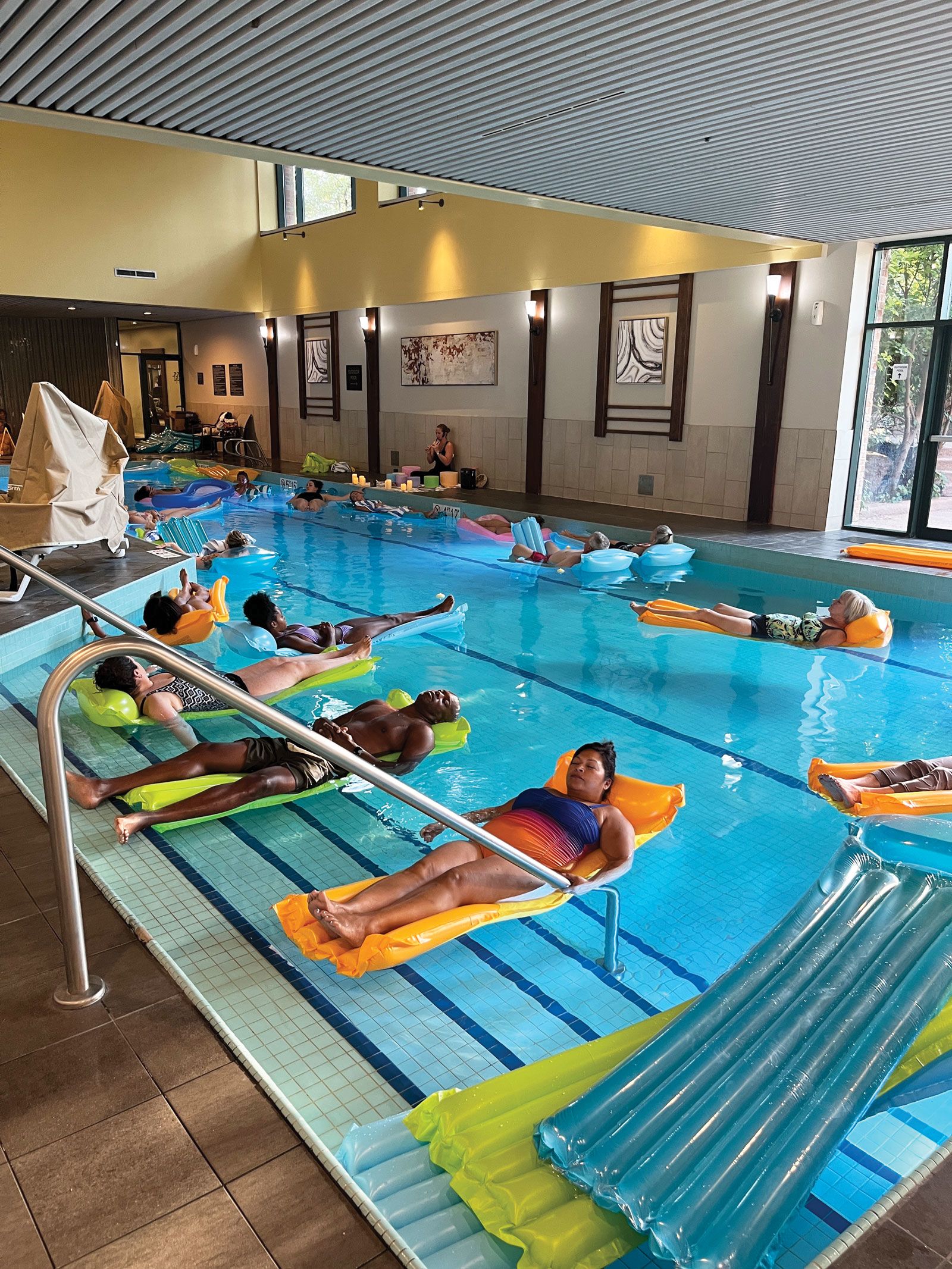
A group floats in a pool during a sound bath experience at The Inverness Denver. (Courtesy of The Inverness Denver)
A group floats in a pool during a sound bath experience at The Inverness Denver. (Courtesy of The Inverness Denver)
Cvent’s Andrews has similarly noticed that some popular wellness elements require minimal investment.
“You can have a wellness room with yoga mats and get a yoga instructor for very cheap,” she said. “And I’ve even made wellness rooms with existing conference furniture in a breakout room, adding a couple plants and a diffuser, and lowering the lights. That’s not a huge cost, but it does make an impact.”
At the Scottsdale Resort & Spa in Arizona, director of sales and marketing Tim Keough has seen demand for everything from puppy yoga to chakra-alignment sessions among corporate clients.
But one of the most-requested wellness offerings for corporate gatherings are simple “meditation rooms” or “quiet, reflective spaces.”
“Planners are prioritizing private spaces designed to offer a separate environment to step away, refocus, re-energize and ultimately engage during their meetings,” Keough said.
Andrews agreed that creating these types of spaces helps keep attendees engaged and present.
“In the past, if you wanted this sort of quiet zone, you had to go to your hotel room,” she said. “Now, if you’re offering that at your conference, you’re prolonging the life of the attendee on-site. If they go back to their hotel room, you never see them again.”
At the more elaborate end of the spectrum, some properties are pushing creative boundaries with programming that might have seemed absurd in corporate settings just a few years ago.
At the Grand Hyatt Nashville, the property’s barista — who also happens to be an aspiring country music artist — leads interactive songwriting sessions that blend storytelling, creativity and mindfulness.
“He’s brought his talents to this class that meets people where they are,” said Hyatt’s Abrams. “It allows them to sort of take stock from a mindfulness standpoint of what’s happening in their current day or life and translate that into really powerful words and a song that reflects not just the individual but the group.”
At Miraval Resorts, one of Hyatt’s most wellness-
focused brands, some corporate groups are embracing even more adventurous team-building activities.
Susie Klein, director of business development for Miraval, recalled one corporate group in February that concluded its strategic meetings with a 100-person cold plunge.
“Talk about memorable,” Klein said. “And everybody did it at the same time, the president on down.”
At Noble House Hotels & Resorts’ Estancia La Jolla Hotel & Spa near San Diego, corporate groups can partake in an activity that Jeff Livingston, a senior area director of sales and marketing for Noble House, described as “pairing leadership exercises with horticulture therapy.”
“Think goal-setting while arranging succulents or working in the garden,” he said, adding that “the tactile and calming nature of it” resonates with groups.
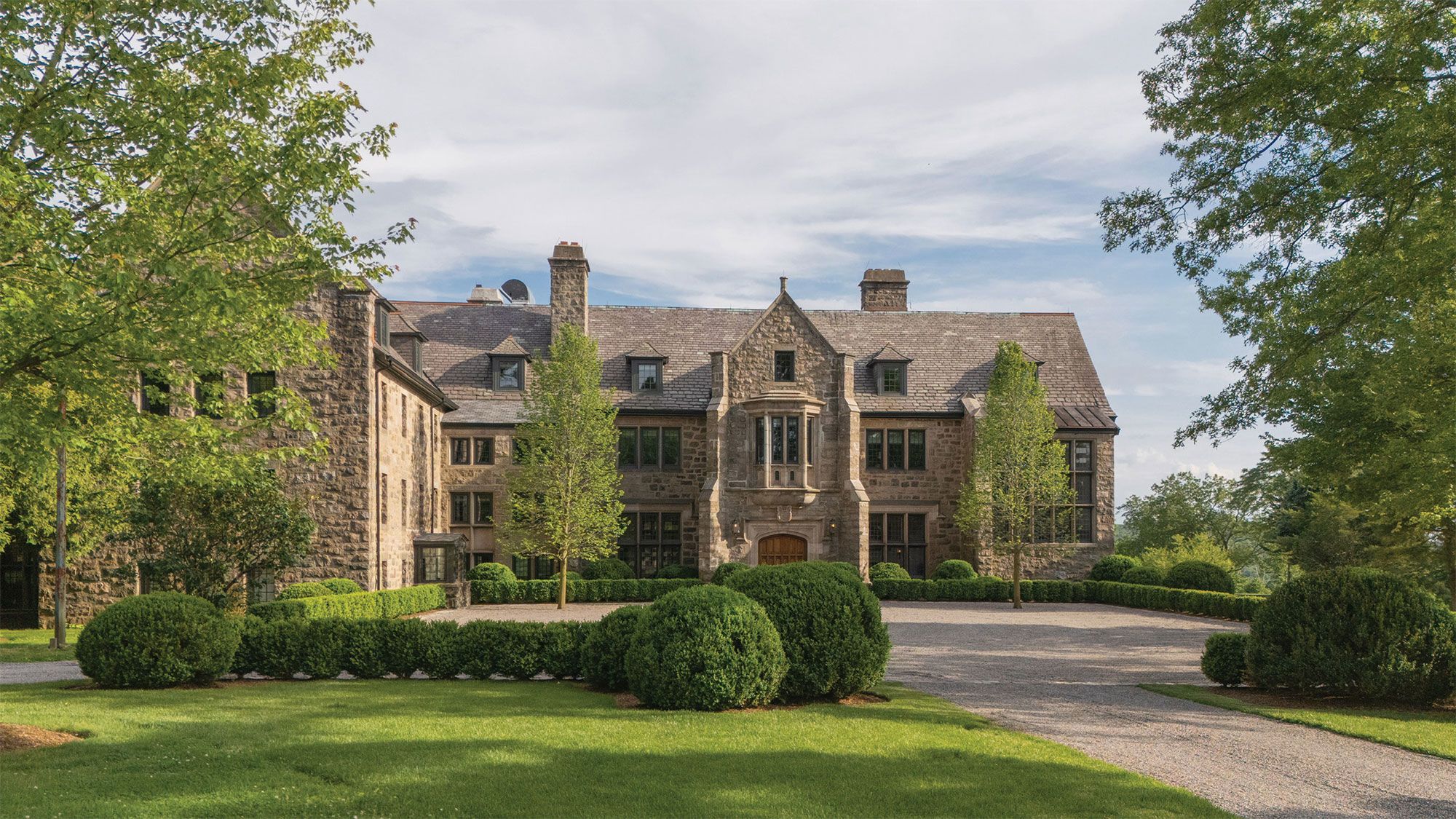
The exterior of The Ranch Hudson Valley, which can accommodate groups of up to 30 for full property buyouts. (Courtesy of The Ranch)
The exterior of The Ranch Hudson Valley, which can accommodate groups of up to 30 for full property buyouts. (Courtesy of The Ranch)
Drinks optional
Corporate events are also rethinking the traditional cocktail hour amid changing attitudes toward alcohol consumption.
“A huge percentage of our audience are mocktail enthusiasts or sober-curious,” said Andrews, adding that at Cvent events that has translated into more inventive mocktail options.
“We try to create something that you would actually want to drink rather than just providing sodas and water,” she said. “But admittedly, this is something I think the events industry can do a better job with. And a lot of times, it’s not necessarily the planners but the catering companies that need to come up with better ideas for that audience.”
Dr. Wilkinson’s Backyard Resort & Mineral Springs in Calistoga, Calif., has responded to this demand with an expanded “elixir” menu, featuring premium nonalcoholic spirits combined with adaptogens and botanicals.
Jose Ortega, the property’s general manager, said the property’s nonalcoholic play on a mojito and its mule mocktail are two of the more popular offerings.
“We have another one that tastes like it actually has mezcal in it, but it has no alcohol,” he added.
At The Inverness Denver, the property’s liquid IV water stations are a popular draw for corporate groups, serving as both a wellness amenity and a hydration boost for attendees who may be recovering from a late night.
“Our chef makes these [liquid IV] concoctions and floats fruit in it and all sorts of fun things,” Finn said. “We typically introduce it on the second day or third day, depending on when their awards dinner is or when you know they’re staying out late.”
However, the transition to alcohol-free offerings isn’t universal. At The Ranch properties, Reed reports that despite the brand’s wellness focus, “nine out of 10 groups must have alcohol.”
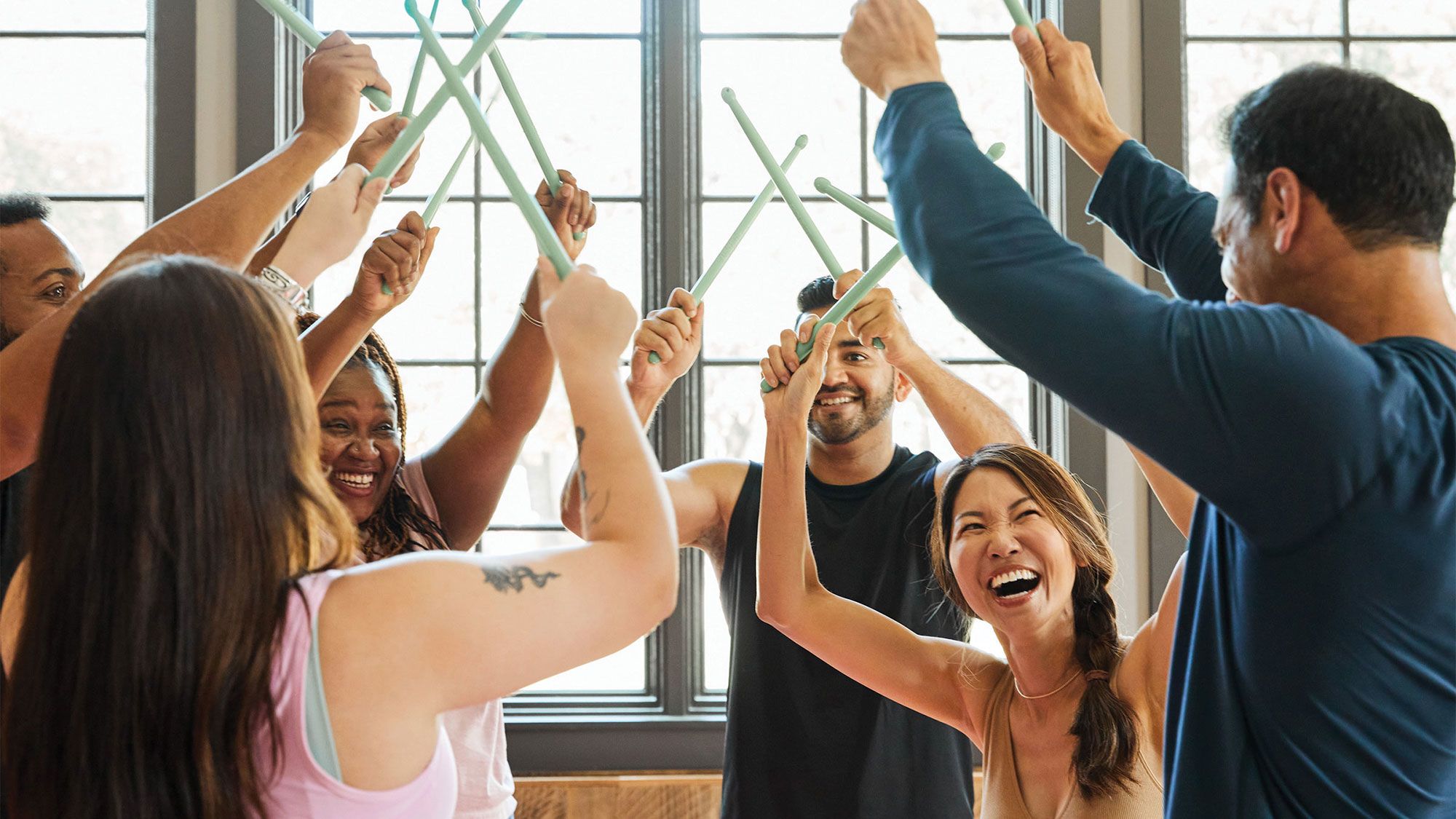
A group fitness class at a Miraval Resorts property. (Courtesy of Miraval Resorts & Spas)
A group fitness class at a Miraval Resorts property. (Courtesy of Miraval Resorts & Spas)
The value proposition
Wellness may not always require a major spend, but many companies are proving eager to invest in experiences that prioritize their workforce’s mental and physical well-being.
Noble House Hotels & Resorts’ Livingston reported that companies are allocating an additional 10% to 20% of their event budgets toward wellness elements these days.
“More companies are seeing the ROI in terms of attendee engagement, productivity and overall satisfaction,” he added.
At Miraval Resorts, Klein reported seeing a 10% to 30% increase in event budgets when companies embrace comprehensive wellness programming. Klein added that when she compares Miraval’s all-inclusive pricing to luxury hotel alternatives in major cities, “when you start doing $120 per person for breakfast, and $175 per person for lunch, plus transportation costs, it’s actually more expensive” than the Miraval experience.
“And we feel like it’s really no longer a ‘nice to have,’ but it’s a strategic priority, because of the mental, emotional and well-being piece that they know will pay them dividends in terms of retention,” Klein said.

‘Wellness offerings are really no longer a ‘nice to have’ but a strategic priority.’
At The Ranch, Reed said he took a similar view despite the brand’s luxury price point.
“I always say we’re underpriced,” he said. “When you look at a lot of the luxury hotels, you’re really just paying a rate for a room. We have a little bit more of a sticker shock because our pricing is all-inclusive, but if you start breaking out the costs of all those things, the value is there.”

‘I think the ROI, the return on human capital, is just invaluable.’
The wellness trend has also proven remarkably broad in its appeal across industries.
“We’ve had everything from finance to insurance to legal to fashion companies to automotive — you name it,” added Reed. “I think the ROI, the return on human capital, is just invaluable.”