


Fashion forward
How do travelers join the club of high flyers with exacting taste and exclusive travel habits? By sporting the resort’s merch.

Fashion forward
How do travelers join the club of high flyers with exacting taste and exclusive travel habits? By sporting the resort’s merch.
Rebecca Bullen wasn’t expecting much when Le Bristol Paris gifted her a navy T-shirt during a 100th anniversary celebration last February. After years working in merchandising and retail at luxury fashion houses like Louis Vuitton, Gucci and Burberry, she had seen more than her fair share of branded apparel.
“I was like, ‘Oh, it’s another T-shirt,’” said Bullen, now a Smartflyer-affiliated luxury travel advisor.
But the thick cotton tee, born of a 2023 collaboration with California leisurewear company Sporty & Rich, quickly became one of Bullen’s wardrobe staples. Featuring “Le Bristol Paris” and “Sporty and Rich” branding in smaller text on the front, along with the hotel’s address — 112 Faubourg Saint-Honore — in larger script on the back, the design was subtle enough to work with a variety of outfits.
“I’ve worn it with some trousers and dressed it up, I’ve dressed it down, I’ve done all sorts of things with it,” said Bullen. “It’s literally one of my favorite T-shirts.”
Part of the shirt’s appeal, she said, lies in its relatively understated branding.
“I get so many compliments on it, because people don’t quite know what it’s [referencing]; it’s not like it has a big logo on it,” she said. “It’s kind of like, ‘if you know, you know.’”
That IYKYK ethos has become central to how many luxury hotels approach merchandise and fashion collaborations. Rather than functioning as overt advertisements, these items signal membership to an unofficial club of travelers with exacting taste.
‘I get so many compliments. People don’t quite know what it’s referencing. ... It’s kind of like, “if you know, you know.”’
Hotels have taken varied approaches to these partnerships, from unexpected pairings to purposefully scarce collections.
Bullen thinks the best collaborations are “super-targeted” toward a specific clientele, such as the partnership New York’s Bowery Hotel entered recently with Lingua Franca, a cult-favorite local label known for its hand-embroidered cashmere sweaters.
“Both of those brands are so New York, and made for a certain type of client,” she said.

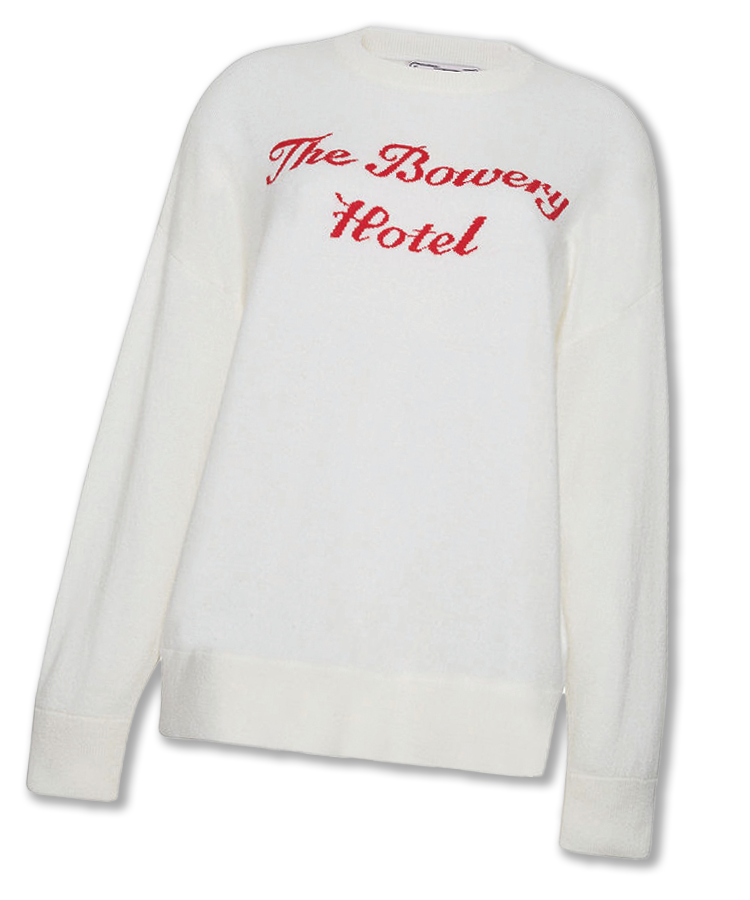
An embroidered cashmere crewneck sweater that debuted as part of The Bowery Hotel’s collaboration with New York-based label Lingua Franca. (Courtesy of The Bowery Hotel)
An embroidered cashmere crewneck sweater that debuted as part of The Bowery Hotel’s collaboration with New York-based label Lingua Franca. (Courtesy of The Bowery Hotel)
That membership mentality directly inspired Le Bristol to expand beyond one-off collaborations and launch its own lifestyle and fashion brand, Le Bristol Society, in 2024.
While watching guests mingle at the hotel’s weekly Champagne reception, Thomas Mattei, Le Bristol’s branding and marketing director, said he saw that they treated Le Bristol more like a private members’ club than a hotel.
“We realized people are coming here to be among other like-minded people, and we needed to give them something to embody this way of thinking,” Mattei said.
Le Bristol Society launched with roughly 15 items, including a 90-euro (around $105) T-shirt, a 75-euro ($88) hat, a line of athletic wear crafted in partnership with Lululemon and a few higher-end offerings, including bomber jackets and cashmere goods.
The line is only available at Le Bristol’s boutique, which Mattei said was deliberate. The hotel has turned down major Parisian department stores that have approached it about carrying the collection.
“We said no, because it’s not aligned with what we want to do,” he said. “You’d get rid of the experience part, which is coming to Le Bristol. Whether you’re buying something for yourself or someone else, you come in and you get to experience, even for 15 minutes, what we do best, which is being hospitable.”
The strategy appears to be working. Mattei reports that some guests buy one of each item and ship them home due to lack of luggage space. Parisians stop by specifically to purchase hats, bags and workout gear. And the line gained more buzz late last year when the singer Lana Del Rey was photographed wearing a Le Bristol hat during Paris Fashion Week.
Building on this success, Mattei said plans to expand into children’s clothing and pet accessories are already underway.
“It has definitely helped to present the hotel in a new way, especially to the Parisian, which was very important, because we want the local to adopt the hotel and not to be afraid to push the revolving door,” Mattei said.
The response from longtime guests has also been positive.
“They were kind of proud to see that their trusty hotel, this traditional Parisian palace, was daring to do something different and not afraid to play a bit with its image,” he added.
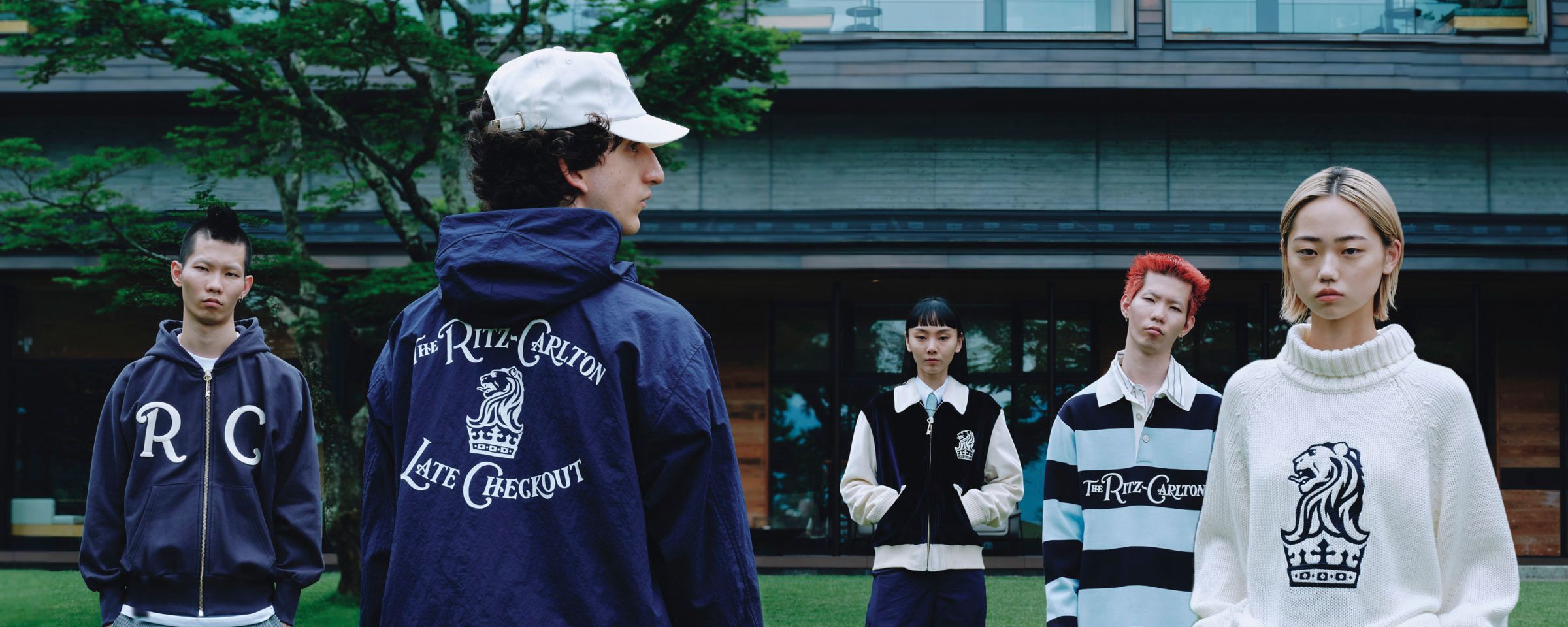
Marriott International’s Ritz-Carlton brand embraced a similar sense of playfulness via its partnership with Late Checkout, a Madrid-based clothing brand whose aesthetic leans into vintage hospitality imagery.
“We recognized that we were on very different ends of the spectrum,” said Jamie Kerr, global brand leader for The Ritz-Carlton. “Ritz-Carlton is this sort of timeless legacy, and then Late Checkout is playful and has a really interesting wit about it.”
The pair teamed up for their first collection in 2024, and within nine days of launch, 75% of the inventory had sold out. A second collection — Late Checkout: A Ritz-Carlton Story - Chapter II — debuted in late 2025 and expanded to include childrenswear and accessories. The line features items like a $370 roll-neck sweater with an embroidered lion-and-crown crest and a $260 navy hoodie emblazoned with the letters R and C. It is available online as well as at pop-up shops at more than 20 Ritz-Carlton properties globally. (Kerr said items that sell out online can sometimes be found at pop-ups, giving guests the chance to acquire sought-after pieces.)
The partnership has even extended beyond merchandise and into content creation, with the launch of each collection accompanied by a short film featuring “The Hunger Games” actor Josh Hutcherson. In both films, Hutcherson portrays a Ritz-Carlton concierge, which Kerr described as a first for the luxury brand.
“Having Josh embody one of our ladies and gentlemen — one of our associates — was really interesting,” said Kerr. “We typically hadn’t used a celebrity or other talent to represent the teams at our hotels, so having him present that perspective of the brand I think really resonated, not only with a younger audience but also internally with our own ladies and gentlemen.”

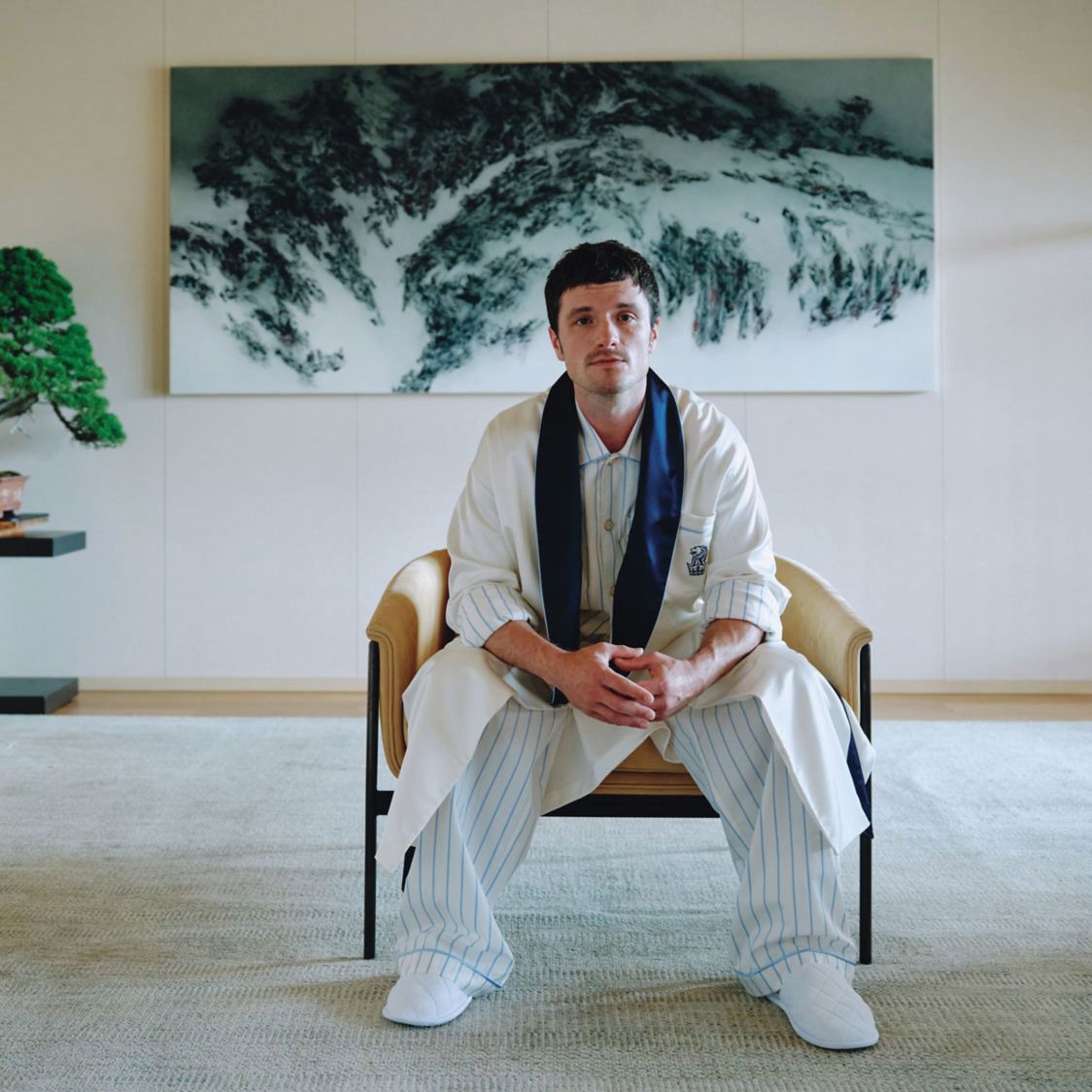
“The Hunger Games” actor Josh Hutcherson is a brand ambassador for the Late Checkout: A Ritz-Carlton Story — Chapter II collection. (Courtesy of Marriott International/The Ritz-Carlton)
“The Hunger Games” actor Josh Hutcherson is a brand ambassador for the Late Checkout: A Ritz-Carlton Story — Chapter II collection. (Courtesy of Marriott International/The Ritz-Carlton)

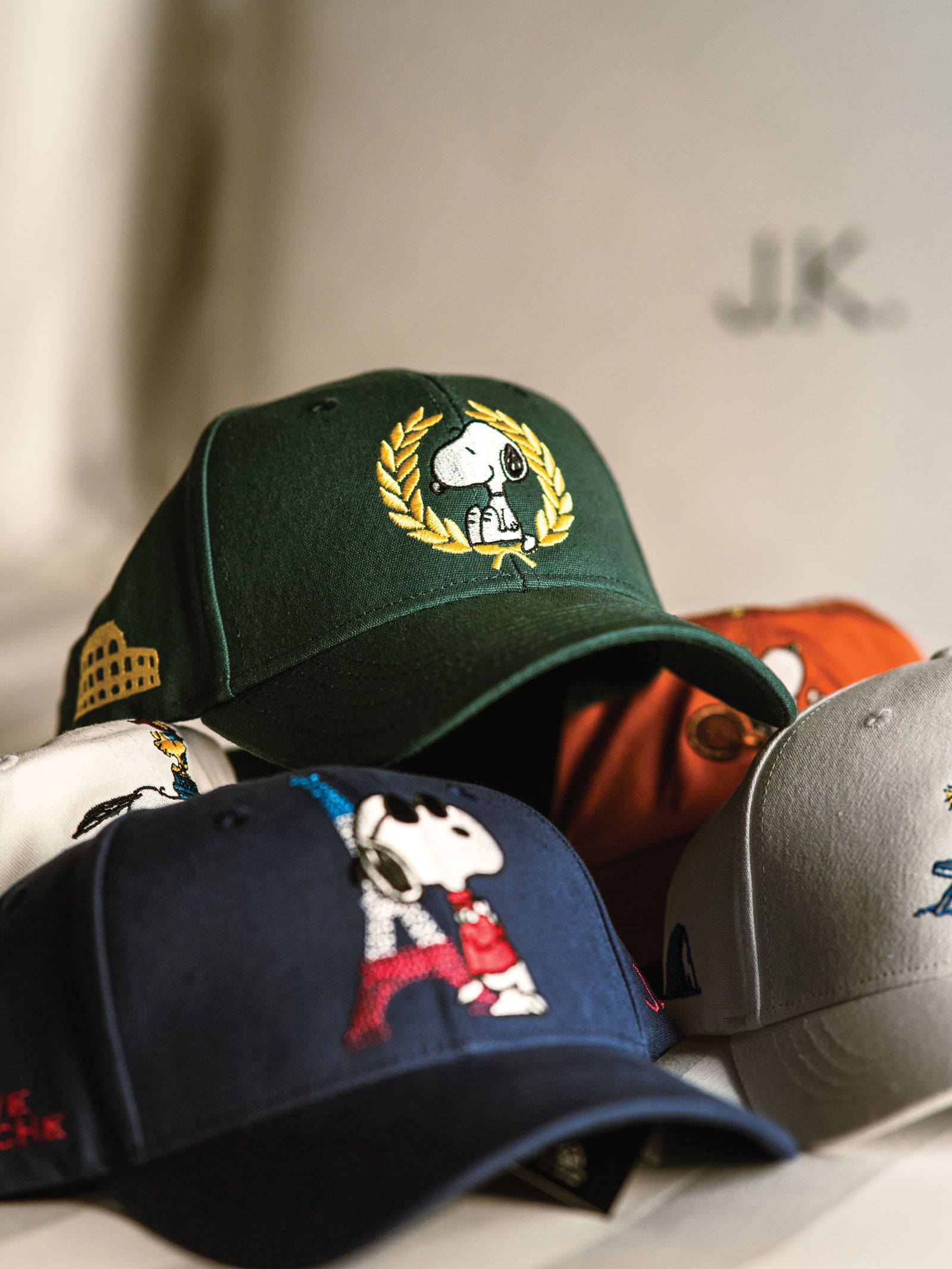
An assortment of limited-edition hats from various J.K. Place hotels, all featuring the Peanuts character Snoopy. (Courtesy of J.K. Place)
An assortment of limited-edition hats from various J.K. Place hotels, all featuring the Peanuts character Snoopy. (Courtesy of J.K. Place)

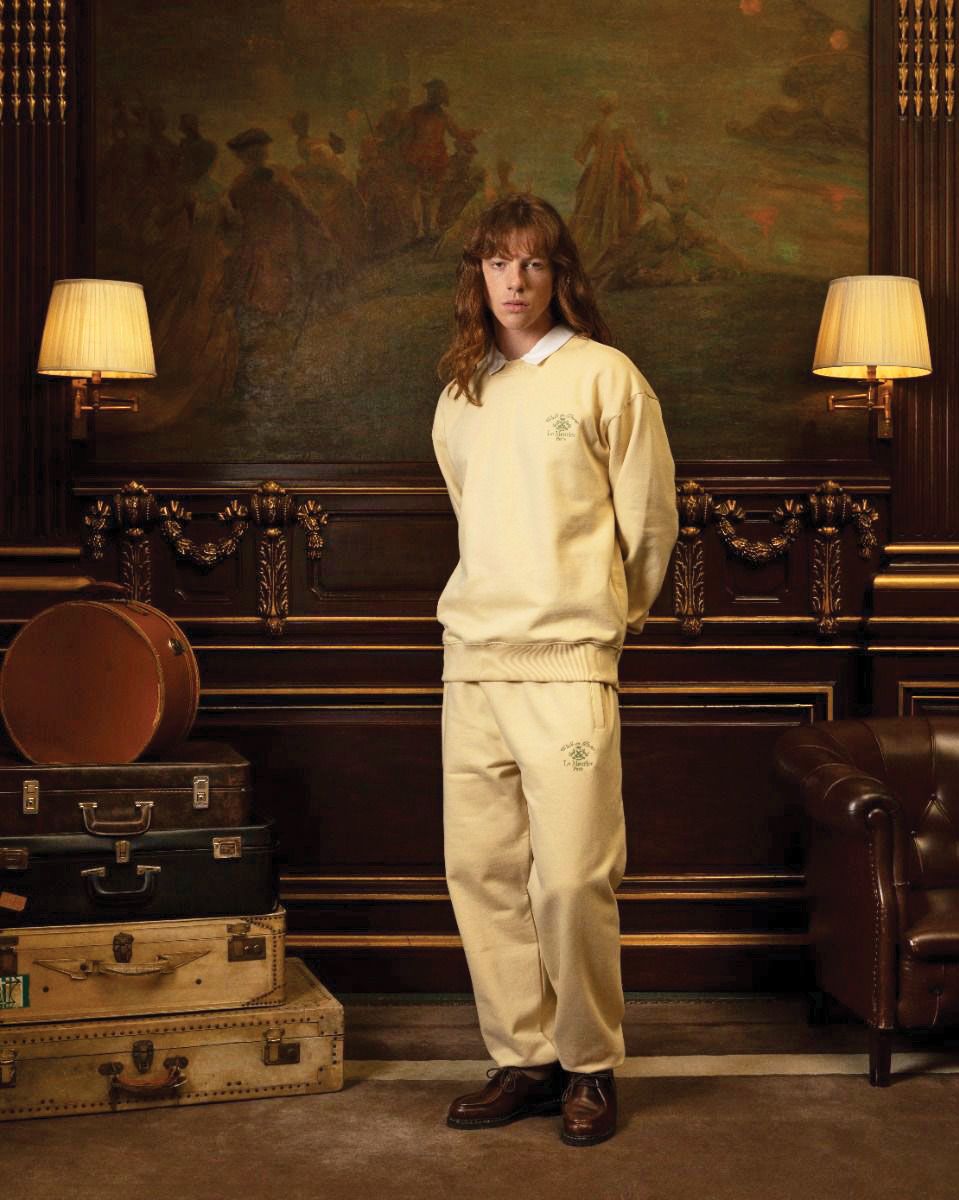
A tracksuit from the Le Meurice-Walk in Paris collection. (Courtesy of Le Meurice)
A tracksuit from the Le Meurice-Walk in Paris collection. (Courtesy of Le Meurice)

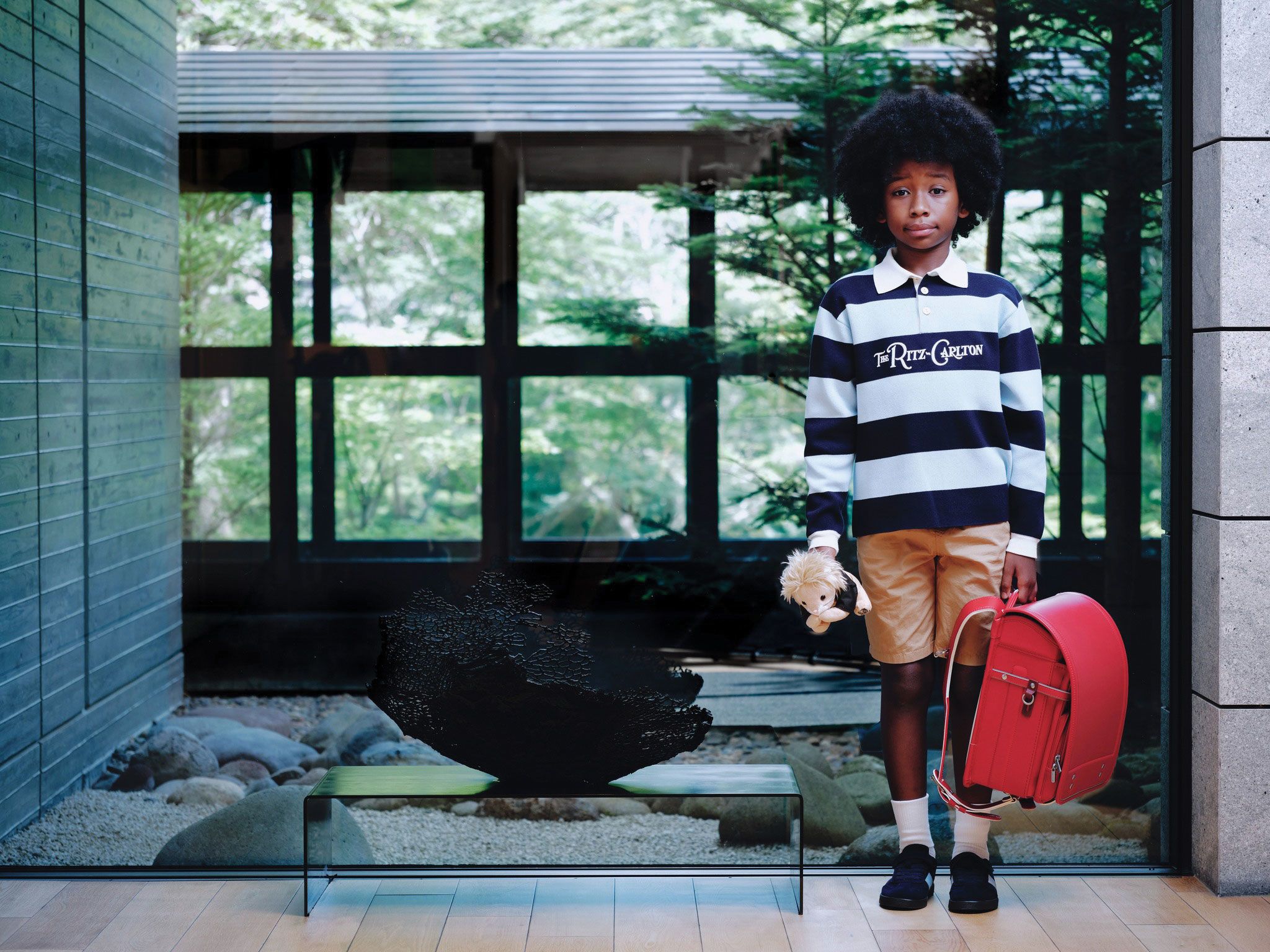
The latest collaboration between the brands featured an extension into childrenswear. (Courtesy of Marriott International/The Ritz-Carlton)
The latest collaboration between the brands featured an extension into childrenswear. (Courtesy of Marriott International/The Ritz-Carlton)
Capturing the moment
Momentum around these collaborations comes at a time when many high-end retailers are facing headwinds, with traditional luxury goods sales slowing amid cost-of-living pressures and changing consumer priorities. At the same time, the experiential luxury market continues to enjoy strong growth.
“Luxury goods are out, luxury experiences are in,” said Philip Morris, vice president of commercial at Dorchester Collection, quoting a recent headline from The Economist that was presented during the company’s annual board meeting. “It’s a theme that’s very prevalent in the market right now.”
Fflur Roberts, head of luxury goods at data analytics company Euromonitor International, agreed, citing a shift that she said has been building for years but accelerated during the pandemic. Euromonitor found that the global personal luxury market declined marginally in 2025, while experiential luxury — including travel, wellness and hospitality — grew by 8%, to $103.4 billion.
“We’re living in an age when people are choosing to spend money on experiences rather than actually buying luxury goods,” Roberts said. “The whole experience economy, as we call it, is probably one of the fastest-growing economies today.”
‘The more time we spend understanding our guests, the more we’ve realized they want something that really embodies the experience and not just a souvenir.’
Hotels are proving to be an exception to this trend, successfully selling luxury merchandise that serves as a tangible reminder of an intangible experience.
Dorchester Collection, parent to luxury hotels including The Dorchester in London, Le Meurice in Paris and The Beverly Hills Hotel in L.A., has leaned into this dynamic, working closely with an anthropologist to interview guests and better understand their emotional connections to the group’s properties.
“You can’t take that experience home,” said Morris. “But guests do want to take something with them. And the more time we spend understanding our guests, the more we’ve realized they want something that really embodies the experience and not just a souvenir.”
At Le Meurice, that something could be a fleece tracksuit from the hotel’s limited-edition capsule collection, created in partnership with local streetwear brand Walk in Paris. At The Beverly Hills Hotel, it could be a piece from an exclusive Dior collaboration that included a Dioriviera pop-up pool takeover at the property in 2023 and 2024.
During these pop-up periods, Morris said some hotel guests flew in just to nab Dior items that they knew were exclusive to the collaboration.
“Dior’s top clients are our top clients,” said Morris. “We’re talking to the same people.”

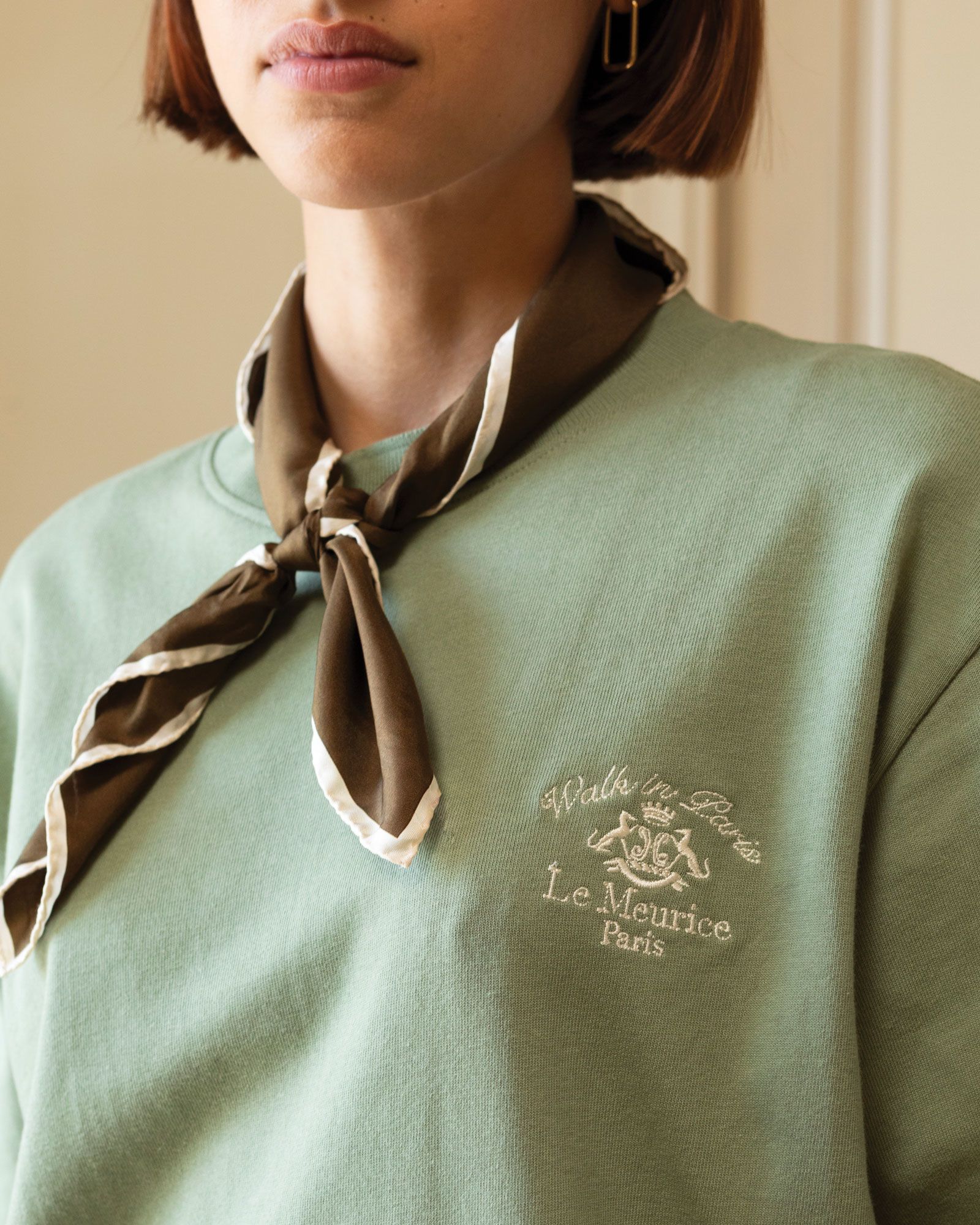
A close-up of a shirt from Le Meurice Hotel’s partnership with design label Walk in Paris. (Courtesy of Le Meurice)
A close-up of a shirt from Le Meurice Hotel’s partnership with design label Walk in Paris. (Courtesy of Le Meurice)

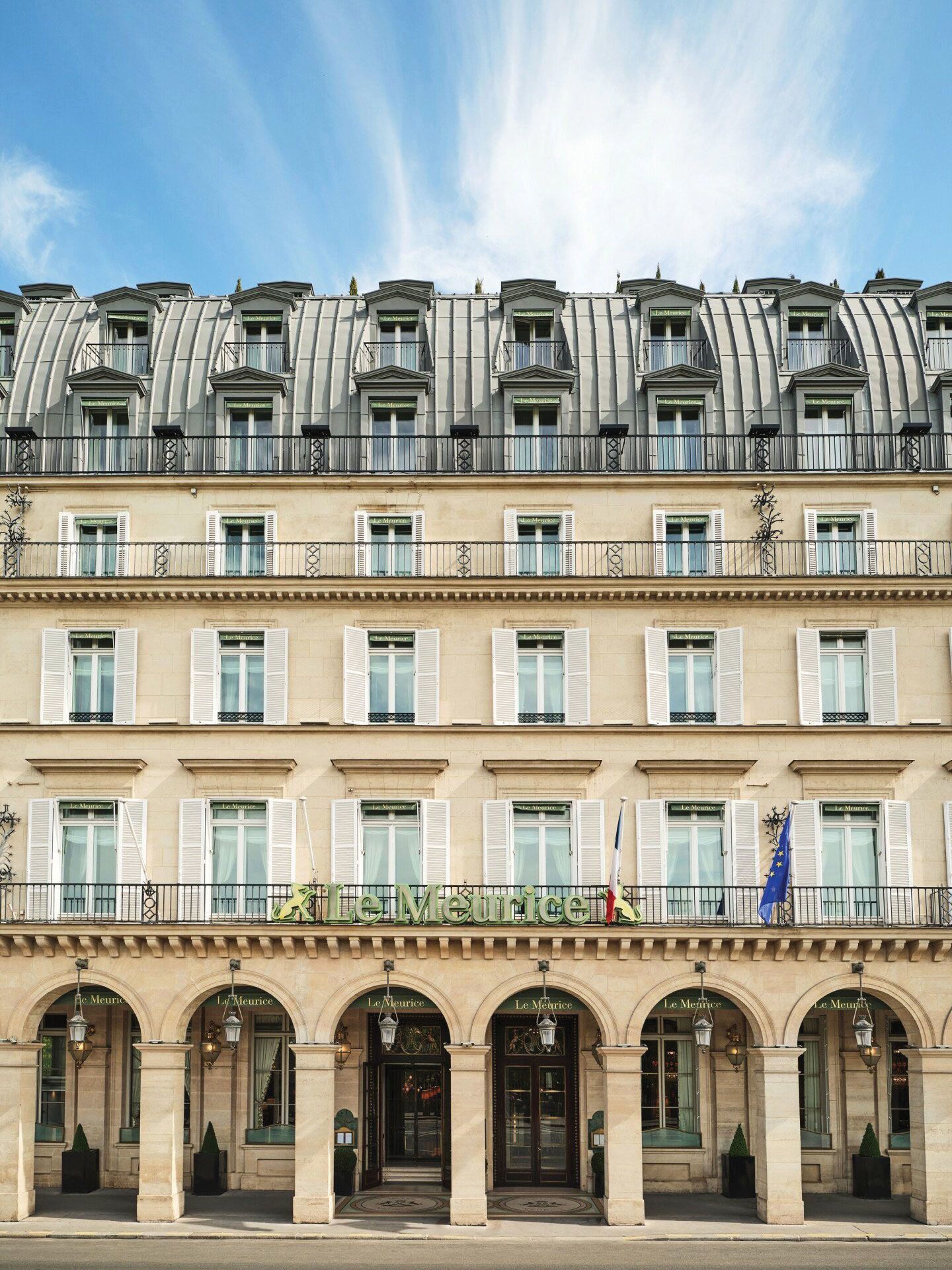
Le Meurice Hotel has partnered with design label Walk in Paris. (Courtesy of Le Meurice)
Le Meurice Hotel has partnered with design label Walk in Paris. (Courtesy of Le Meurice)

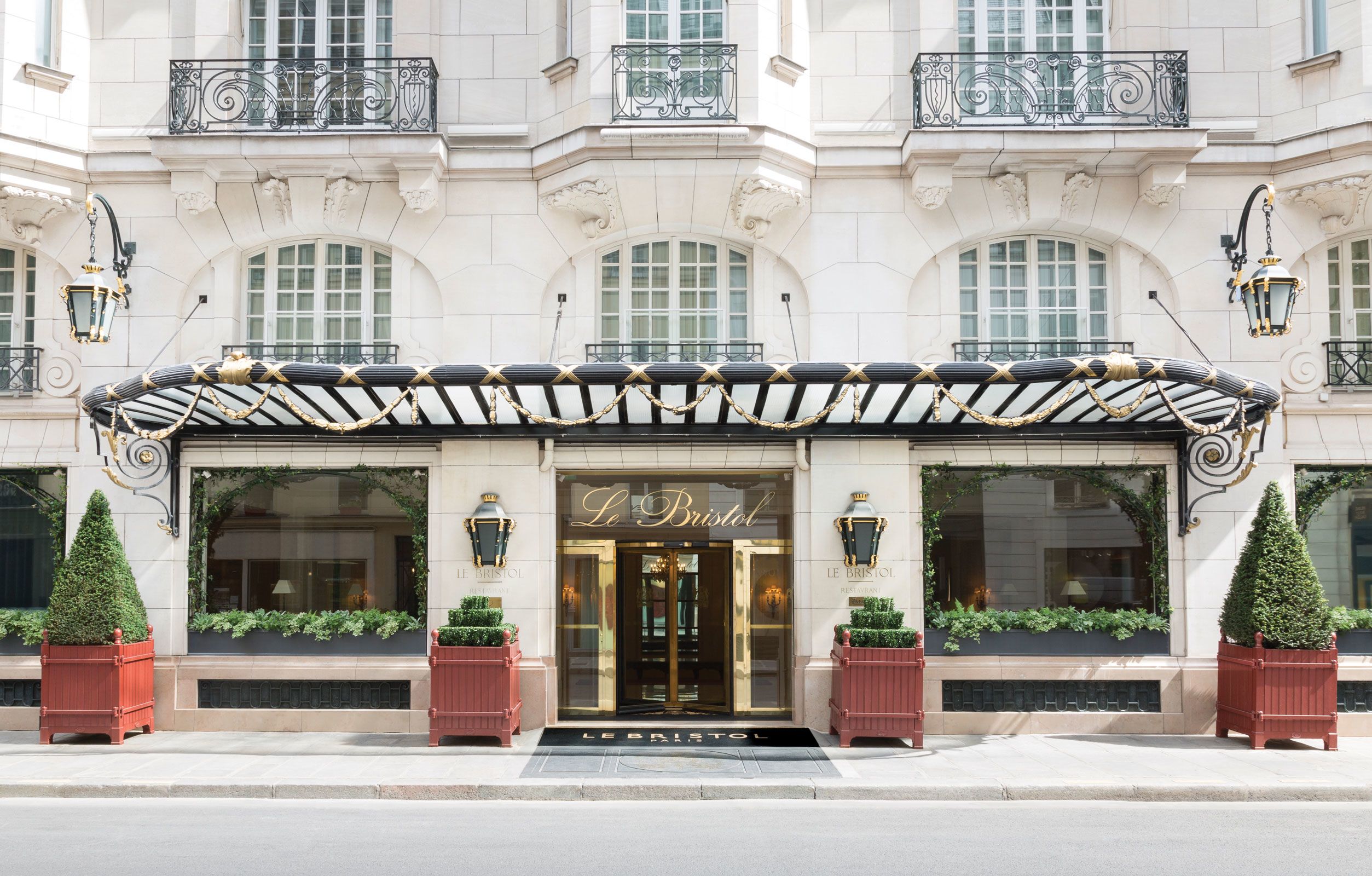
Le Bristol launched its signature line in 2024. (Courtesy of Le Bristol Paris)
Le Bristol launched its signature line in 2024. (Courtesy of Le Bristol Paris)

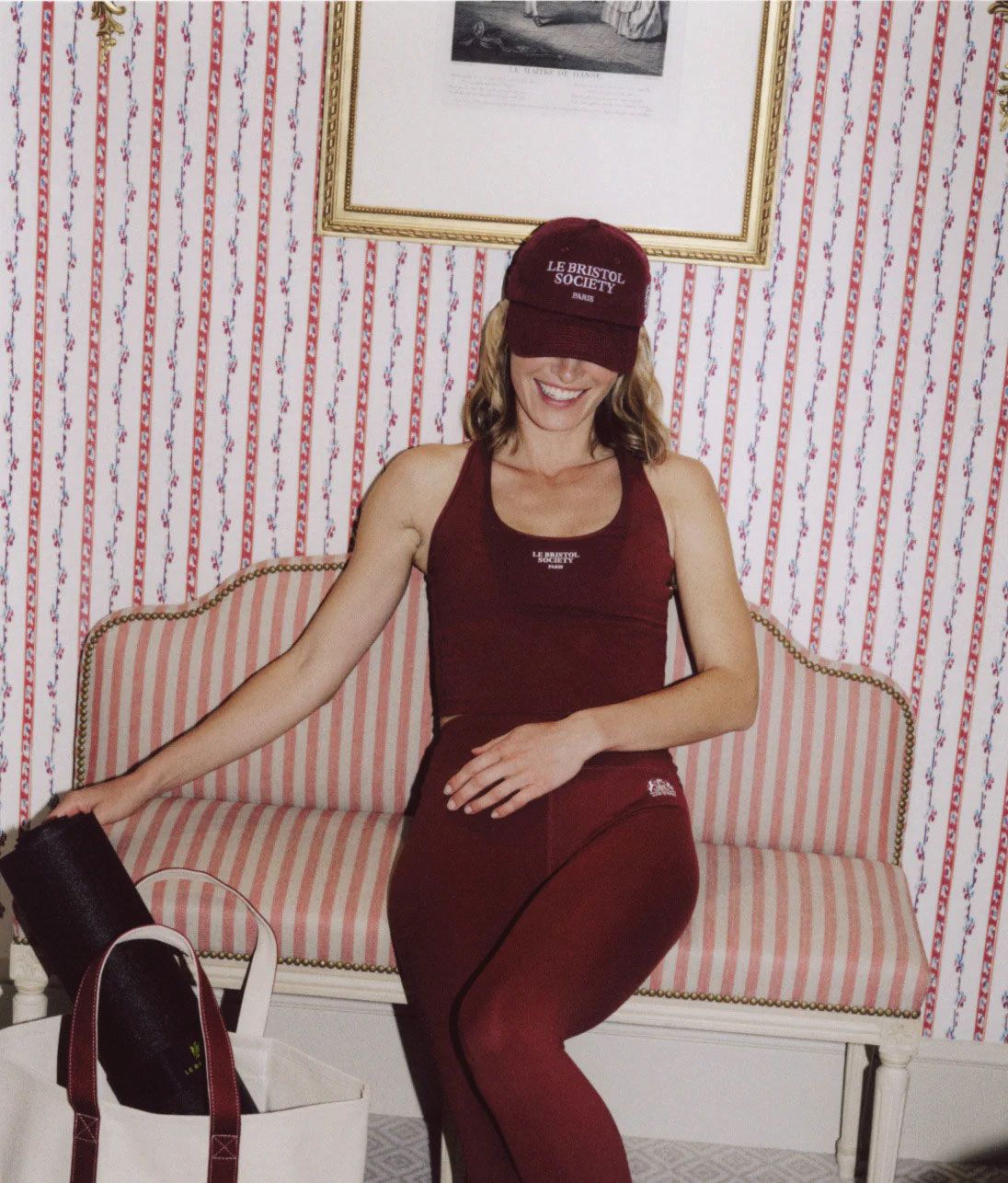
An athleisure outfit from Le Bristol Society. (Courtesy of Le Bristol)
An athleisure outfit from Le Bristol Society. (Courtesy of Le Bristol)
Exclusive items are in high demand
The limited availability of many of these collections has only served to enhance their desirability.
Boutique hotel group J.K. Place has taken this exclusivity to another level with its signature Snoopy baseball caps, featuring the classic Peanuts cartoon character. The hats, which debuted roughly two years ago, sport different designs at each J.K. Place location. At the J.K. Place Capri, for example, Snoopy lounges on a sun bed, while in Paris, he poses in front of the Eiffel Tower. The collaboration came about organically, through the family background of Ori Kafri, co-founder and CEO of J.K. Place. Kafri’s father’s textile company, J Brand srl, holds the rights to the Snoopy character in select markets.
On all the designs, a small J.K. Place logo is visible on the side of the hat rather than front and center. Kafri said the caps are primarily gifted to staying guests.
“You need to visit all our hotels in order to get all the different styles and colors,” he said.
This limited availability has made the caps so coveted that Kafri said one guest who had to cancel her reservation last minute still contacted the hotel, requesting her hat.
“People appreciate the little gesture,” Kafri added. “And we love to make them feel like they’re part of this ‘Snoopy community.’”
Scarcity can also create a secondary market for especially hard-to-find hotel merch. Dorchester Collection’s Morris said he’s spotted Beverly Hills Hotel-branded caps, sweatshirts and T-shirts for sale on eBay.
“There is definitely a market for resale for some of this stuff,” he said. “We’ve seen quite a lot pop up on eBay, and it always makes us smile.”

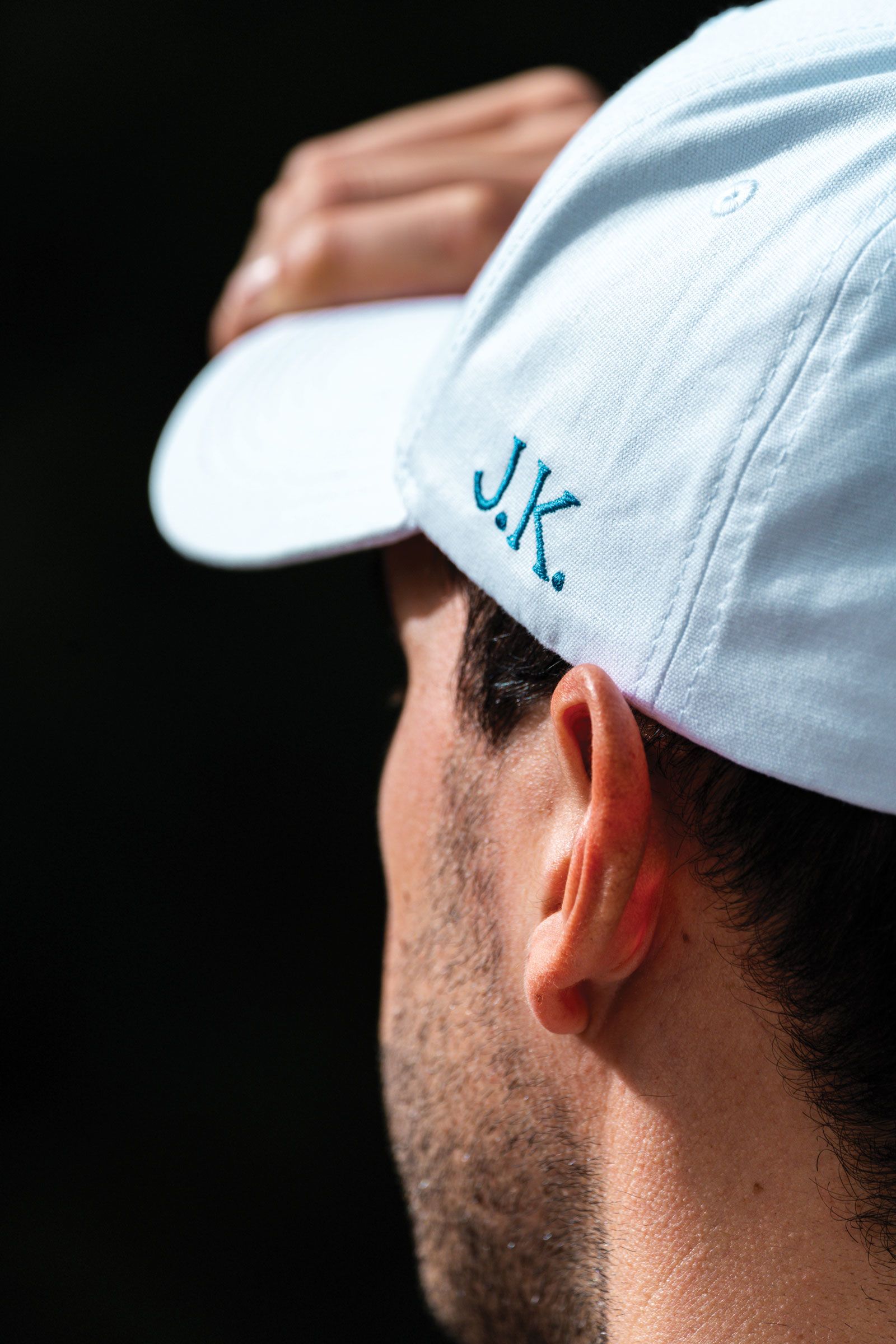
The J.K. Place logo on the side of the brand's signature baseball cap. (Courtesy of J.K. Place)
The J.K. Place logo on the side of the brand's signature baseball cap. (Courtesy of J.K. Place)
Building relationships — new and old
For luxury hotels, these partnerships also offer a strategic way to court future guests, with a $100 T-shirt providing a more accessible entry point for travelers not yet ready to splurge on a stay.
The approach mirrors a strategy that Euromonitor’s Roberts said has long worked for luxury fashion brands, which often create multiple touchpoints with customers at varying price points.
“You might not want to spend on a bag, but maybe you want to buy a home item or have a lovely coffee or have a wonderful facial at a Dior spa,” she said. “Lifestyle, overall, has become such a huge thing and such a status symbol.”
Ritz-Carlton’s Kerr echoed that sentiment, with the Late Checkout collaboration proving especially effective at attracting younger audiences via social media.
“It’s allowed us to engage with the more aspirational luxury consumer that ultimately, hopefully, will be a core guest of the brand,” Kerr said.
For core guests, meanwhile, merchandise can help deepen their existing relationship to a hotel.
Le Bristol’s Mattei has noticed that guests enjoy talking about the hotel items they’re wearing.
“They say, ‘Oh, this is a hat from Le Bristol. When I was last in Paris, we had the most wonderful stay,’” he said. "There is always a story behind it."