
A new vision in the Galapagos


Pikaia Lodge is an example of an evolutionary change in travel, where cruise ships are positioned as floating hotels and hotels are adding cruise-inspired experiences.

GALAPAGOS — I’m balanced on the edge of a small dinghy as it cuts through the water off the coast of Santa Cruz. There are eight of us onboard, plus a guide and our captain, the hum of the motor punctuating our conversation.
Across from me sits Ellen, a retiree from upstate New York. She adjusts her sun hat and points toward a National Geographic expedition ship on the horizon.
“That’s the boat we would have been on,” she says to Steve, her husband.
Steve shakes his head. “No, that’s the boat you would have been on,” he replies. “I wasn’t getting on a boat for five days.”
The irony isn’t lost on me. Here we are, very much also on a boat, racing toward Santa Fe Island; and on our return we would hop back aboard the Vision Pikaia, a 145-foot luxury yacht. But Steve’s comment captures precisely where our Galapagos experience diverged from the traditional expedition cruise model.
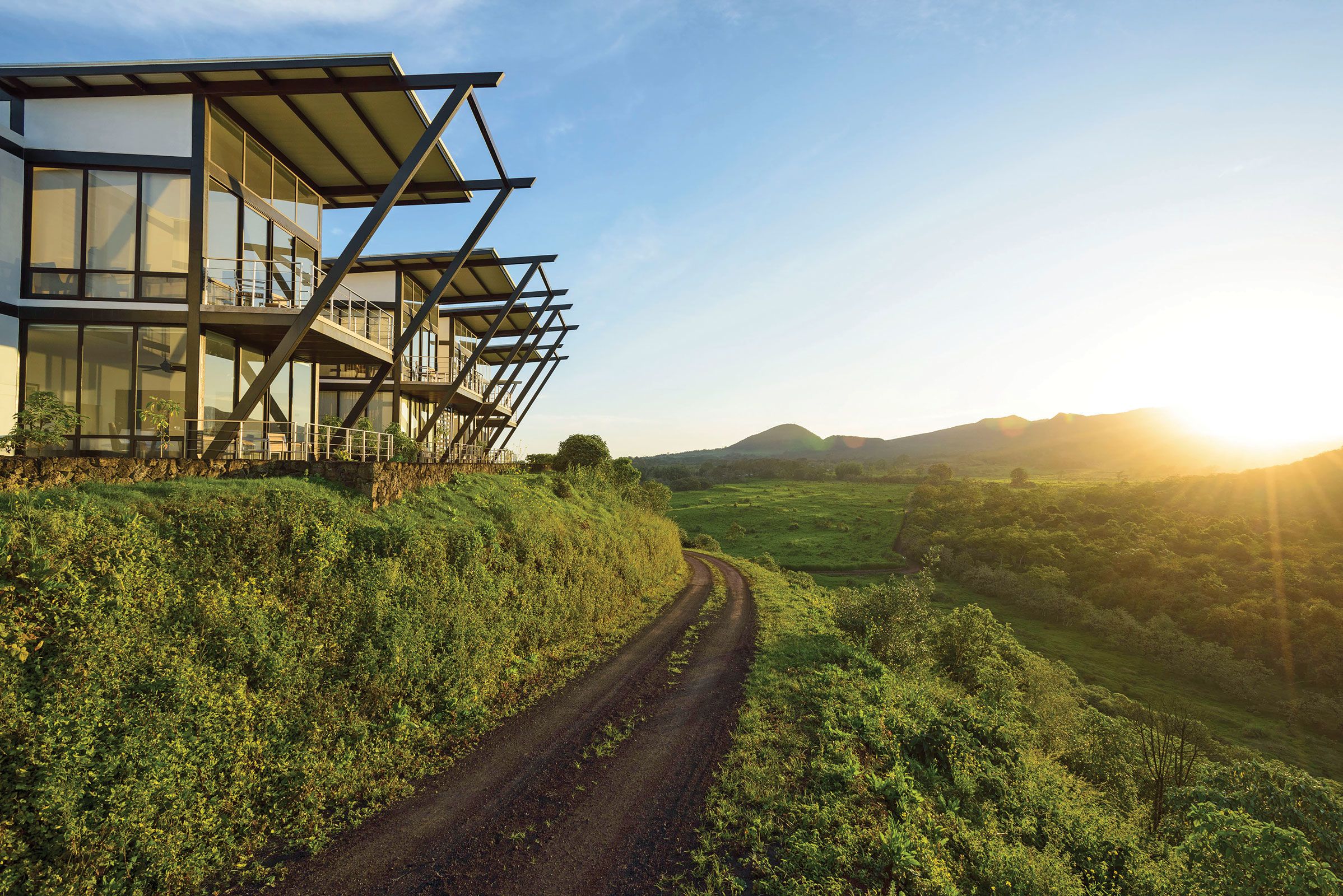
While potential guests on a Galapagos cruise may worry — needlessly or not — about cabin size or how active the sea may be, by dinnertime we’ll have returned to Pikaia Lodge, a Relais & Chateaux-member property located in the highlands of Santa Cruz, where Steve can plant his feet firmly on solid ground and spread out in one of 14 spacious units (12 rooms, two suites), each with a huge bathroom, outdoor space and stunning views.
This hybrid approach represents something of an anomaly within the luxury Galapagos tourism landscape, which has long positioned multiday cruising as the most immersive and exclusive way to experience the archipelago. Pikaia Lodge, however, is a different breed of accommodation, one that treats land and water as complementary components of the same experience.
But it’s also part of a broader evolutionary shift happening across the global travel industry. Just as Darwin discovered that species adapt to survive in changing environments, so too do hospitality and cruising adapt to changing consumer preferences.
Luxury cruise lines are increasingly positioning themselves as “floating hotels,” shifting toward more flexible embarkation and debarkation models, experimenting with a la carte dining and investing in ever expanding suite categories.
At the same time, a growing number of high-end properties are adding exclusive yacht charters and other cruise-inspired experiences to their offerings, giving guests get a taste of life on the water, whether it be for a few hours, a day or even overnight.
Adaptation, after all, is essential to survival.

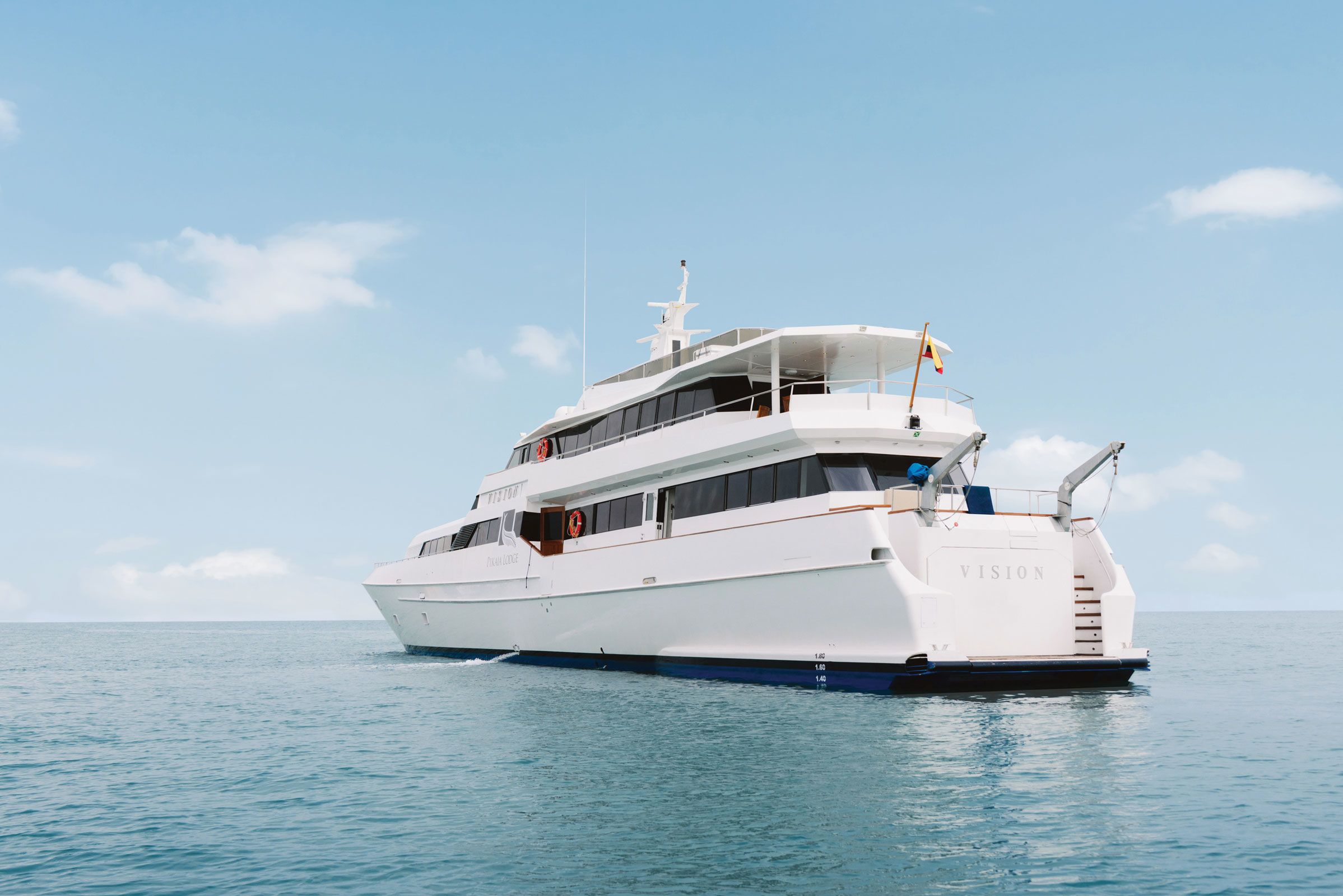
The Vision Pikaia is owned and operated by Pikaia Lodge and takes guests on day trips throughout the archipelago. (Courtesy of Pikaia Lodge)
The Vision Pikaia is owned and operated by Pikaia Lodge and takes guests on day trips throughout the archipelago. (Courtesy of Pikaia Lodge)
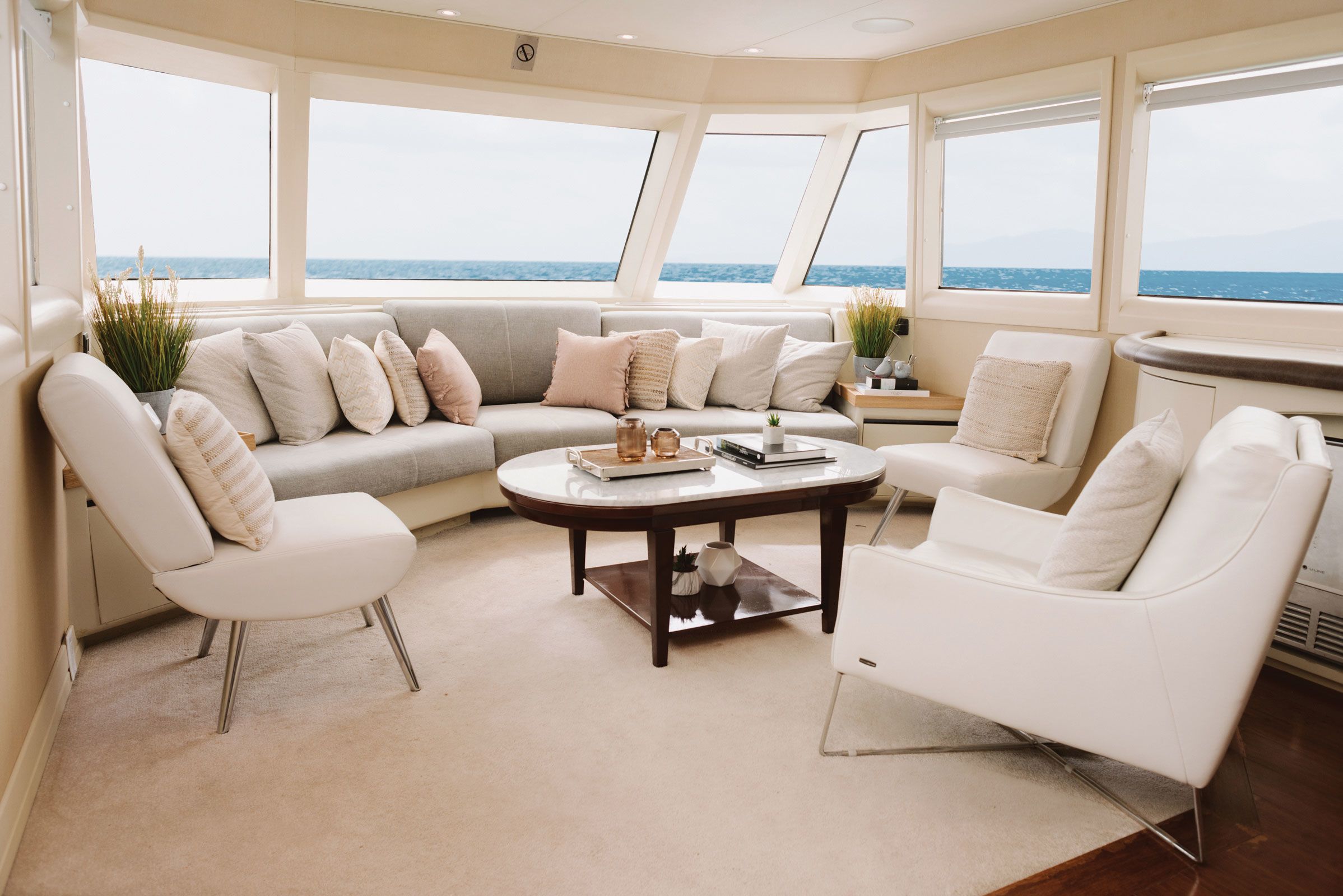
A living area aboard the 145-foot luxury yacht. (Courtesy of Pikaia Lodge)
A living area aboard the 145-foot luxury yacht. (Courtesy of Pikaia Lodge)
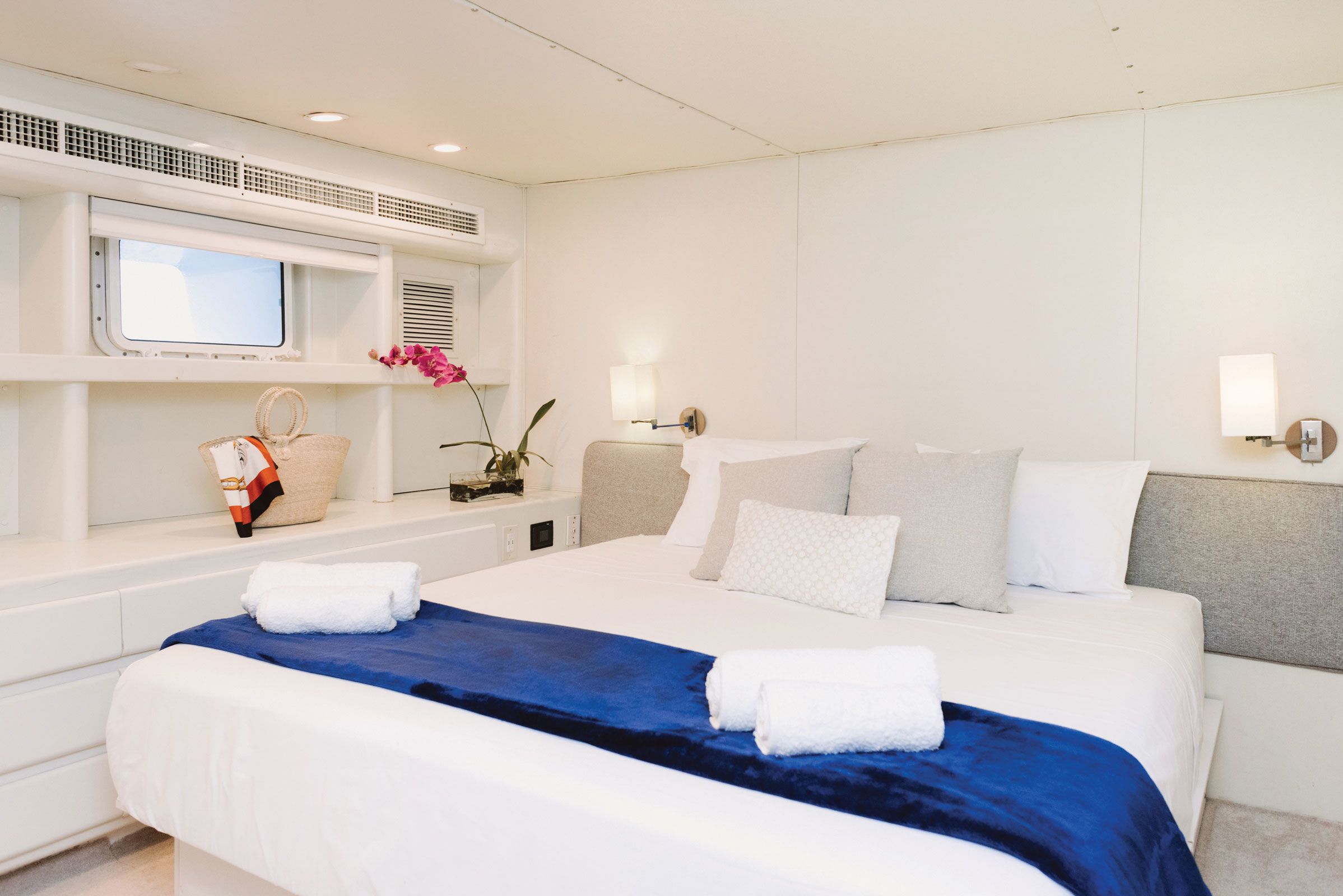
One of eight cabins aboard the Vision Pikaia, which guests can use during excursions. (Courtesy of Pikaia Lodge)
One of eight cabins aboard the Vision Pikaia, which guests can use during excursions. (Courtesy of Pikaia Lodge)

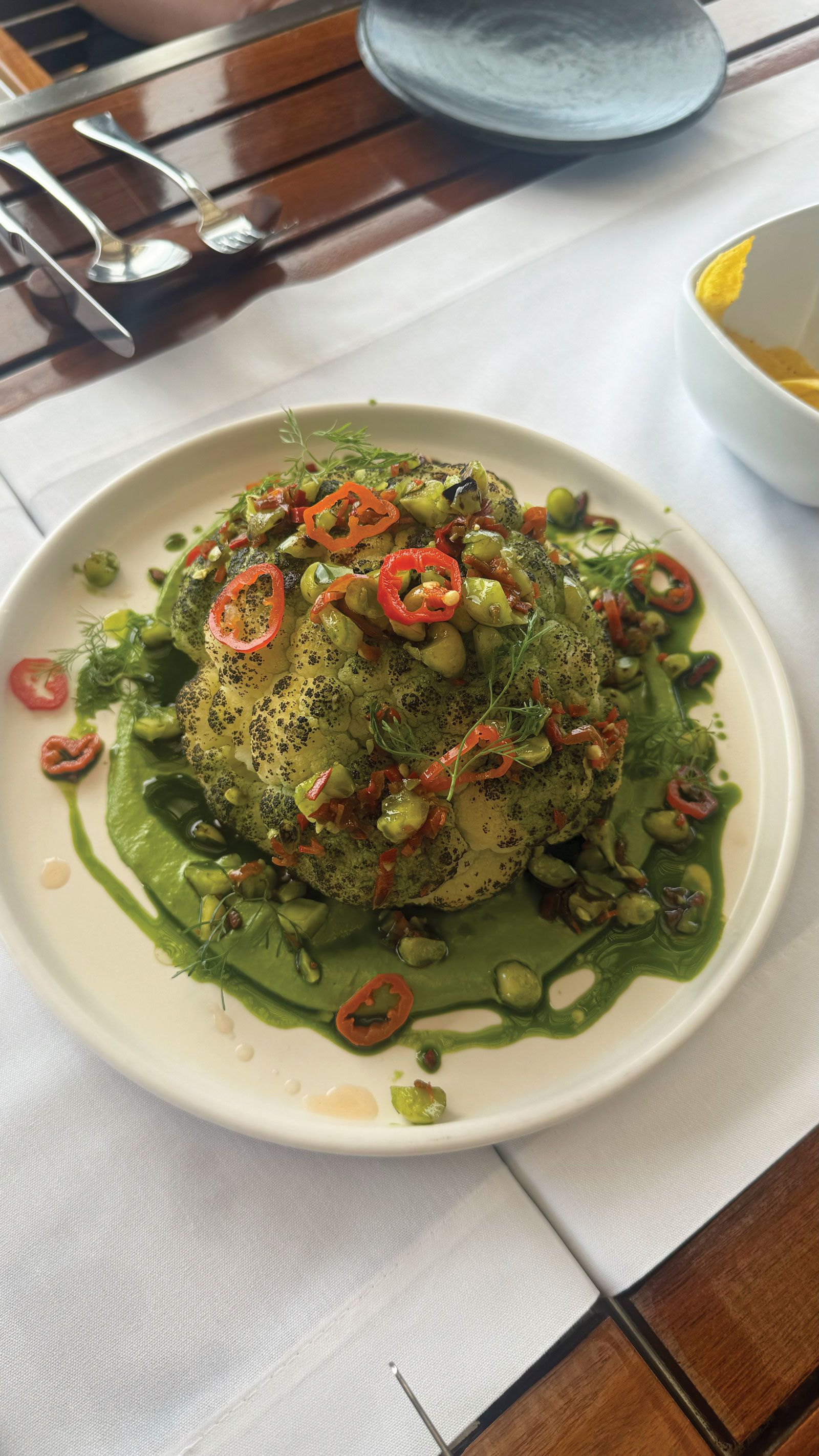
Grilled cauliflower with Andean pesto, macadamia sauce and house pickles served as a lunchtime appetizer at Evolution Restaurant, the Pikaia Lodge’s sole restaurant. (Photo by Christina Jelski)
Grilled cauliflower with Andean pesto, macadamia sauce and house pickles served as a lunchtime appetizer at Evolution Restaurant, the Pikaia Lodge’s sole restaurant. (Photo by Christina Jelski)
Getting to Pikaia Lodge
Getting to Pikaia Lodge from the U.S. is, admittedly, a journey in and of itself. Accompanied on the hosted trip by my longtime friend Simran, the journey required a six-plus hour flight from New York to Guayaquil, Ecuador, a night at an airport hotel and an early morning, two-hour connection to the island of Baltra the next day.
The Pikaia experience kicked in soon after landing, however, with airport staff whisking us away to a VIP lounge at Seymour Airport, where they handled passport control and submitted the Ingala Transit Control Cards — $20 permits required to enter the Galapagos — that we’d picked up in Guayaquil. We sipped Diet Cokes while they sorted through the bureaucracy.
Upon departing the airport, we were met by a Pikaia Lodge representative, and it was seamless transfers the rest of the way. We took a 15-minute van ride to the Itabaca Channel, where we were met by turquoise waters and dozing sea lions on the docks, followed by a short water taxi crossing to Santa Cruz, another van pickup and finally a scenic 45-minute drive up to the lodge.
When we finally wound up the final stretch of mountain road and Pikaia Lodge came into view, it felt like we’d ascended to paradise.
Our first stop after check-in: lunch at the property’s aptly named Evolution Restaurant with hotel manager Norman Brandt. We sat outside, overlooking the property’s infinity pool and Santa Cruz’s misty highlands. Save for another couple dining nearby, we had the lodge nearly to ourselves, as every other guest was out on their daily, guide-led adventures.
Evolution is the lodge’s sole dining venue, led by chef Cristian Puente, and he has adapted well to this environment. While the restaurant’s breakfast and lunch menus stay fixed — as guests frequently take these meals aboard the Vision Pikaia as part of their excursions — dinner menus rotate nightly.
Our first taste of Puente’s culinary prowess came via Brandt’s recommendation: a savory, grilled cauliflower served over Andean pesto and topped with macadamia sauce and house pickles. It was delicious, tender, smoky and herbaceous. It’s also a perfect example of how Evolution’s menu blends local flavors with more internationally influenced fare.
“We’re trying to help our guests get a feel for Ecuadorian culture,” Brandt said, gesturing toward the plantain chips and popcorn that arrived before our meal, per traditional Ecuadorian custom.
As we chatted over lunch, he explained that since its debut in 2014, Pikaia Lodge has carved out a niche among “people who aren’t necessarily ‘boat people.’”
The model works particularly well for couples or families where one person may be more adventurous than the others, a dynamic that Brandt has observed frequently over the years. Pikaia’s approach aims to let everyone enjoy the same trip, making it easier for families to commit to what is, inevitably, a significant financial investment for a luxury Galapagos experience.
Like its high-end cruise competitors, Pikaia Lodge operates on an all-inclusive model. The property’s 2025 rates start at $5,330 per person for a three-night stay, covering accommodations, meals and beverages, daily yacht and land excursions with naturalist guides and VIP services at Seymour Galapagos Ecological Airport as well as transfers.
The only other land-based, all-inclusive luxury Galapagos experience competing at a similar price point appears to be the Galapagos Safari Camp, also on Santa Cruz. That property also includes excursions and other amenities, but with its tented accommodations and absence of air conditioning, it caters to a different market, Brandt said.

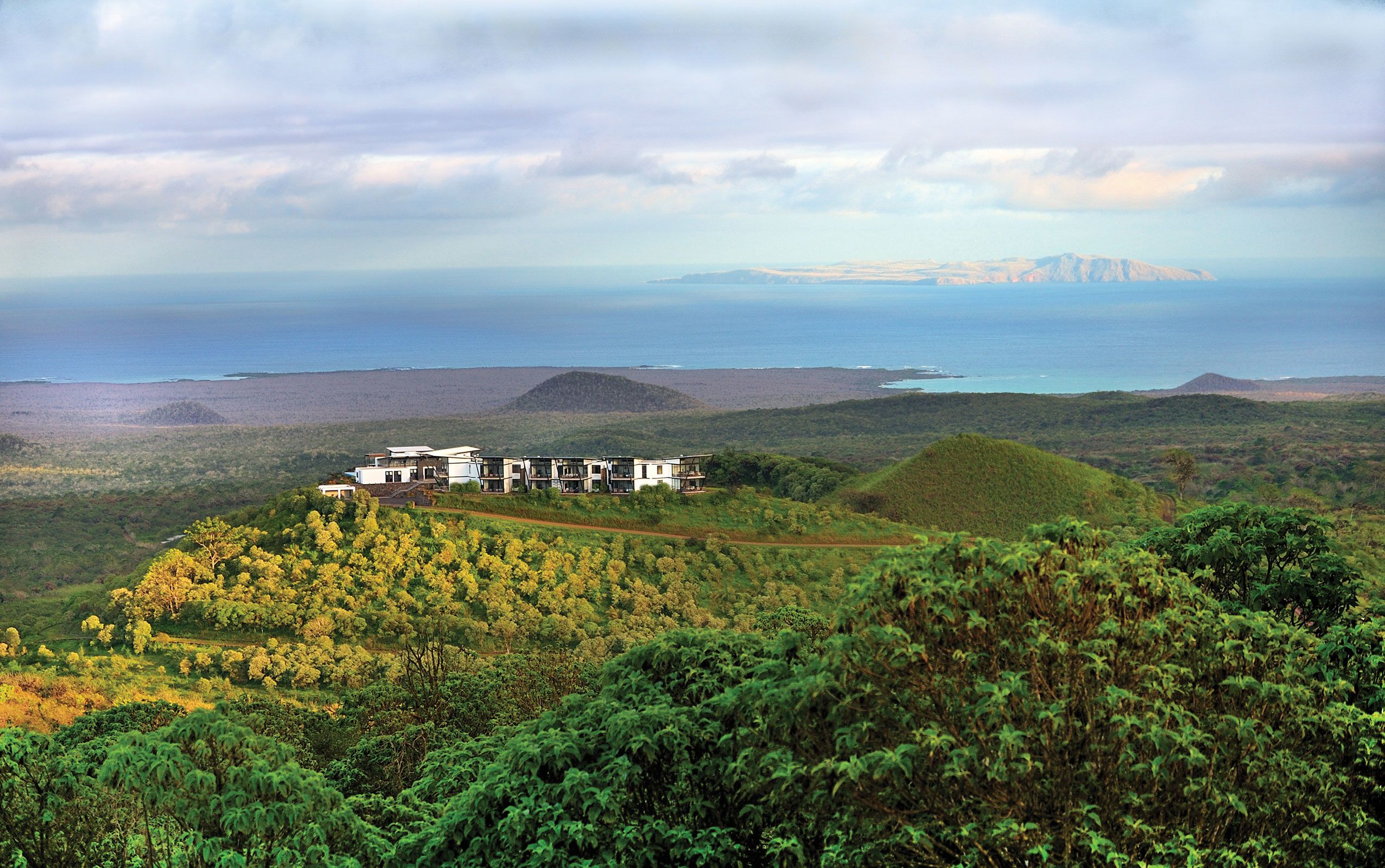
An aerial view of Pikaia Lodge. (Courtesy of Pikaia Lodge)
An aerial view of Pikaia Lodge. (Courtesy of Pikaia Lodge)

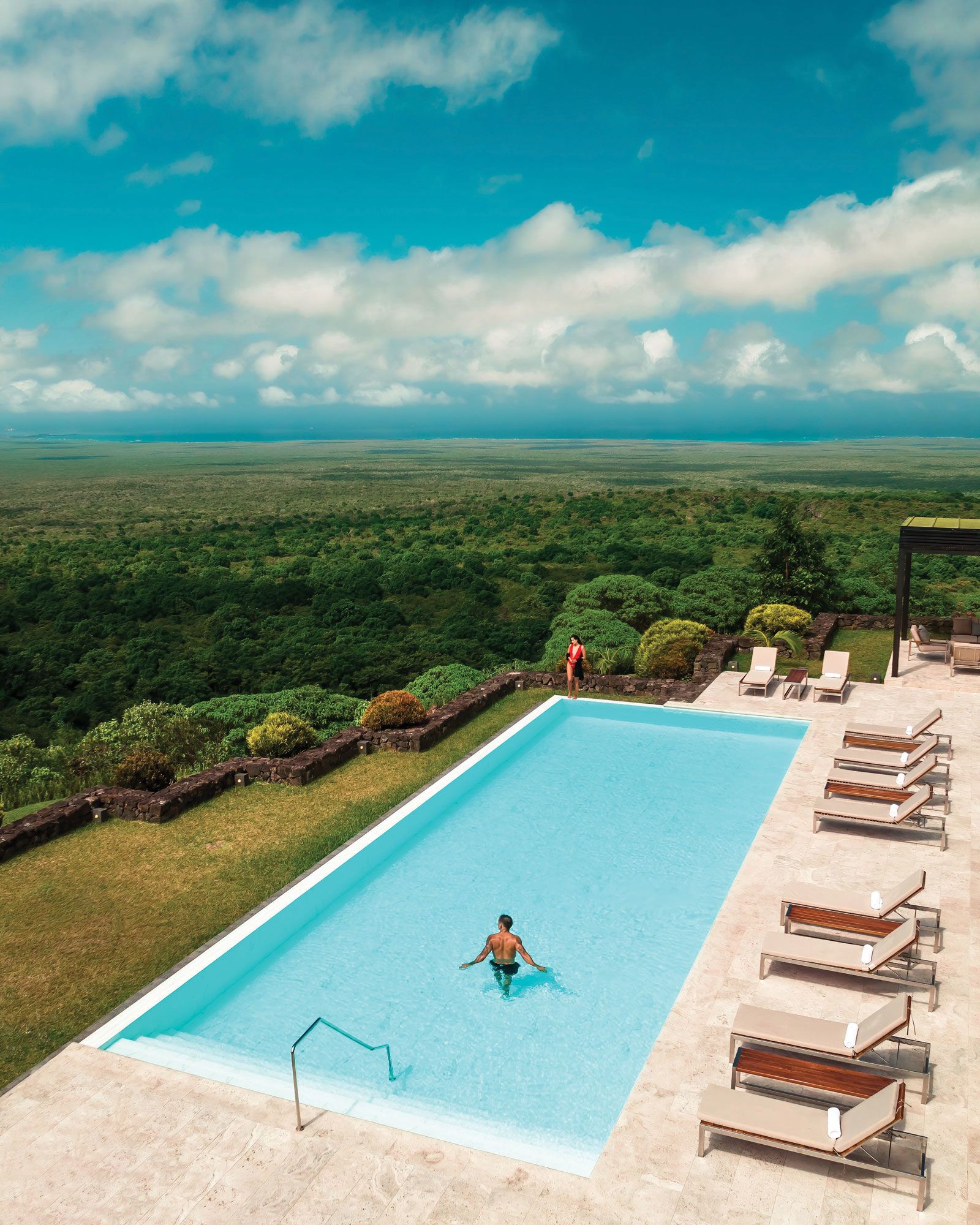
The property’s infinity pool. (Courtesy of Pikaia Lodge)
The property’s infinity pool. (Courtesy of Pikaia Lodge)

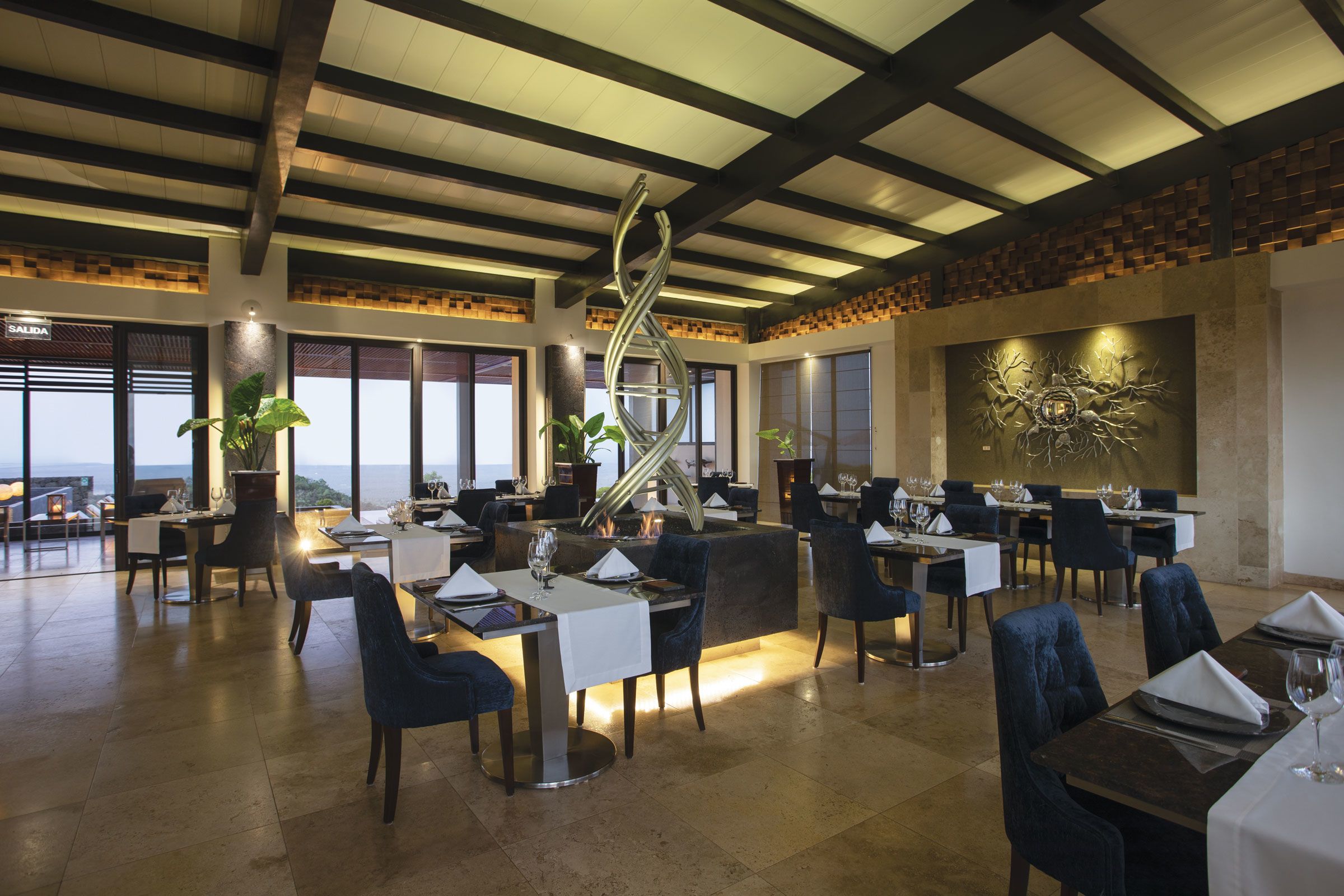
The dining room at Pikaia Lodge’s Evolution Restaurant. (Courtesy of Pikaia Lodge)
The dining room at Pikaia Lodge’s Evolution Restaurant. (Courtesy of Pikaia Lodge)
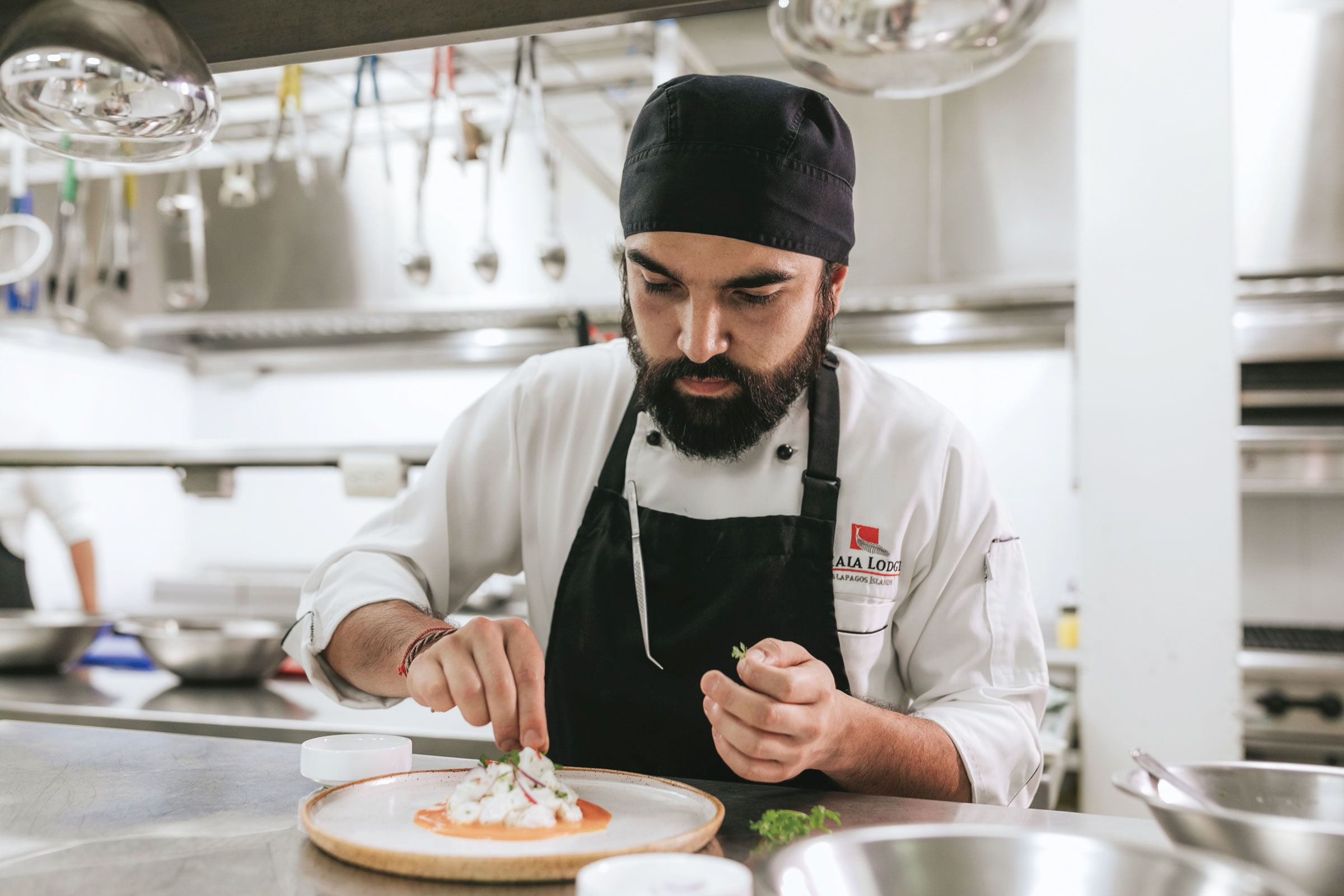
Chef Cristian Puente, who oversees culinary programming across Pikaia Lodge and the Vision Pikaia. (Courtesy of Pikaia Lodge)
Chef Cristian Puente, who oversees culinary programming across Pikaia Lodge and the Vision Pikaia. (Courtesy of Pikaia Lodge)
Flexibility and accessibility
Travel advisors have taken notice of Pikaia’s unique positioning.
Kristen Fernandez, managing partner at New York-based Elli Travel Group, said that the lodge has opened up the Galapagos to clients who were previously hesitant about traditional cruise experiences.
“If you have someone who is nervous, who has mobility challenges or motion sickness challenges, they oftentimes were a little heartbroken that they couldn’t comfortably visit Galapagos,” Fernandez said.
The flexibility factor is also compelling. Unlike expedition cruises with rigid departure schedules, Pikaia enables guests to arrive and depart on their preferred dates, which Fernandez cites as a crucial advantage for families navigating school calendars or business commitments. Fernandez said she recently booked a grandmother-granddaughter duo who traveled during the week of Presidents Day, with the 13-year-old’s school schedule driving their timing needs.
Indeed, the property’s appeal spans generations. Fernandez has sent clients ranging from that wildlife-passionate teenager to couples in their mid-60s, all returning with rave reviews.
More broadly, Fernandez sees Pikaia as a trendsetter in hybrid luxury travel, with similar concepts starting to pop up around the world. She pointed to examples of hotel/yacht offerings along the Amalfi Coast as well as the House of Nine in Florence, Italy, which enables guests to pair a city stay with two- and three-night cruise experiences aboard its Curiosity superyacht or Electa motor-sail yacht on Italy’s western coast.
“But Pikaia was one of the first products that I knew of that was creating this hybrid travel experience,” Fernandez said.

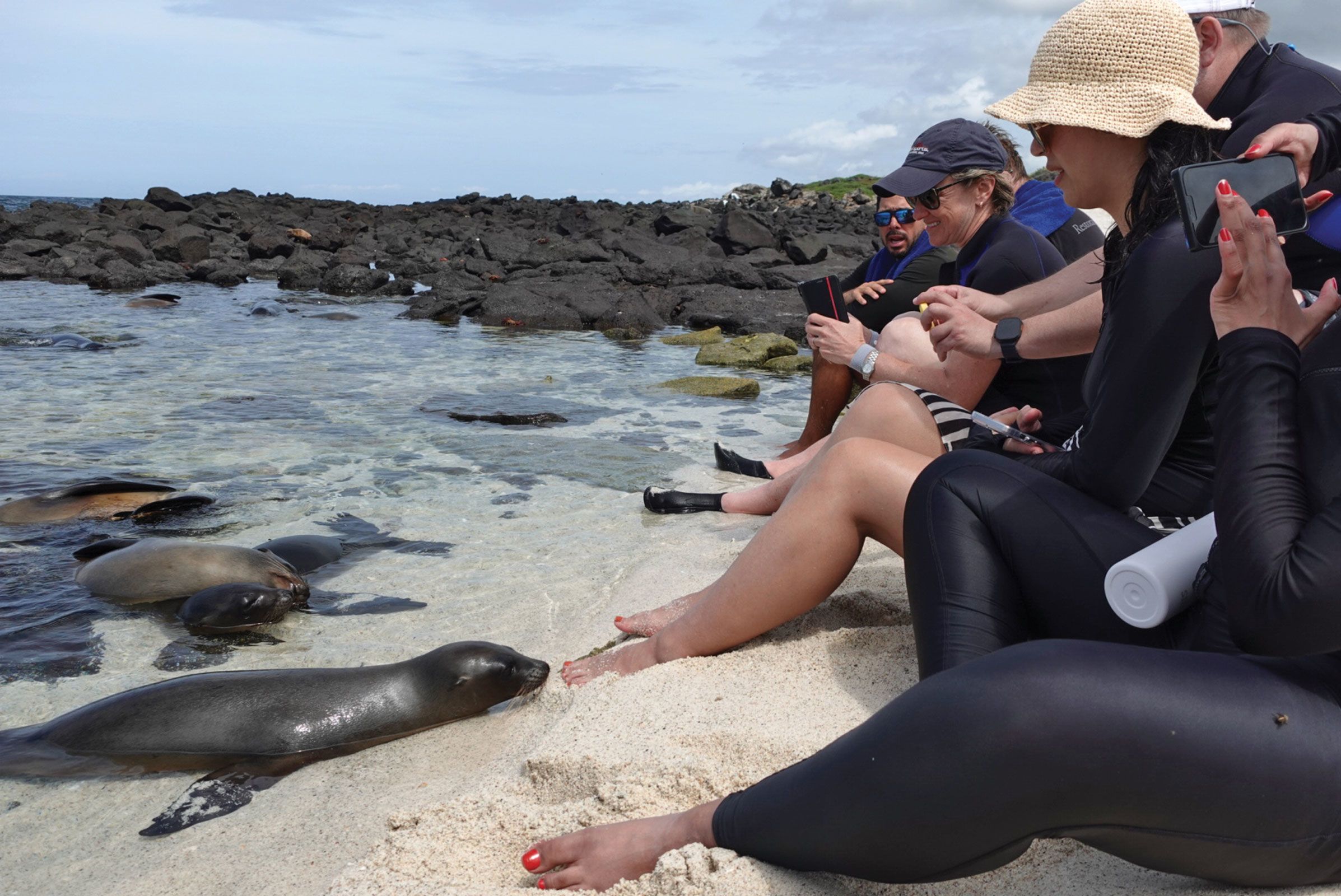
Pikaia Lodge guests (including author Christina Jelski, in the straw hat) encounter baby sea lions during an excursion to Mosquera Islet. (Courtesy of Christina Jelski)
Pikaia Lodge guests (including author Christina Jelski, in the straw hat) encounter baby sea lions during an excursion to Mosquera Islet. (Courtesy of Christina Jelski)

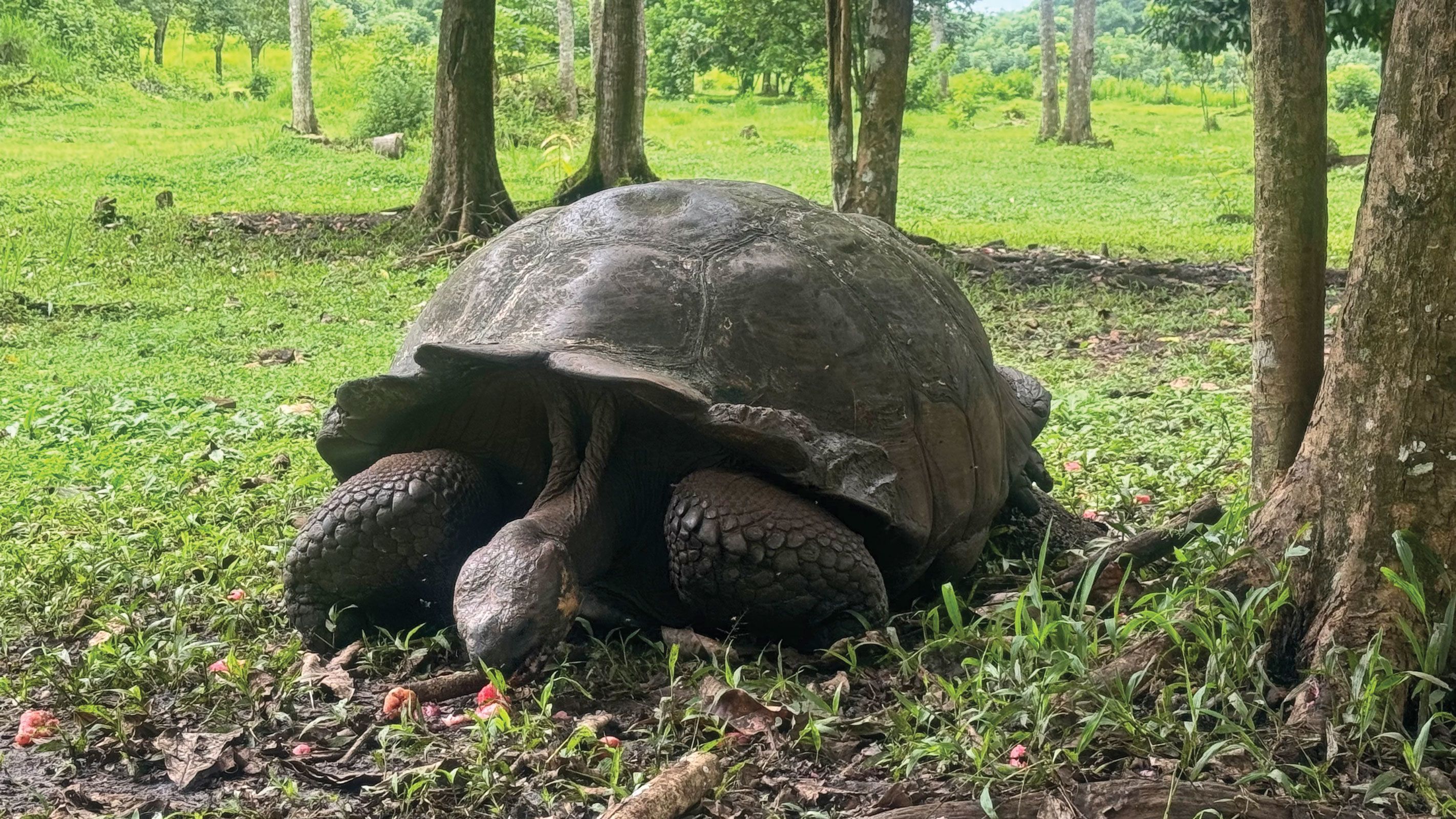
A tortoise feeding at Santa Cruz’s Giant Tortoise Reserve. (Photo by Christina Jelski)
A tortoise feeding at Santa Cruz’s Giant Tortoise Reserve. (Photo by Christina Jelski)
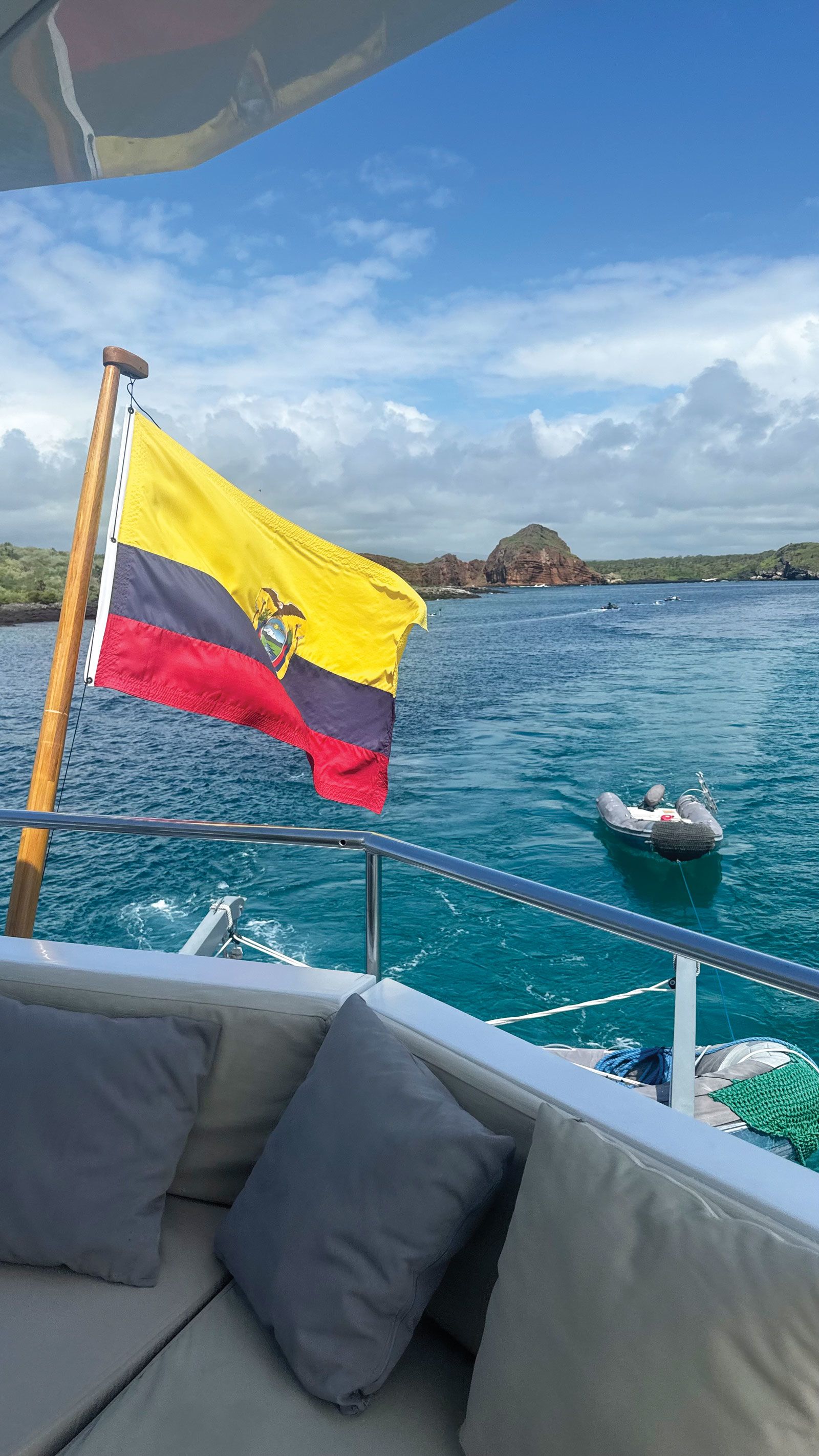
An outdoor deck on the Vision Pikaia, with the yacht’s dinghy towed behind it. (Photo by Christina Jelski)
An outdoor deck on the Vision Pikaia, with the yacht’s dinghy towed behind it. (Photo by Christina Jelski)
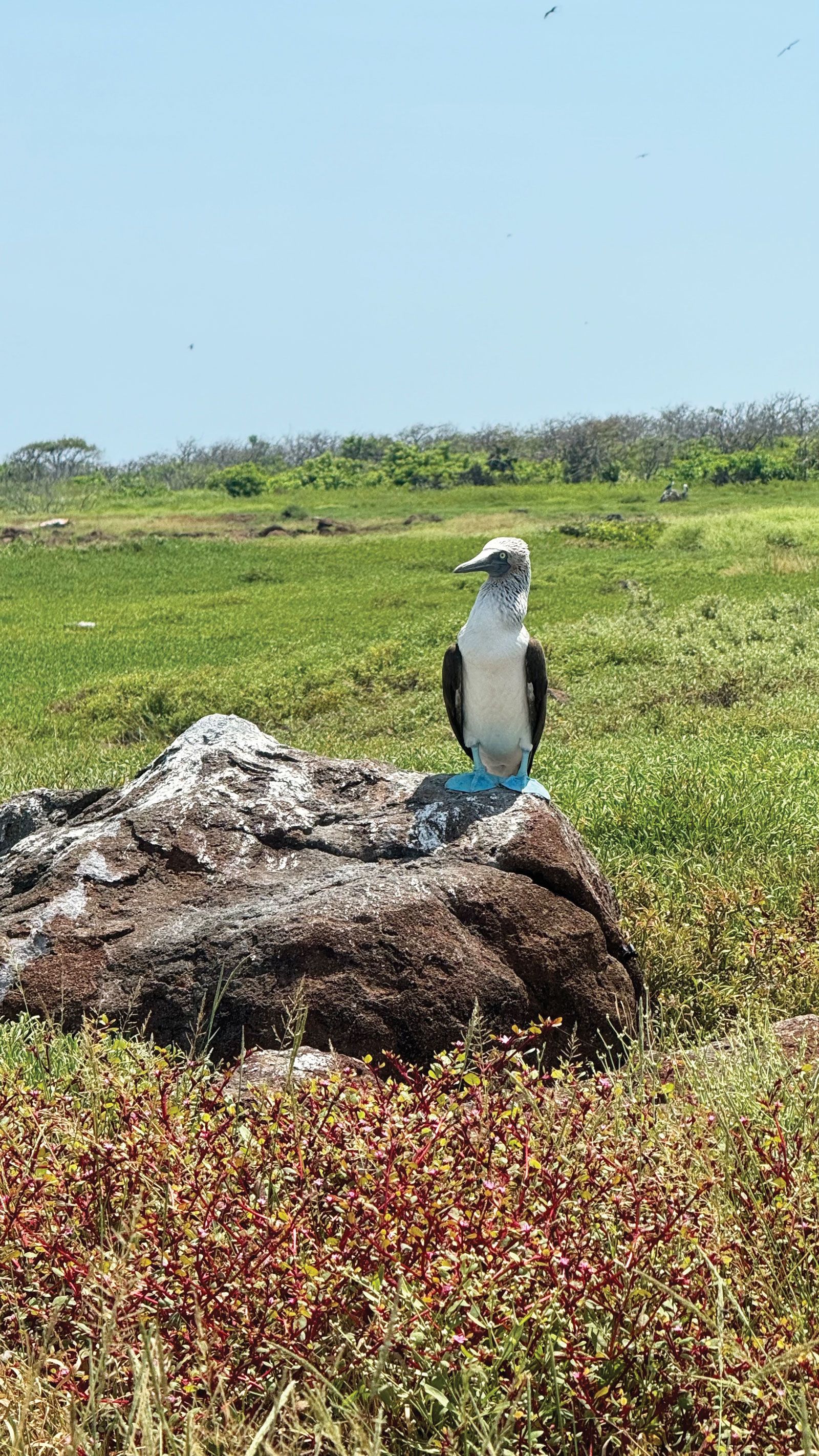
A blue-footed booby spotted during an excursion to North Seymour Island. (Photo by Christina Jelski)
A blue-footed booby spotted during an excursion to North Seymour Island. (Photo by Christina Jelski)
Onboard the Vision Pikaia
Under this hybrid positioning, one of Pikaia Lodge’s biggest differentiators is the Vision Pikaia, which, unlike the vessels employed by many other Galapagos properties, is owned and operated by Pikaia itself.
This ownership model gives the lodge more control over the guest experience, from meal service aboard the yacht — which is also overseen by Evolution’s Puente — to the timing and duration of island visits.
The expansive yacht has multiple living areas and decks, a dining area and a hot tub and accommodates up to 16 guests across six cabins. Guests are assigned a cabin during their yacht excursion, where they can stow belongings, relax and even shower after snorkeling.
During one excursion, the cabin also proved a comfortable spot to nap, after a hastily applied scopolamine patch left me feeling drowsy.
And while Pikaia Lodge offers a diverse mix of land and water tour experiences, the yacht days were a true standout, even for those who don’t consider themselves “boat people.”
My friend Simran, in fact, could hardly be considered a “water person,” having only very recently taken up swimming lessons at the Y. She was, in a way, the Steve to my Ellen.
But when Brandt heard through the grapevine that she had some anxiety about an upcoming snorkeling tour, he surprised us one evening by emerging from the lobby in a black wet suit, flippers and snorkeling gear in hand.
After handing Simran her own wet suit to change into, the pair took to the infinity pool for an impromptu snorkeling class. Brandt, having helped guests well into their 80s overcome their snorkeling fears, was confident Simran could do the same.
Lo and behold, less than 24 hours later, Simran was kicking her fins through deep water near North Seymour Island and spotting brightly colored fish along with the rest of our small group. Her initial anxiety had been replaced by wonder.
Over the course of our yacht and land excursions, we encountered many more of the Galapagos’ most iconic residents in their natural habitat.
Blue-footed boobies performed their elaborate courtship dances on rocky outcrops, iguanas could be found sunbathing along every shoreline and frigate birds soared overhead, the males inflating their distinctive, red balloon-like throat pouches.
During an excursion to Santa Cruz’s Giant Tortoise Reserve, we watched as ancient tortoises, some more than a century old, methodically grazed on grass and shrubs.
But perhaps the most magical encounter came at Mosquera Islet. In shallow tide pools, dozens of baby sea lions had found a perfect safe haven protected from strong currents and predators.
While Galapagos regulations strictly prohibit visitors from closely approaching or touching wildlife, these curious pups operate under no such restrictions. As we sat quietly and watched them play, they eagerly swam up to us, sniffing our toes and playfully tugging at wet suit sleeves.
Here were creatures perfectly at home where water and land meet — much like Pikaia.
Corrections: An earlier version of this report incorrectly stated that the Vision Pikaia yacht has eight passenger cabins; it has six. Also, the $5,330 starting rate for Pikaia Lodge is for a three-night stay; it is not per night.