INVERNESS, Scotland — We've had lovely weather in Scotland, but that finally took a turn.
On the day we visited the Culloden Battlefield, the temperature had dropped, the wind had picked up and the skies threatened to dump water on us. But our guide told us it was good to tour the battlefield in similar conditions to what the Jacobites faced as they made their last stand during the Battle of Culloden in 1746.
As we wrapped ourselves tighter in our coats and scarves and trekked through the battlefield, our guide -- perhaps the best one I've had -- immersed us in the tragic story of the Jacobites as they sought to restore the Stuart monarchy to the throne. They fought the Duke of Cumberland's government army, losing in a bloody battle on the very ground we stood.
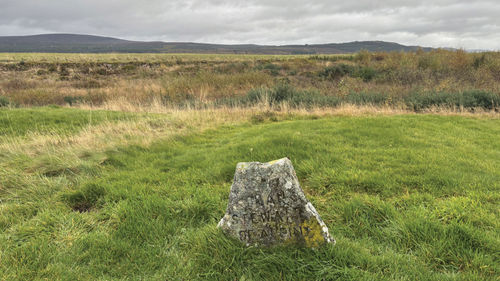
A memorial stone honoring a clan at Culloden Battlefield, near Inverness, Scotland. Photo Credit: Brinley Hineman
Some in our group -- part of a preview of Luxury Gold's Spectacular Scotland itinerary -- were already familiar with the uprising due to the popular TV and book series "Outlander," but the history was new for many of us.
The Jacobite rebellion in Scotland was brought by the desire to have the exiled and Catholic James Francis Edward Stuart installed as king on the British throne instead of the Protestant William and Mary. The Battle of Culloden was led by Prince Charles Edward Stuart, James' son who was also known as Bonnie Prince Charlie, but the Jacobites were crushed in less than an hour. Of the 1,600 slain in a matter of minutes, 1,500 of them were Jacobites.
It was a bloody, ruthless and quick end to the rebellion. That battle, the last on British soil, changed the course of history, also sparking the repression of Highlanders.
Hearing the heartbreaking stories -- our guide told us no Jacobite was spared, even the women and children were executed -- was sobering. He shared stories of the Jacobites running across the battlefield, only to sink neck-deep in the bog and drown, too weak to pull themselves out after hiking miles through the night on starvation rations. Those who survived the government army attack were surrounded and forced to wait on the battlefield until death, either from their wounds or exposure.
Those killed were buried in unmarked graves; our guide said erecting a memorial to the fallen Jacobites would have been deemed a treasonous act worthy of death by the British monarchy at the time. Some of their clans are now recognized by stones that were placed at the designated war grave in 1881.
Though battlefield tourism is not typically something I am drawn to, I found myself moved by the stories our guide shared. Walking in the same steps of the Jacobites as the wind whipped by us and the chill sank into our bones, it was impossible not to picture the desperation they felt as the government army closed in.
But "Outlander" fans found a reprieve from the sadness, with several in our group eager to see the Clan Fraser stone, which is featured in the television show. Though I don't watch the series, I've learned from my companions -- and major spoiler alert, here, so reader beware -- that love interest Jamie Fraser is believed to have died there. Main character Claire visits the memorial stone to honor Jamie, a scene which was filmed at the real stone on the battlefield.
While there, a single white rose marked the stone honoring the clan, likely from an "Outlander" tourist, or perhaps someone paying tribute to the fallen Jacobites all these years later.